105 Ways to Give a Book
Showing posts with label Adult Books. Show all posts

Existential Emptiness in The Ocean at the End of the Lane

Feeling down and reflective today. Everything seems slow. The morning has moved by me with no effort or action on my part, aside from a writing part of song that has long been tickling the inside of my brain. The Internet is sluggishly loading, my email seems stuck, and even as I'm writing this post I'm reading above the ominous "An error occurred while trying to save of publish your post. Please try again."

Oh I'm trying. Lord knows, I'm trying.

I planned to start the week off with a review but it feels more like a quoting sort of day. And not even from a title that needs to be shared, as it's old news online, but it was a book that truly moved me in an unexpected way. See, I have issues with the darkness of Neil Gaiman's tales where I respect the artistry of his craft but often find it isn't for me. Not so with The Ocean at the End of the Lane. I was hooked from a haunting description of childhood that felt much like mine:
I was not happy as a child, although from time to time I was content. I lived in books more than I lived anywhere else.
Isn't that ridiculously telling for two sentences? The story itself is not like my life, as it then moves into an allegorical fairy tale slash horror story that kept me enthralled slash quaking. Beautifully done and leading to one of the most moving descriptions of the existential emptiness that I've ever read. Though it's towards the end of the book, I don't think it gives away anything - except maybe the heart of the book. But you've probably all read it anyway, so here:
How can you be happy in this world? You have a hole in your heart. You have a gateway inside you to lands beyond the world you know. They will call you, as you grow. There can never be a time when you forget them, when you are not, in your heart, questing after something you cannot have, something you cannot even properly imagine, the lack of which will spoil your sleep and your day and your life, until you close your eyes for the final time...

...


Okay, maybe I need to take a walk or pet a puppy or something.


Links to material on Amazon.com contained within this post may be affiliate links for the Amazon Associates program, for which this site may receive a referral fee.

Nonfiction Monday: Blue

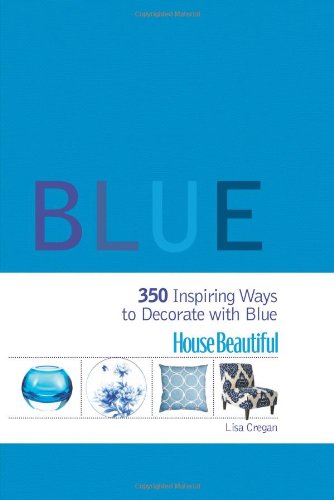
Blue: 350 Inspiring Ways to Decorate with Blue
by House Beautiful, 2011
review copy from library
Blue: 350 Inspiring Ways to Decorate with BlueThis probably doesn't count for Nonfiction Monday - hosted today at Simply Science - but I had to post a little something about this title. I can't say that I generally grab books on decorating, but when I saw this little blue book, I had to take it home. It's unlikely I'll ever reach a fraction of the style exhibited in the featured rooms or arrangements but it's fun to look and possibly come away with an idea or two. One of the best part is the paint swatches. And when did you ever hear that before? But here each color swatch is described by a designer and they capture so much of the feel of the variety of tones and shades with careful, often poetic words. Two of my favorite descriptions:

John Saladino on Benjamin Moore Oriental Iris:
"I'm attracted to periwinkle blue. It's soothing and serene and metamorphic because it goes from gray into blue into lavender, depending on the time to the day, the season, and the person looking at it. No two people see color the same way. Blue combines two things I love, the ocean and the sky, which lifts me out of the quagmire of reality."


Thomas Jayne of Benjamin Moore Heavenly Blue:
"This is the color of the sky in Old Master paintings, when the varnish has yellowed. It has a luminous quality. You could paint the whole room or just the floor - you'd feel as if you were floating."


Links to material on Amazon.com contained within this post may be affiliate links for the Amazon Associates program, for which this site may receive a referral fee.

The Map of My Dead Pilots

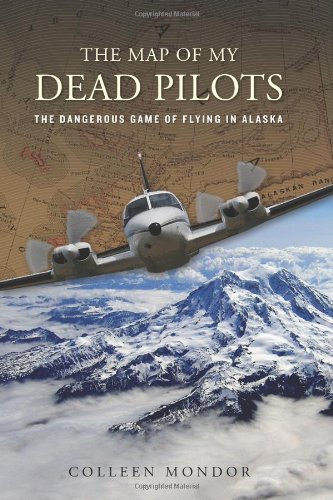
The Map of My Dead Pilots: The Dangerous Game of Flying in Alaska
by Colleen Mondor

Lyons Press 2011, purchased copy

The Map of My Dead Pilots: The Dangerous Game of Flying in AlaskaThis book is simply the worst marketing campaign ever for arctic aviation. So you want to be an Alaskan pilot? Because it’s cold, lonely, boring, erratic, stressful, exhausting (very, very cold needs another mention), and you may die. Blending the adventure stories of plane trips both successful and unsuccessful with personal narratives, Colleen Mondor brings the reader into the last frozen frontier. With money at stake, planes fly in weather too cold, with cargo too heavy to be legal or safe. Everyone personally knows some pilot who died, yet the collected stories of deadly accidents don’t change the rules or risks. Published as adult nonfiction, there is crossover appeal for teens in the subject and — let’s be honest here — shorter page count then many nonfiction titles. There is some language throughout the book, but nothing that teens won’t have heard, read, and likely said before.

Personally, I read the book on a deadline, and now feel that it deserves a less rushed reader. Because when I could stop, I was able to process much more of the weight of what I had just read. For example, one anecdote detailed how the operations department was expected to lie on the official documentation for the flight — but in her job the author would write the correct weight on scrap paper, for only cargo and the pilot to see. Based on that real number, they would make the decision whether to take the flight. In a way, that number was the only thing that had substance, reality — in that everything else was faked (like the numbers), uncertain (like the weather) or precarious (like the aging planes): all but that one scrap of paper that would get thrown away. That’s something to think about, right? And that’s this book.

My fellow book blogger and good friend Colleen Mondor agreed to stop by to answer some questions about her book and new authorhood:

When did you start writing and/or seeing yourself as a writer?
I really started thinking that I could write as part of who I intended to be (as opposed to writing all through school and being told it was “a nice hobby”) after I left graduate school and realized that all the research I had done for my thesis was too valuable to shelve. The thesis was the longest thing I had ever written (160+ pages) that made sense and had a real beginning and ending. Once I had it in my hands I believed I could be more than just someone who writes after I do my “real work” every day (as I had always been told growing up) and that’s when I got serious. (I should note that my thesis was on pilot error accidents among Alaskan bush commuters — so it played right into Map.)
Who inspires you personally or professionally?
Ray Bradbury, Louis Armstrong, Hepburn & Tracy, Springsteen, Dan Eldon, Peter Beard, Barbara Hodgson (The Sensualist, Dreaming of East, etc.), Sara Vowell (!), Tim O’Brien (The Things They Carried), and so many more. Lately my life is filled with images of my great grandmother, Julia Lennon, whose photo albums recently came into my mother’s possession. Her life was incredibly hard and I find it amazing how she survived — her sheer force of will is the stuff of legend. If that isn’t inspiring (and she was my Nana!), I don’t know what is.
The narrative has an organic flow, elaborating on things previously mentioned and hinting at stories to come. With that structure, how did you organize the writing process?
Ha! Organization was something that came up all the time — sticky notes and index cards everywhere to keep straight what I wrote where and when I said what and on and on. (I have Scrivener now and I’m hoping it will help a lot in the future.) I wrote the book completely out of order and then, with the help of my agent and editor, put it in the final order you see now. I wish I could have been more straightforward when writing the book as it would have been easier from an organization perspective, but in terms of the actual creative process, easy was just not any part of the writing.
With such a personal and difficult topic, what was the hardest part to write?
Technically it was most difficult to make sure I protected the identities of all the people involved while still writing the complete truth. The hardest chapter though was a surprise for me — it was “The Good Pilot,” about my friend “Adam” who crashed due to pilot error but is still alive and well in Alaska. You would think as he is still here that would have been easier but the crash had such a detrimental affect on him and was so preventable that I really struggled with how not to let my frustration with the whole situation boil over. I wanted a different story for him — I still want a different story for him — and there is nothing that anyone can do about that. At one point I wondered if I could even include the chapter at all. It took forever to get it right.
You’ve had a longtime perspective on publishing from the reviewing side of things at Bookslut and Chasing Ray. What have you found surprising as a new author?
How quickly you become overwhelmed by the need to sell the book now that the book is written. I wish writers could just write and write and write and while I had some idea from friends how much work I would have to put into marketing Map after it came out, I was still surprised. It can overtake your life if you let it.
Where do you go next, either literally with author visits or figuratively as a writing path?
Literally, I will be going through several cities/towns in Alaska this spring and also hopefully in the Pacific northwest. To get the book on lots of shelves I have to help generate interest, and the best way to to do that is to show folks the pictures I have of flying up there and to talk about the job. There is a lot of interest in Alaska — a lot of curiosity — and I have found people very receptive to events where they can see what we saw and ask questions about what the Company was like. That is my plan for early 2012. For writing, I have several essay projects in the works and intend to continue with narrative nonfiction — more on that as it develops!
Be sure to check out other reviews and interviews:

Links to material on Amazon.com contained within this post may be affiliate links for the Amazon Associates program, for which this site may receive a referral fee.

The Wave

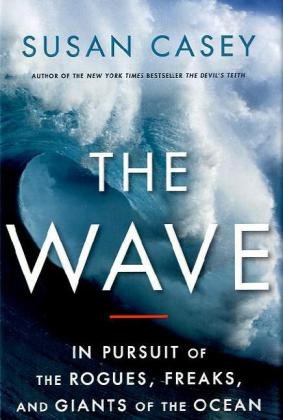
The Wave: In Pursuit of the Rogues, Freaks and Giants of the OceanThe Wave: In Pursuit of the Rogues, Freaks and Giants of the Ocean, by Susan Casey, isn’t about lazy, relaxed days of beachfront surfing. Oh no, sir. The dudes featured in this title routinely chase forty-foot waves, dreaming of the challenging sixty-footers, and longing for that Holy Grail, the one-hundred-foot surfable wave. The stories of these amazing men — and yes, men dominate the extreme sport — are interspersed with interviews with the scientists who study the ocean and historical information about the world’s craziest waves. The adventure stories are gripping and keep readers coasting through the scientific sections with a drive to learn more about ocean waves than they perhaps thought possible.

My only minor problem was that it was sometimes hard to follow the chronology of the surfers’ storylines, as there was a lot of jumping around to describe past exploits. The photographs in the insert were arranged according to the waves discussed, but not necessarily the ride mentioned in the book — which was a bit confusing. The pictures in the insert added to many of the descriptions in the chapters, and I would have loved to see many more photos, even if it is impossible to truly capture the intensity of these towering walls of water. Overall, The Wave is a fascinating book that will have appeal for teens as well as adults. Personally, my shoreside stares over the ocean will be forever altered knowing the fierceness that lies in the sea.

Nonfiction Monday is hosted today at Apples With Many Seeds.

Links to material on Amazon.com contained within this post may be affiliate links for the Amazon Associates program, for which this site may receive a referral fee.

The Checklist Manifesto

In 2001 at Johns Hopkins Hospital, Peter Pronovost did a little experiment. You see, a number of patients would get infections from central lines put in to, you know, help them get better. But the infections would, of course, make the patients worse. So he came up with a five-step checklist for putting in a central line with basic directives, which were as simple as washing hands with antibiotic soap.

Pronovost then asked nurses to observe doctors for a month and record how often they carried out each step. In more than a third of patients, they skipped at least one. After recording that explosive bit of data, for the next year the hospital asked and authorized the nurses to stop the doctors if they saw them skipping a step on the checklist.
The results were so dramatic that they weren’t sure whether to believe them: the ten-day line-infection went from 11 percent to zero... So they followed patients for fifteen more months. Only two line infections occurred in that entire period.
This remarkable story is from the book The Checkist Manifesto: How to Get Things Right, by Atul Gawande. The author’s theory is that many jobs — especially in the medical profession — have become so complicated that training and intelligence aren’t enough to achieve the best results. He offers a solution in the humble checklist.

The main comparisons he explores are two professions that have incredible amounts of potential scenarios, along with incredible consequences for failure — physicians and pilots. What he finds in his research is a huge difference in how each profession handles the problem, with implications for change in many industries. While doctors tend to bristle at being followed with a checklist — it’s why the nurses had to be authorized to stop the doctors in the above example — pilots embrace their checklists, which are standard to the airlines. In fact, pilots are taught not to go with their instinct as problems arise but to turn to the checklist first. That doesn’t mean that instincts, training, and quick thinking aren’t valued for the pilots. Instead, the idea is to take the guesswork out of basic steps and protocols so that the pilots can do their jobs with more focus.

The author shares another story from the airline industry, about a plane that suffered a complete engine shut-down in January 2008. Luckily, the plane landed safely enough that the passengers were fine, but the industry was puzzled as to the cause. The possibilities were researched, a theory was proposed, and new guidelines were established for particular flights. A new checklist was distributed and within a month of the recommendations, pilots had it in hand and were using it. How do we know? Because in November 2008, the same situation presented itself and the pilots were able to use the new checklist to recover the engines.

While new procedures can take years to establish themselves in medicine, compare that to this scenario of identifying a problem, recommending a solution, and distributing the information within a year. The author also shows uses for the checklist in financial and legal industries, but all have shied away from the solution as being too simple.

Will this next generation of thinkers be able to get beyond that mindset? I hope so, and that’s why I would recommend this book to high schoolers in hopes that they can change the way we approach problems in a society only growing in complexity.

Nonfiction Monday is hosted today at Rasco from RIF

Links to material on Amazon.com contained within this post may be affiliate links for the Amazon Associates program, for which this site may receive a referral fee.

A Pearl in the Storm

Life in the “real” world is hazy, and it is piled full of superfluous things that have little bearing on survival. Modern conveniences equate with disposability. When things break, we throw them away. When friendships break, we throw them away. After all, there are so many people. We don’t watch the weather; we change the thermostat. We don’t take care of ourselves; we leave that to the doctors and the lawyers. We don’t take care of the people around us; we pay taxes and expect the government to do the caretaking. We place our trust in our locks and alarm systems. People come and go at dizzying speeds, and most encounters are frustratingly superficial. When I remember to ask someone, “How are you?” I seldom slow my pace to listen to the response. Reality is sometimes difficult to find in the “real” world.
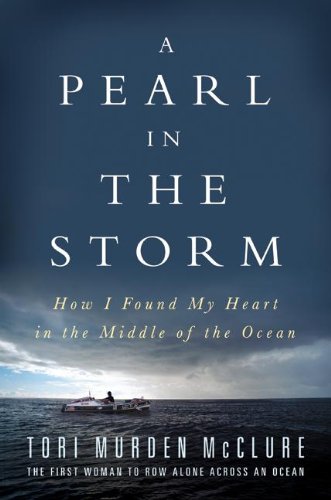
A Pearl in the StormA Pearl in the Storm: How I Found My Heart in the Middle of the Ocean, by Tori Murden McClure, is an amazing story of endurance, strength, drive, tenacity, pride and humility. This book was recommended by a patron at my library, and by the time my hold came up, I had forgotten all about it. I almost put it back, because I couldn’t imagine why I had wanted to read about the first woman to row across the ocean. I’m glad I gave it a try, because it was interesting and inspirational. An adult biography, it would be perfect for high schoolers as well.

In 1998, Tori McClure rowed across the Atlantic Ocean in a custom rowboat with a tiny cabin. She charted her journey in hours and miles rowed, in the lessons learned, and in the insights discovered. She rowed alongside whales and playful dolphins, through storms and rogue waves. When things broke, she fixed them. When things broke beyond repair, she did without — even when those things were considered essential.

She starts her story with a strong statement of will: “I felt proud not to be searching for life in the absent corners of weekends.” She ends her story with a realization: “Our helplessness makes us human. Love is what makes our humanity bearable.” And in between those two points, she shares the remarkable story of her life and ocean journey. Not to be missed.

Nonfiction Monday is hosted today at All About Children’s Books.

The American Journey of Barack Obama (and the Greatest Gift to Future Leaders)

As I watched the Inauguration yesterday, an insight came to me as to the one gift that we give our children as future leaders of this great nation:

Digital photography.

You see, when I was growing up — as when all of our current leaders were growing up — the cameras were crap. The pictures were often blurry or overexposed. Someone’s elbow was in the shot. Or there wasn’t enough light or too much flash. Or the pictures simply faded in their albums. Let’s not even start on Polaroid.

It didn’t really matter then if the photos weren’t great, because these were our memories. Without digital cameras, parents took the picture and hoped for the best. With the cost of film and processing, people didn’t take that many pictures. And it was fine.

Until you become President of the United States and Life writes a book about you and all the pictures covering your earliest years are not good.

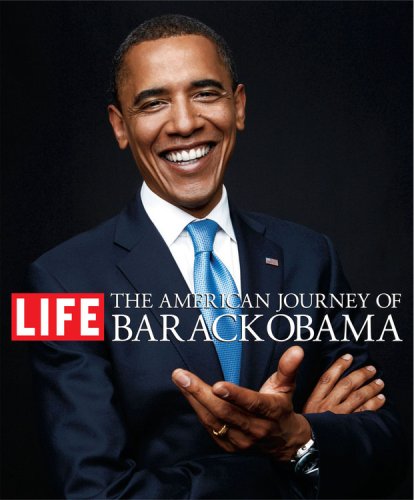
The American Journey of Barack ObamaDuring the slower parts of the Inaugural day, I skimmed through The American Journey of Barack Obama. I won the book from Book Dads (Thanks guys!) and was really looking forward to spending time in the Obama world. But now I realize that I was mostly looking forward to the photography of a Life publication. What I didn’t think about was that only a fraction of Obama’s journey was photographed by the experts. A great deal of the book relies on the photographs from his family. Pretty much the same type of blurry, overexposed, faded, poorly framed photos that I grew up with.

I still enjoyed the book and am looking forward to really reading it, including the essays at the end from some great writers. I can still highly recommend it for Obama fans. But personally, I may look around for a book that only chronicles the campaign with fantastic photography. I’ll also look at my digital camera with new respect, knowing that if one of my daughters is ever leader of the free world, the biographers will have more than five thousand pictures from which to choose.

Leaders of tomorrow, we give you digital photography. You’re welcome.

Look Me in the Eye

Today I’m participating in Nonfiction Monday (Yo! Suen!) with an adult book. (Yes, Roger. I do read adult books. Double score!)

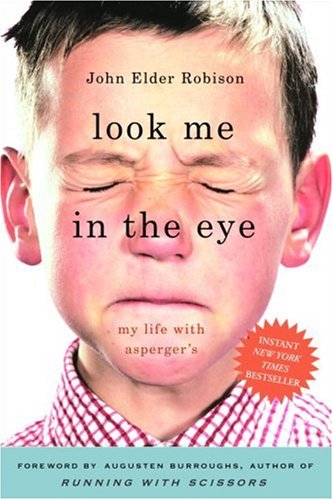
Look Me in the EyeLook Me in the Eye: My Life with Asperger’s was written by John Elder Robinson, brother of Augusten Burroughs, author of Running With Scissors, which devoted a chapter to the misdiagnosed sibling. Got it? Now we hear John’s story.

The chapters about John’s early years were of most interest to me. I felt like I was getting a view inside the head of someone who is trying so hard to communicate and not getting it right. He writes that contrary to common belief, a child with Asperger’s has emotions but can’t express them in the “appropriate” way. He describes how he had to learn logically the correct response to “Look at my Tonka truck!” where other kids knew what to say based on social cues and context. He explains that his natural remarks could seem random because he was following his own train of thought before his response. While adults were more tolerant of his random remarks, he shared how in ways it hurt him because he didn’t learn the correct way to relate to other people.

As a teenager, John found an interest in electronics and sound, and through a series of contacts he became the sound engineer and guitar designer for KISS. He describes his tours with the band — his own behavior was fairly tame, unlike that of the band — and his return to his home life. The ending chapters about his corporate work and later his own company didn’t hold my attention as well, but overall it was an interesting and insightful book.

The Secret: Part II

The most common thought that people hold, and I held it too, is that food was responsible for my weight gain. That is a belief that does not serve you, and in my mind now it is complete balderdash! Food is not responsible for putting on weight. It is your thought that food is responsible for putting on weight that actually has food put on weight. Remember, thoughts are primary cause of everything, and the rest is effects from those thoughts. Think perfect thoughts and the result must be perfect weight.
— from The Secret
What good news, because Chloe has been packing it on the last couple of years, and now I can tell her that it is not the food that is responsible for her large tummy, but her thinking that food will cause weight gain that is really responsible. I’m sure this concept would be life-changing for her, if she weren’t, you know, a cat.

Here’s my problem with The Secret. When I find a statement that I can get behind, like this:
Get clear on the weight you want to be. Have a picture in your mind of what you will look like when you have become that perfect weight.
Then I’m hit with something that seems this side of crazy, like this:
Let go of all those limiting thoughts. Food cannot cause you to put on weight, unless you think it can.
Come on! I see a benefit in the concept of focusing your energy on a positive instead of a negative — i.e., your target weight rather than the idea of losing weight — because you can make subtle and real changes by visualizing the end goal, or so I hear. With that picture of yourself in mind, maybe you’ll be less likely to grab that third Oreo (or fourth or fifth or sixth... don’t judge me!). But I can’t stand by the idea that food doesn’t contribute to weight gain. There are a lot of fat cats, fat lab mice, and ahem, fat people who will beg to differ on this concept.

The section about health raised similar problems for me. I think that it is possible to bring out healing powers from within, but I wouldn’t want to count on that instead of say, insulin for diabetes. I think that the more you focus on your bad health, the more depressed you get, and the worse you feel. But I don’t think that people are attracting cancer to them. Then there is this part, the most insane section of the book:
Often when people first hear this part of the Secret they recall events in history where masses of lives were lost, and they find it incomprehensible that so many people could have attracted themselves to the event. By the law of attraction, they had to be on the same frequency as the event. It doesn’t necessarily mean they thought of that exact event, but the frequency of their thoughts matched the frequency of the event. If people believe they can be in the wrong place at the wrong time, and they have no control over outside circumstances, those thoughts of fear, separation, and powerlessness, if persistent, can attract them to being in the wrong place at the wrong time.
I was going to put in a sarcastic comment about the World Trade Center or the Indonesian tsunami or the Holocaust, but I can’t even do it. I’m so irritated by that concept, that my blistering smart-ass response has been short-circuited.

Overall, The Secret was a great disappointment to me. There were some gems in there which focus on our own power to shape our thoughts and perspective, and by doing so, to shape our lives in real ways. There were useful messages about the power of positive thinking for our health, relationships, and ourselves. But for me, the good in this book was overshadowed by the bad and the totally insane.

The Secret: Part I

“I learned from The Secret that what you focus on expands. I hoped that wasn’t going to be true of her ass.”
— Roland Gentry, from “You Pay Your Dues
The SecretI missed the first buzz of Rhonda Byrne’s book, The Secret. But it wasn’t long before library patrons were asking for Secrets or The Secret to Life or That Book From Oprah, and I put my name on the hold list below three hundred other wisdom-seekers.

There may be a problem when you’re reading a book, and you’re already rolling your eyes at the dedication:
Dedicated to You

May The Secret bring you love and
joy for your entire existence.

That is my intention for you
and for the world.
I’m not going to enjoy this, am I? And it’s not that I hate self-help books. I’m a big fan of expanding self-knowledge and a big fan of books, so occasionally those two interests direct me to some interesting and useful publications. The writing in this one, though, was a little... much for me right from the start.

The overall premise of the book — and DVD — is that you attract to you that on which you focus. There is part of this concept that has value for me. I do think that as you focus on the negatives, you bring more negative energy in. I also think by focusing on the positive, that you bring positive energy in.

However, I don’t believe that if you focus on getting a bicycle for your birthday, that you’ll get a bike. I don’t believe that if you focus on a car, that you’ll get a car. I don’t believe that if you focus on George Clooney, you’ll get George Clooney. Because believe me, I’ve been focusing my energy there for years.

Oh I forgot — if it doesn’t work, then you’re just not believing in it strongly enough. Very clever.

Let’s get back to the good, just for today. There is value in understanding that your own thoughts control your experience of the world around you. Your positive or negative outlook will affect any given situation and/or your interpretation of that situation. I know people who always believe that they are the victims, and they do turn out to have bad luck more than I would otherwise expect. But neither are they able to look at the good aspect of anything that happens, so it becomes a self-fulfilling prophecy.

In my own life, I’ve been looking at my tendency to attract chaos with my focus on current chaos. I’ve been feeling so very disorganized in my household and my activities, and it does seem that the more it bothers me, the worse it gets. Part of the problem is in my own ambivalence on the issue. While I would like an organized home and mind, I also think that some of the creativity in my humor and my writing comes from the disorder of things. It’s what let’s me make the link from Phillipa Gregory’s books to Lunchables. Or Nobel Peace Prize winners to Pinter tea lights at Hallmark.

What I didn’t get from the book, in attracting like to like, is how to break the bad patterns of attraction. For instance, in my situation, do I just imagine that I’m an organized person and then I’m done? So who picks up the actual Happy Meal toys and tosses the rock tumbler kit?

The Secret has 1,486 reviews on Amazon, and they are all over the board. Some of you may have strong opinions as well. Let’s leave today for your positive or more general comments. Tomorrow I — and you — can let loose on some less stellar aspects of this provocative book.

MacGyver Stories

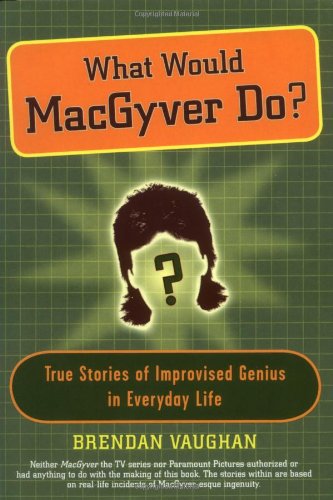
What Would MacGyver Do?What Would MacGyver Do? True Stories of Improvised Genius in Everyday Life, by Brendan Vaughan, is the perfect bathroom book. What? It is. Each story is short, light, and vaguely interesting.

It’s funny that the Amazon reviews are so extreme. (“Horribly Misleading!” “Smart and Fun!”) People loved it or hated it. But I think that it is a matter of what the reader was expecting. A few of the stories are cool. Many of the stories would be hard to call true MacGyver thinking, though some definitely fit the bill. The subtitle is far more honest about the content of the book.

I particularly liked “Sic Transit Rodentia,” which was not really a MacGyver tale, but is a well-written, funny story of man versus mouse.
“What’s the problem?” he asked.

“We got a mouse.”

His face went white, and he withdrew the book before I could write anything. He clicked on his walkie-talkie and spoke quietly into it.

The super materialized in seconds. I explained the situations, and he responded in a whisper. The building hadn’t had any mice in years, he said. Years. But he’d take care of it. In the meantime — and he practically passed his hand over my face to complete the Jedi mind trick — I didn’t see any mouse.
I also liked the stories of fixing the clutch with a knitting needle, using a sock to brew coffee, and making a bong out of a potato. What? It was interesting.

(Thanks to Emily Reads for pointing the book out.)

Thematic Thursday: Nanny Books For Adults

I love books about nannies, because these people don’t write nanny books to say how great and attentive the parents are. No, people write nanny books because the parents are awful — to the children and to the nanny — and to make some cash. So whenever I read one of these books, I feel instantly better about myself as a mother. At least I’m not as bad as that one, I can safely say.

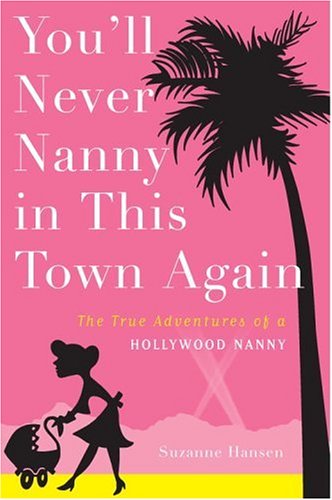
You’ll Never Nanny in This Town AgainI liked The Nanny Diaries. I highly recommend it as a fictionalized funny/sad story of a nanny’s Manhattan experience. I liked White House Nannies. Again, recommended as a nonfiction look at a nanny service operating in the power center of Washington, DC. I had high hopes for You’ll Never Nanny in This Town Again, by Suzanne Hansen, to cover the Hollywood version. Oh well.

Susie nannies for some important people, and she’s not afraid to name names. The lack of concern for the children’s privacy makes me uncomfortable, as the other books keep the identities under wraps. Susie is also a whiner, complaining and complaining about how she is treated, but never standing up for herself. She knew she was supposed to get a contract for her services, she didn’t, and it bit her in the butt. As she states many, many times throughout the book. She is very young and immature, and doesn’t do what she needs to do. I can understand the relationship of employer and employee, but all throughout the book I kept wishing for her to grow a spine and set some limits on the parents. While it seems the first nanny job was awful and they did take advantage of her, she didn’t help matters by being a doormat.

She learns some lessons from that experience as she moves on to nanny for Debra Winger and then Danny DeVito. They seem to have been good employers, though she finds things to complain about there too. Eventually she gives it up to — surprise! — write a book about the experience. Now that you’ve read a summary of her experience here, skip the book and read one of the other suggestions instead. Or tell me your favorite nanny book. (Is it the Melody Mayer series? You can tell me, because I read it too.)

The Sex Lives of Cannibals, or What’s In a Title?

I am a sucker for a good title, as I have mentioned before.

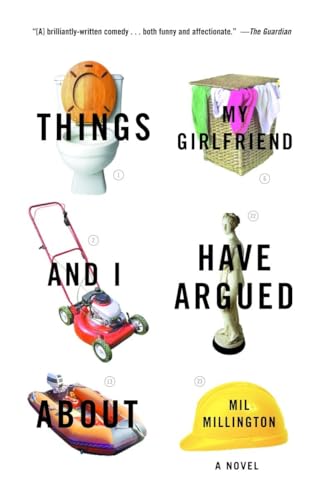
Sometimes a good title really outlines the content of the book. This is the case with my favorite adult funny book, Things My Girlfriend And I Have Argued About.

Or for one of my favorite kids’ books, How I Became a Writer and Oggie Learned to Drive.

Or the official White House briefing, Bin Laden Determined to Strike in U.S. But that’s for another blog.

The Sex Lives of CannibalsI was compelled to pick up The Sex Lives of Cannibals: Adrift in the Equatorial Pacific based solely on the title alone. How could I resist? What wonderful luck that it also happened to be an incredibly interesting and — my highest praise — funny book. It’s just that the title doesn’t really have anything to do with the book. I know, because I meant to skim it so that I could verify that fact, but I ended up rereading the whole book (I think I first picked it up some time last year). And you know what? I am glad I did, because I found it just as funny, just as fascinating, the second time around.

Troost was twenty-six when he decided to join his girlfriend on an island in the Pacific. The island was Tarawa. Never heard of it, right? How about the larger country of Kiribati. Still no? Then you can understand just how isolated this island is from the rest of the world. The author’s girlfriend was there to help the government with the health of the natives on the island. He was there to write the great American novel, but instead found himself writing about his two years in the middle of nowhere.

Most travel writers wax poetic about the lovely natives and the beautiful land and the peaceful existence. Not Troost. This guy tells it like he sees it, as a young man on an island where there is trash and crap (literally) everywhere, because on a tiny island in the South Pacific there is nowhere for the trash and crap to go. The native I-Kiribati have their own cultural norms that stand directly against their own progress. For instance, the custom of bubuti, whereby an I-Kiribati will go up to another and say, “I bubuti you your goat,” and the person hands over their goat. Now the next day that person, presumably, could go to the first and bubuti his chicken. But you can see how no one wants to advance past their village friends because they would just have to give it away again. Fascinating. They live in some of the richest tuna fishing waters in the world, but their government has leased the fishing rights to other countries for a pittance. Amazing. Coconut trees are the only food-producing plant that grows on a coral atoll in the middle of nowhere, so the average I-Kiribati eats about 400 pounds of fish a year — which they generally catch without a fishing pole, but just a line and hook thrown in the ocean. Unbelievable.

Though Troost is often harsh in his description of his new, temporary home, he isn’t disrespectful of the people who live there or their history. He is more appalled, in fact, by what encroaching “civilization” has done to these poor islands. Troost does give tribute the the beauty of the islands, the impressive glory of the Pacific ocean, and the warmth of the people. Otherwise, the book would read as pretty snide. But he never shirks from reporting the deprivation and the challenges of living in this forgotten part of the world, and he does it, remarkably, with humor and style.

So, I’ve had a bad couple of days. My kid called home crying over something that doesn’t seem to be her fault. I’m feeling a bit unappreciated in my job. Then, my same kid gets sick on Friday night, making it impossible for her to go to the Baltimore aquarium with her Brownie troop — a trip she has looked forward to for six months. I was up all night with her that night, and then Saturday morning had a birthday party (on the down-low) for her sister. Then feeling a little sicky myself, I started on Sunday to prepare the oldest’s room to paint, only to find out that the border won’t just peel off like it did in her sister’s room. Oh, no. This one is going to take a chemical suitable for warfare to get this puppy off, and delay the beginning of the actual painting until 8:00 Sunday night. Did I mention that everything the oldest girl owns is piled in the room of the youngest girl, making it impossible for either girl to use their rooms until the painting is complete? I’m feeling a bit put upon.

My point being, if it feels like life is crashing down around you, what better way to break out of your funk then reading about people for whom electricity, clean water, food variety, and books — yes, even books — are luxuries.

The Funniest Adult Novel That I Have Ever Read

Yesterday was “Take Your Daughter or Son to Work Day.” Today was “Take Your Fourth Grader To School At 6:45 a.m. So She Can Go On The Jamestown Field Trip Day.” And, apparently, it was also “Take Your Advil Because Your Head Is Pounding Day.”

Who would have though we could get that many capital letters into this post so far? Not me, that’s for sure.

Things My Girlfriend And I Have Argued AboutAnyway, I’m wiped out. It’s time for an adult book for everyone to enjoy, but I got nothin’ new. And next week doesn’t look good either, since I have fourteen young adult books checked out and stacked on my living room floor.

So, without further ado, the book is... Things My Girlfriend And I Have Argued About by Mil Millington. The book came together from the website, which is a long, long list of things his girlfriend and he argued about. Put these in a book, add a thriller plot involving the Chinese mafiosi, and mix throughout with Mil Millington’s British wit, and you’ve got one perfect book. Oh, and there’s this:
Look, there’s no easy way to say this, so I’m just going to come right out with it, all right?

I work in a library.

There. There, I’ve told you, and I feel somehow cleansed. That said, I do need to press on pretty quickly and explain that it’s not a public library. Ahhh, what a delicious dream that would be; old men with Thermos flasks quietly asleep in the newspaper section, erratically cut handouts for the women’s keep-fit club... you could go gently mad in a place like that and never be bothered by anyone. Sadly, the cradling arms of such a library were not around me.

Presumably because I spent a previous life beating tiny puppies with thorny sticks, I had been cast into the library at the University of Northeastern England... it had its own set of degree courses, including “Scratch-card studies,” “Eggs and stuff you can do with them” and the groundbreaking “Turning up.”

And this:
TSR, however, is someone whose proximity alone is enough to double the volume on my nerves. Some people just “give off” moods. That, I suppose, is what’s called charisma. I don’t have charisma. I AM double-jointed — I can bend my thumbs back until they touch my upper forearms — which I like to think is pretty close to charisma, though.

And this:
I believe effort is a finite resource, something to be used only when no other option is available. For me, halfheartedness is a full quarter too hearted.

Couldn’t have said it better myself.

Win Money Playing Blackjack

That was what I was supposed to be doing. But our plans to go to Atlantic City for the beginning of spring break fell through. Instead I found myself on Monday sitting on the front porch, and then the back porch, and then the front porch again, reading about gambling. No, I correct myself. Not reading about gambling — reading about winning.

(Did you hear that? That was the sound of people leaving this site when they found out it was about books, not blackjack.)

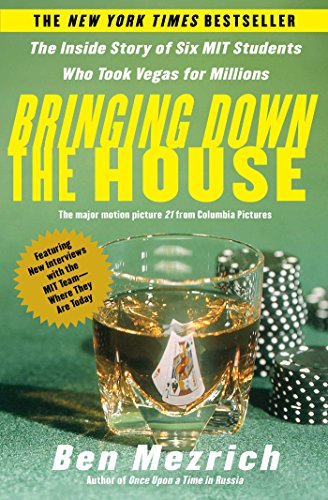
Ben Mezrich’s two books, Busting Vegas: The MIT Whiz Kid Who Brought The Casinos To Their Knees and Bringing Down the House: The Inside Story of Six M.I.T. Students Who Took Vegas For Millions, are extraordinary. They are action-adventure books for geeks. They give the nerds their day in the sun. You know, in case übernerd Bill Gates ruling the world wasn’t enough for you.

Busting VegasIn Busting Vegas, the author tracks a M.I.T. kid who learns a new system for beating blackjack. It is almost cheating, but not quite. Using three techniques more sophisticated than card counting, he and his team make tons of money — in one case fifty thousand dollars in one hand. In ten minutes of play. Of course, you can’t make that kind of money without drawing some attention, and some of it isn’t the nice kind of attention. For with the comped suite and plane ticket and arena fight, there’s back-room intimidation, gunpoint confrontations, and one memorable plane crash. It wasn’t an easy life for a kid, but it sure was a profitable one, and now he is sharing his secrets with us.

Bringing Down the HouseIn Bringing Down the House, the author presents a group of M.I.T. students who find their way to money through card counting. But this isn’t your Rain Man kind of card counting; this is a simple high-low strategy the students are learning. But that strategy alone won’t pull in the kind of money they want, and it always attracts the attention of the casino managers — who don’t like card-counters. Instead, the students work in teams, with “Spotters” playing hands until the decks get “hot” with high cards, then the “Big Players” swoop in on a signal, and play hard and fast on the good run. Then they take off with the winnings and everyone splits it later. But again, with the freebies and money come danger and risk. And sometimes, even with the best odds in your favor, the cards don’t go your way.

Both of these books were quick, incredible reads. Now if you’ll excuse me, I’m going to play a little blackjack.

Going Down Under

Why travel to Australia on vacation, halfway around the world, when you can just read a book about it?

Or that is how I justify it to myself.

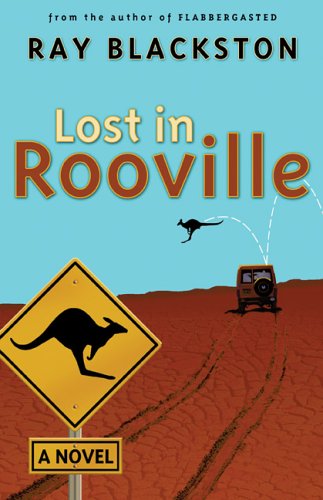
Lost in RoovilleLost in Rooville, by Ray Blackston, showed great promise in my armchair journey. A cute, light green cover with the kangaroo warning sign and a kangaroo jumping on top of a car in the background. It looked light and easy, which was just what I was after. I found myself wading through forty pages of two guys talking about getting engaged to their girlfriends with the enthusiasm I would expect to see from two guys talking about getting laid, but I knew kangaroos were coming, so I hung in there. The two couples split up to explore the Outback separately, and the book picks up. One couple gets lost, and as they run out of water and wonder if they will be found in time, they think about having sex. But they don’t, because their values are too strong.

Hold on. This is a grown couple and they haven’t had sex yet? What’s going on here? It all comes back to me. The passing reference to praying for help. The woman has been working with a mission. Is this... Christian fiction?

I flip ahead, and while the author must have contained himself for the first part of the book, suddenly the God, praying, and minister references are all over the place. I have no problem with the existence of the genre, and this book was probably a decent expression of Christian values in a new setting. But hey, warn me. You don’t play rap on a country music station; you don’t slap a chick-lit-ish cover on a book of Christian fiction. It’s just wrong.

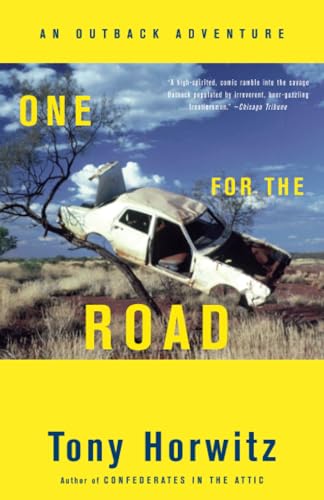
One for the RoadI had to clear my head, and went for an old favorite, One for the Road: An Outback Adventure, by Tony Horwitz. Tony is an American journalist who gets the idea to cross the outback by hitchhiking. He meets lots of crazy characters, crosses a landscape similar to the moon, and sees his first kangaroo after the driver runs into it. This is the Australia adventure about the people, not the tourist attractions, and it is fascinating and funny.

In a Sunburned CountryBut, my old favorite wasn’t there, so I decided to try Bill Bryson’s In a Sunburned Country. I am halfway through it, and it is good but not great. He talks a lot about various tourist attractions or cities that he assumes we have a working knowledge of. But I don’t, and wish that there were a few pictures and maps to help me follow his descriptions. His books incorporate more history and facts and actual information. It’s a little too much work for me. I just wanted the funny or interesting stories and some clever writing.

Because, face it, I’m on vacation.

Sorry, Guys

I got so distracted writing my letter of love to friends, fellow bloggers, and sunshiny days that I forgot to include the book that I promised to read over the weekend. Uh, oops.

I have a special place in my heart — and shelf on my bookcase — for books with fun titles. It’s a good hint that the dog isn’t going to die in the story. Or if it does, it will be in an amusing way. I dole these books out to myself, like the good chocolate, so that I can stretch out my supply of funny title books.

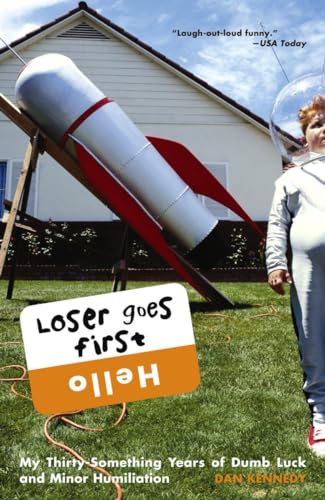
Loser Goes FirstOkay, the suspense has been killing you. Which book did I go with from my list? It was Loser Goes First: My Thirty-Something Years of Dumb Luck and Minor Humiliation, by Dan Kennedy.

Loser Goes First is a funny, slacker memoir of a guy who is sure he is a rocker from the age of ten to nineteen, even though he has never picked up a guitar. He becomes a man, sort of, who manages to miss the grunge movement by leaving Seattle to go to Austin at the very time grunge is picking up speed. And leaves a well paying job to bomb as a dot-com millionaire. It’s about being in the wrong place as the right time passes you by. The style is informal, almost conversational, with excerpts from his notebooks, like “Fantasy Interview With My High-School Guidance Counselor.” As he sets a scene for the reader, he goes off on tangents about fantasies or other episodes in his life. You know, it reminds me of how, as a kid, entire lifetimes would happen in the time it took for someone to kick the ball in kickball and the ball to hit me squarely in the face, destroying my image of being kickball champion of the world. Overall, if you like my style of writing, you will probably like his. And if you don’t like mine, what are you still doing here? There are like forty million blogs out there. Go!

What was a bit eerie for me (cue Twilight Zone music), was that the last page of the book coordinated so perfectly with what I posted yesterday. I wrote yesterday’s post about how a kid asked what I wanted to do for the rest of my life and I responded that maybe I’d like to focus more on writing. After writing that post, I finished the book.

On the last page, Dan Kennedy talks about walking past a kid who is staring at him. Dan imagines that the kid has been put in path for a reason.
Maybe he’ll say something so accurate it’s chilling, like some kind of fortune-teller, since kids can see the truth and ghosts and UFO’s. Maybe he will say, “Start writing. On the train. Tonight. In that gay little journal you carry around with you. It’s what you naturally do, ever since the sixth grade, except this time it will be notes for the book. You’ll be like a huge, thirty-three-year-old goony sixth grader with a book deal writing on some lame-ass commuter train. Now go! Go on!” Whatever he says, he will deliver the message that all of us have lost the ability to say in our jaded adult lives. Maybe about how our lives finally change but only when it is right for our lives to change. That we are not in control of this thing. I look back at him just before making my right turn onto the highway for the last part of my walk to the train. It feel like slow motion as he sizes me up that one last time. He opens his mouth and the words come out:

“Hey, mister. Why don’t you have a car?”

Oh, man.
Can’t say it better myself.

Improv This

Shout out to my improv friends. Improv is so, so hot right now.

I am, admittedly, an improv wanna-be. With the suburban mom/working gig I can’t find the time, but man I love the idea of improvisational acting. I got a little taste when I worked on Tohubohu Productions’ first short film. We outlined the scenes, but improvised all of the script. The film was a bit rough around the edges, since it was the first one, but the improv gave it such a fresh feel.

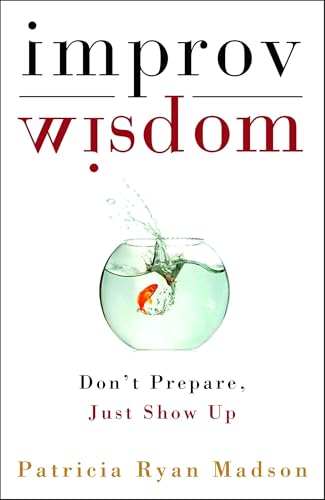
Improv WisdomBut if I can’t do improv, I can read about it. Improv Wisdom: Don’t Prepare, Just Show Up, by Patricia Ryan Madson, is a new book taking the maxims of improv and applying them to life. She asks us to “say yes” and to “start anywhere.” It is another way of looking at the world in a creative way, and the author even gives the reader exercises from improv to make her points. Sometimes her ideas seemed like a bit of a stretch, other times they seemed quite valid. It didn’t all resonate with me, but I think it would mean a lot to the people who do improv acting and follow the principles she outlines.

For me, interesting, but not life-altering. Any comments, improv buffs?

Guys Who Love to Laugh

If you read my intro, you may remember that I am thrilled when I find a truly funny book. ’Cause I love to laugh. In deference to Patton Oswalt’s bit on this topic, it would be quite disturbing to see someone laughing who didn’t love to laugh, but I do love a book that makes me Laugh Out Loud.

Having given up —again — on The Areas of My Expertise to make me outwardly chuckle, fate smiled on me by dropping this new book in my lap. Actually, the book was dropped in the return bin at the library and the cover caught my attention, but you get my drift. I started reading it Saturday night, coming out of my over-indulged, late-night, no-sleep, sucky-workday malaise to grin, then giggle, and finally LOL. I started calling bits across the room to my husband, barely able to read through my laughing. Ah, I’m With Stupid, where have you been all my life?

I'm With StupidThe full title of this book, by Gene Weingarten and Gina Barreca, is I’m With Stupid: One Woman. One Man. 10,000 Years of Misunderstanding Between the Sexes Cleared Right Up. Gene Weingarten writes a humor column for the Washington Post Magazine, and sometimes pairs up with Gina Barreca for an exchange about men and women. This book includes those columns and more. It is incredibly funny, but there are some real truths in here about men and women that make it better than just a joke book. As well as being outrageously funny, Gina Barreca is a scholar of feminism, and her intellect adds to the quality of the book.

I have one complaint. I didn’t like the last chapter because it got a little serious for the tone of the book and left me on a down rather than an up. Here’s my suggestion: Read the intro chapter, then the last chapter, and then the rest of the book. Or read the the book in order, but then immediately turn back to Chapter 4, “Men and Women are Funny, Just Not to Each Other,” to end on a high note. Nothing like going out on a high note, like... now.

For those of you who want to stay for the touchy-feely part of the post, hang on. Everyone else may go back to the preceding paragraph and leave after the word “now.”

Okay, in the last chapter the authors talk about when they are going to meet in person, which they never have done to this point. Gina is uncomfortable meeting Gene sooner then need be because she is worried how he will feel about her when he sees her and realizes that she is just average in looks and a little fat. He doesn’t care, but she doesn’t want to ruin the illusion they have of each other, the chemistry they have, with appearance. And this is the feminist scholar talking, so what hope is there for the rest of us women who worry about our appearance and our weight? Also, she talks about the nature of the man/woman friendship and how tenuous it is, which made me think about my own friendships with men and how each of those started, evolved and/or crashed and burned. So, I enjoyed this book very, very much, but it caught me off guard that it made me thoughtful about my own life and issues when I just wanted to Laugh Out Loud.

Plus, now I felt invested in these people. For the publicity of the book they did finally meet. What happened? I had to drag myself downstairs to look online, where I found Weingarten’s Post column on the topic. But at the time I was reading the book, I felt like they left me hanging, and I am a little bitter about it. Oh yes I am.

It’s Tough Out There

I got this idea to read the book Sex and the City by Candace Bushnell. I had read it long ago before I started watching the HBO show Sex and the City, and now that I have seen and enjoyed the show, I thought it would be fun to go back to the book. The book is not the same as the show. The characters and situations are taken from the book, especially the earliest shows where they would have “man on the street” interview comments interpersed throughout the show. But the show changed characters around, changed their relationships to one another, and changed some of the scenarios. All and all though, an interesting companion for fans of the show.

But what I found most intriguing about this book was how it made me feel. I envied the fun, partying life of these New Yorkers while similtaneously feeling relieved that I didn’t have to participate in these dating rituals. On the personal side, I met my husband right after college, so I never had that time after school but all on my own. There are chances you can take and mistakes you can make that are impossible when another person is involved. And that is good and bad. But reading this book just made me realize how hard it is to be... out there. And led me to read the next book.

In one of the shows of Sex and the City, one of the female characters is talking with her girlfriends — and one guy — about a less than successful date. The women reassure her that she is wonderful and of course he will call her. The guy shocks everybody by saying, “It sounds like he’s just not that into you.” This statement changes the way she approaches her relationships. Imagine, not having to analyze every little thing a potential boyfriend does. If he really, really likes her, it will show.

He's Just Not That Into YouThe idea resonates so strongly, that the guy consultant on the show — from whom the episode was formulated — writes a book entitled He’s Just Not That Into You. Now, it has been a bestseller, so I’ve never seen it at my library, but now it has been out for a while, so I go to the shelf to look at it, and lo and behold, there it is. So I spend my boring, rainy Saturday at the library skim-reading this book. And I have to say it has changed how I look at interactions that I have had with men in the past. He doesn't call you back? He’s just not that into you. He doesn’t want to drive down to meet you for lunch? He’s just not that into you. He ignores you around his friends? He’s just not that into you. In fact, I have just given away the entire book. The only advice in the book is — now say it with me — he’s just not that into you. So, why don’t men just say so? Because apparently, a man would rather gnaw off his left arm than tell you this simple truth. Single women should read this book because after the tenth question and answer posed, it does start to sink in.

And men, if you would, let me hear from you. Is it true? Is it really that simple?