105 Ways to Give a Book
Showing posts with label Reading Ideas. Show all posts

Thursday Three: Reading Help

With my kids going back to school this week, I updated this post I did at PBS Booklights about helping your child with reading during the year. It's broken it down to the three people involved in your child's reading development - the teacher, the child, and yourself. Here are ways to help each.

1. Helping the Teacher
With class sizes growing and budgets shrinking, teachers need the help of parents more than ever. While you can't present the state-regulated curriculum, any parent can help with building reading skills. If you're good at reading aloud, offer to come in and read to the kids once in a while. Better yet, ask about that state-regulated curriculum and find books at your library that can support it. When my children were studying Native Americans, I brought in folktales to read. How Chipmunk Got His Stripes is one of my favorites. When they learned about insects, I brought in Farfallina and Marcel. You can also use the storytime to bring more depth to issues the teachers don't have time to cover in class. During the 2008 election, I was happy to share Grace for President.

There may be other ways you can help if you're not comfortable being a storytime presenter. Our school had a pull-out program for children who needed a little extra help with reading. Volunteer parents would bring the kids out in the hall for fifteen minutes, select beginning reader books, read along with them, and send the books home for them to practice in the week. This take-home reading program worked very well in giving kids a little extra attention and needed very little training. Volunteer parents also came in on occasion to help the children write stories, to run small book groups, and to prepare materials.

2. Helping Your Child
Other than potty training, I've found nothing that has tested my patience on a continual basis more than the beginning reading stage. There are wonderful successes, often followed by the third laborious rendering of the word then. It can be very frustrating for both of you. So you can help your child by remembering that she will benefit most in her reading growth by mixing up the type of reading she does. Books that are easy for her will reinforce the feeling that reading can be just pure fun. Books that are in her comfort zone will give her confidence of her skills. Books that are a challenge will push her learning to the next level. In fact, while this approach seems somewhat natural for the early reading stage, it applies throughout a person's reading life even to adulthood. It is one of many reasons that kids (and grown-ups) are never too old for picture books. Please don't be one of those parents I see in the library telling their first graders that they can't bring home a "baby book." A better approach is to let that first grader bring home some books that he chooses, and some more challenging books that you choose.

3. Helping Yourself
My last sentence leads nicely to one of the main ways that you can help yourself, and that is to avoid The Reading Game. You know it. It starts with something like, "We can't tear Jacob away from Harry Potter. What is your child reading?" This parental competition starts early ("Lizzie was smiling at us at two weeks) and goes on ("Jamal made All-Stars again!") and on ("Well, Reggie is going to Harvard, but I'm sure that's a good school too."). You'll find the competition in many factors of a child's growth, but verbal skills and reading level seem to dominate. In all my years as a parent, no one has ever asked me if my kids can do long division or sing in tune or climb a tree. But from the first year, I've been asked to compare what words they were saying and then what words they recognized and then what words they were reading until it was all about reading and levels and books.

There is only one way to win this game, and that is not to play. Don't let yourself get sucked into the competition, don't let yourself feel bad, and don't let yourself push your kid based on these conversations. Also, don't let yourself get too proud either, because kids have a way of surprising you. My oldest daughter had a slow start to reading, made methodical progress in first grade, and suddenly made a huge leap in reading level. Now she's looking at Ivy League schools. My younger daughter started reading at four years old and plodded along thereafter. In high school, she's still not much of a reader, yet can memorize scripts almost instantly. My point is that The Reading Game is pretty meaningless anyway, so it doesn't pay to take it seriously.

To be fair, there are a lot of honest exchange between parents about what their kids are doing that is helpful in knowing when to give a little push and when to wait it out. But I trust that you know the difference. One makes you feel connected to another mom or dad, and the other makes you feel like a failure as a mom or dad. Looking for those connections and avoiding those competitions will be one of the best ways that you can help yourself.


Links to material on Amazon.com contained within this post may be affiliate links for the Amazon Associates program, for which this site may receive a referral fee.

Thursday Three: Reading Games

When my kids were little, I wanted to get them ready to read in a fun way. I looked to all the right books for activities. But if I decided to have my daughter write letters in a cookie sheet covered with shaving cream, I knew that the doorbell would ring and I'd return to a overturned tray on the good carpet and a preschooler with foamy cheeks declaring herself to be Santa Claus. Not like that happened or anything.

Anyway, there were tons of great ideas to introduce reading concepts, but I didn't need great ideas - I needed easy ideas. I have all sorts of respect for the moms who take Junior around photographing items to make a personalized alphabet book with a laminated cover. However, I was a bit energy-challenged, that is to say, lazy, and these are some games that worked for me.

1. Easy ABC's
Maybe the shaving cream thing seems a bit involved, but there are many easy opportunities to learn the alphabet. Going to the beach? Take turns drawing letters in the sand and watch the waves wash them away. Need to get outside? Grab a big paintbrush and a bucket of water and "paint" letters on the sidewalk. Stuck coloring again? Draw multicolored letters for your preschooler to name or decorate. When my three year old niece was crazy about erasing things, I wrote letters lightly in pencil and let her erase them after she named them. She also liked scissors, so I drew words for her to cut out. Look for little chances to toss in some ABC's.

2. Storytelling 101
"How was your day, dear?" sounds cliche, but not to a preschooler. Take time to talk about the day's events. What did we do today? Then what did we do? Help your child find the words to describe his day and tell his story. Of course, you can also add some fun elements of your own. A phrase like "Is that when the dancing elephants came in?" can take the story in a whole new direction. Sometimes it can even thwart an oncoming case of the grumps. For reading readiness, it helps with sequencing.

3. Rhyme Time
Even with my daughters as teenagers, we still make up silly rhyming songs. We're just better at it now. But preschoolers won't judge your imperfect rhymes. In fact, the sillier, the better! Work together to think of the next line as you drive to the grocery store. Giggling is encouraged. While you're checking out, you can try my other favorite rhyme game. Pick a word and figure out which words rhyme with it. You can let them come to you, or you can go through the alphabet sounding out each letter. So, rose leads us to explore b-b-bows and d-d-does. This little time-killer works with phonics and stores up some rhyming pairs for your next silly song session.


Previously posted at PBS Booklights.

Thursday Three: Traveling Books

For me, summer means car trips and lots of them. Our family has gone the portable DVD player route at times, but the girls generally listen to music, read their books, or play Nintendo. But since they were little, we’ve always had some different kinds of books at hand for when traffic takes its toll or the batteries die.

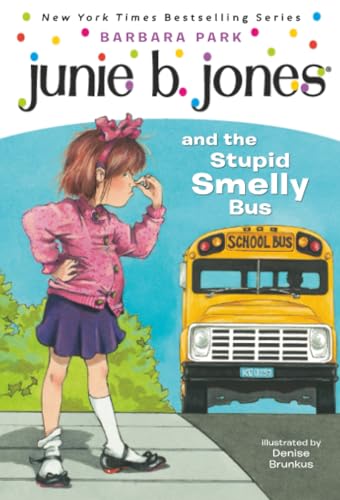
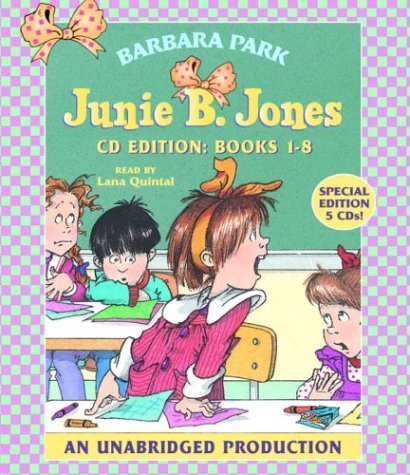
Audiobooks are great for passing the time in the car and feeling like you got some book reading accomplished. I’ve found that the ones that hold our attention are either funny, adventurous, or familiar. With younger kids in the car, it can be difficult to find the book that works for everybody, so compromise must be employed. Personally, we’ve had the most success with the Junie B. Jones series. The books are funny, the reader is great, and the stories are familiar. It’s also helpful that each book is only about thirty minutes of listening time, so they are perfect for that last hour of a trip when everyone is getting cranky. For older kids, I’d also recommend A Series of Unfortunate Events, read by Tim Curry. Again, these work best when you already know the story as it makes it easier for everyone to follow along.

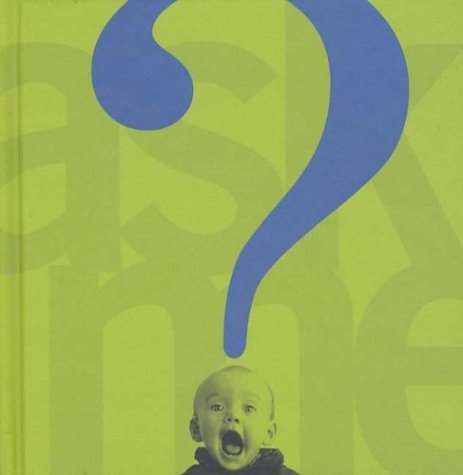
Question books can turn a long car ride into a wonderful opportunity to share stories and memories. Not sure what a question book is? Well, I may be making up the genre, as I’m only aware of two such titles for kids, but both are excellent. Ask Me features an interesting photograph or illustration on one page and a question on the other. Questions like, “What do you wish you could do really well?” and “Where do you like to hide?” Another title, Could You? Would You? by Trudy White, features whimsical drawings along with the questions. Sometimes the questions are offered alone, like “Would you like to dance with animals or look at plants?” But many times include follow-up questions or a few ideas to start you off. So, “What makes you smile?” lists pineapple and big goldfish in a pond. Both books are wonderful to start you talking to each other.

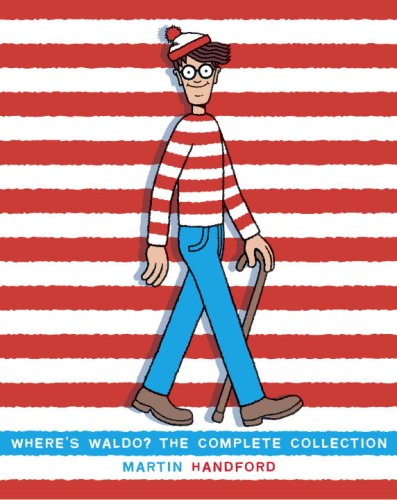
Find-It books are very popular, at least if my library requests are any indication, but a car trip is the perfect place for them. You may buy yourself a reasonably quiet hour only punctuated by an occasional “Found it!” The Where’s Waldo? series is famous, and the I Spy series by Jean Marzollo isn’t far behind. I’ve also seen these types of books for TV shows and movies, ocean life and museums. I keep one in the car at all times, because you never know when even a short trip can go terribly wrong — especially if you live in an area where the famous Beltway is involved.

(This post was previously published at PBS Booklights.)

Links to material on Amazon.com contained within this post may be affiliate links for the Amazon Associates program, for which this site may receive a referral fee.