105 Ways to Give a Book
Showing posts with label Cybils-nominated FPB. Show all posts

Cybils Finalists 2013

It’s New Year’s once again — and that means it’s time for the 2013 Cybils Finalists! A lot of great books on this year’s shortlists, but I want to take some time to call out the ones from my Fiction Picture Books committee:


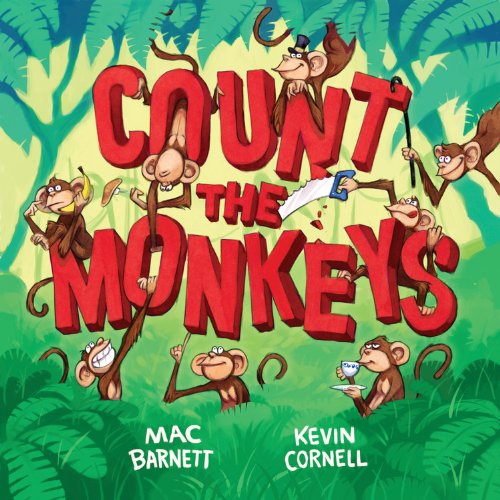
Count the MonkeysCount the Monkeys
by Mac Barnett

Disney Hyperion, 2013

Looking at the troop of monkeys on this cover, young readers may be in for a bit of a surprise as they begin to turn the pages. Where did all the monkeys go? No need to fret, though, for each page brings a new (and increasingly ridiculous) possible factor in their disappearance. Expect a rowdy story time experience with this hilarious, unique addition to the counting book genre.
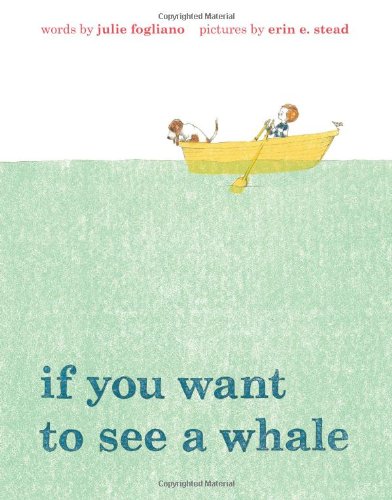
If You Want to See a WhaleIf You Want to See a Whale
by Julie Fogliano

Roaring Brook, 2013

There’s a lot going on beneath the peaceful surface of this slow-building, contemplative deep blue sea of a picture book. As a small boy meanders toward his goal of seeing a whale, he must decide whether or not to pause in order to investigate insects, roses, smiling pelicans, or other things that are not whales. The deliberate pace, simple word choice and list-like structure mimics process writing, but unpredictable, stuttering line breaks undermine the authoritative tone with a jazzy rhythm. Charming, textured illustrations by Caldecott Medal winner Erin Stead subtly rock the boat — balanced, yet always with an off-kilter, asymmetric element, and sometimes revealing the boy’s actions to be at odds with the prescriptions of the text. Is this book about achieving a goal? Or about observation? It is certainly fertile — and beautiful — ground for conversation.
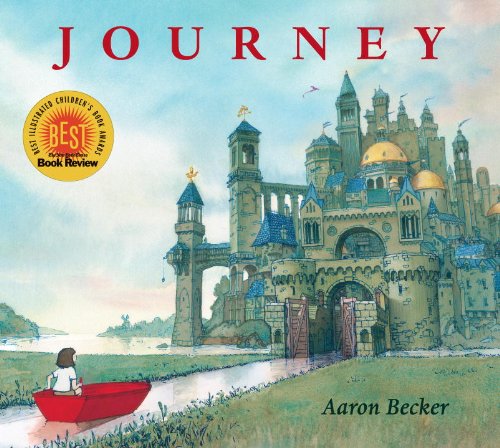
JourneyJourney
by Aaron Becker

Candlewick Press, 2013

With a subtle nod to Harold and his purple crayon, a bored young girl draws herself a door into a magical world using a red crayon she finds on her bedroom floor. Lush and detailed double page spreads draw the reader into the imaginary world, while well placed panels of action sequences along with picture clues lead the reader through this wordless adventure. Like the magic in the story, additional details seem to suddenly appear on re-reads, rewarding readers who are sure to take the Journey again and again.
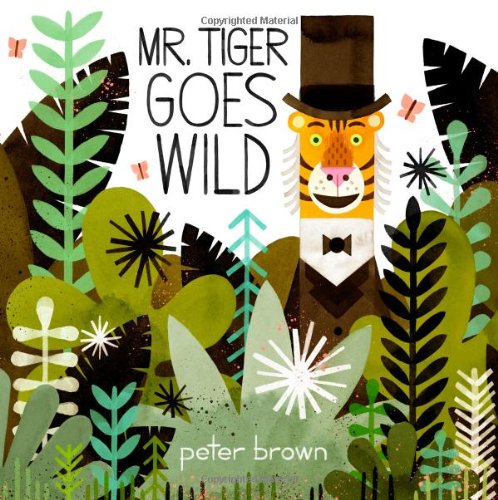
Mr. Tiger Goes WildMr. Tiger Goes Wild
by Peter Brown

Little, Brown, 2013

Claiming Mr. Tiger Goes Wild is, perhaps, his most autobiographical book to date, Peter Brown shares a story about a tiger, growing up in a prim and proper place, who looks for that appropriate place to release his wild side. Once sent into the wilderness where being wild is most appropriate, Mr. Tiger feels lonely, misses his friends, and makes the decision to return and settle in to his own unique style. He decides to be himself. This story resonates with readers and celebrates an author-illustrator who is fully in charge of both brush and pen. Brown writes slim, allows art to support and carry the story, and paces this story well. Rhythm, repetition, and dramatic, comedic action on each and every spread beg for interactive attention to the details of story. Parallel house images, parallel text in the before and after of his “wild” and the repetition of one word: ROAR! make this book a performance kids will scream to experience again and again.
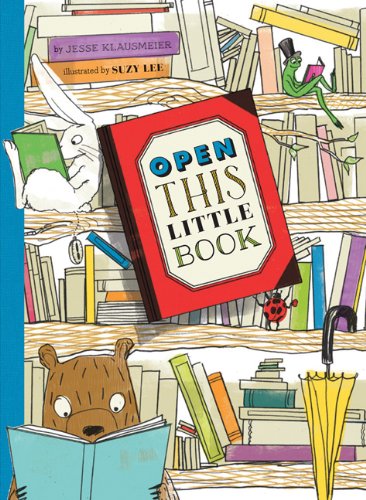
Open This Little BookOpen This Little Book
by Jesse Klausmeier

Chronicle Books, 2013

In an era of enticing digital media, here’s a book that celebrates the magic of paper and ink. A ladybug opens her little red book, and inside is nested a frog’s even smaller little green book, and so on through a series of quirky creatures until we arrive at the tiniest book of all — which happens to belong to a friendly giant, who will need a reader’s help to turn the itty-bitty page. With gorgeous, whimsical, richly detailed illustrations, this charming story pulls young readers right into the action, and may very well inspire them to create little books of their own. The final drawing of the animals curled up among stacks and stacks of books is an irresistible invitation to dive into another tome — or to turn back to the beginning and enjoy this one all over again.
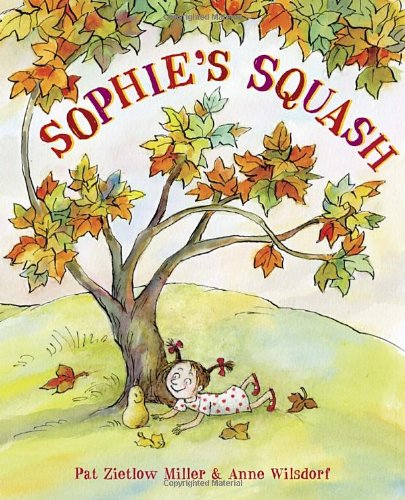
Sophie’s SquashSophie’s Squash
by Pat Zietlow Miller

Schwartz and Wade Books, 2013

Which came first, the text or the illustrations? It’s difficult to tell in this picture book because the two work so well with — and off — each other. The story (created by both text and art) is tender and funny with a big dose of comfort. Kids, who so easily grant inanimate objects the ability to feel emotion, will relate to Sophie’s attachment to a butternut squash with a magic-marketed face. Parents will love the inside jokes (ex., mom prepares to make squash for supper, but after learning Sophie has named her squash Bernice, says she’ll “call for pizza”). The story smoothly transitions over time as Sophie’s fresh squash begins to soften, becomes planted, sprouts in spring, and grows two new butternuts that, as Sophie declares, “look just like your mom.” It’s a contemporary book with an old-fashioned storytelling feel that can be read again and again with pleasure.
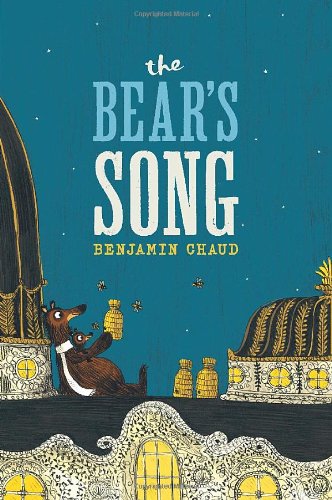
The Bear’s SongThe Bear’s Song
by Benjamin Chaud

Chronicle Books, 2013

First sight of this book hints at its uniqueness with the large format bathed in deep colors and intricate illustrations. The Bear’s Song, by Benjamin Chaud, is a gorgeous French import with spare narrative text and humorously packed illustrations that have an almost Where’s Waldo? characteristic in a more sophisticated flair. Chaud’s lightly clever narration follows Papa Bear as he attempts to track down his bee-following Little Bear through forest and city, busy streets and bustling opera house; until a final hilariously misunderstood, climactic performance by Papa Bear clears the stage for an endearingly cuddle-worthy ending. The Bear’s Song begs for rereads; moves with powerful, yet lilting pacing; and invites lingering over each scene to relish the many added details as well as help spy on the trail of that adventurous little bear.

Links to material on Amazon.com contained within this post may be affiliate links for the Amazon Associates program, for which this site may receive a referral fee.

Poetry Friday: Brother Sun, Sister Moon

We praise you that in this world of hatred and war,
You still give us courageous brothers and sisters
who offer their lives to the making of peace.
They are indeed your beloved children.

— from Brother Sun, Sister Moon
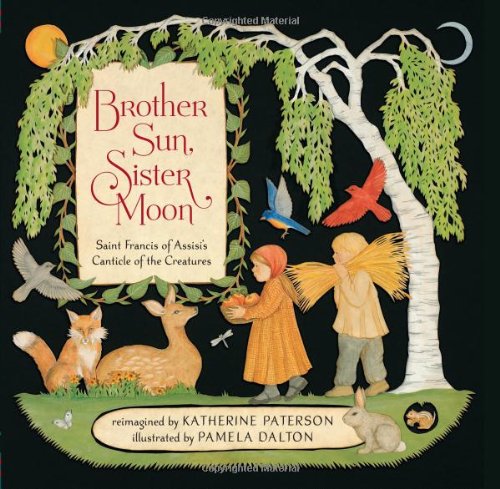
Brother Sun, Sister Moon: Saint Francis of Assisi’s Canticle of the Creatures
written by Katherine Paterson, illustrated by Pamela Dalton

Chronicle 2011, review copy from publisher

Brother Sun, Sister Moon: Saint Francis of Assisi’s Canticle of the CreaturesThe Canticle of the Creatures is elegantly reworked in accessible phrasing with detailed cut-paper illustrations. One word review: Gorgeous. Two word review: Gorgeous gratitude. The levels of beauty continue to surprise me, but I’ll admit that the book requires a patient reader. That seems like a hard sell for a picture book, and yet I see the need for this book. First in a religious context, where too often the quality of the work is lacking in favor of the message. Here we have both, with the text invoking God with sublime poetry and imagery. Fire is praised for the warmth it gives “and in whose resplendent dancing light we glimpse your playfulness.” At the same time the stunning illustrations take us through a story where wood is chopped to build fires for warmth and to bake bread. And in the artwork lies the second need for the book: an invitation to slow down. There’s a sensibility to the delicate cut-paper work where willow branches bend to the force of the wind or bow in a border echoing the downward flow of the water that begs for deliberation. In stopping to appreciate the scenes, the reader has the opportunity to absorb the words of gratitude. In a picture book age of broad strokes and quick page turns, Brother Sun, Sister Moon makes an appeal for an unhurried approach, a mindfulness within its pages that extends to the natural world beyond. Exquisite.

Poetry Friday is hosted today at Teaching Authors.

Links to material on Amazon.com contained within this post may be affiliate links for the Amazon Associates program, for which this site may receive a referral fee.

Cybils FPB Nominees: Over in the Meadow

Over in the Meadow
illustrated by Jill McDonald, sung by Susan Reed

Barefoot Books 2011, review copy from library

Over in the MeadowIf you have young kids or work with young kids or ever had or worked with young kids, you’ll know the song “Over in the Meadow.” You are also likely to know of at least one picture book adaptation. If you are a librarian, you certainly know about many. Therein lies my only real complaint about this book, being that I’m not sure that we needed another one. The illustrations are bright, cute and were created “digitally using collected and painted papers.” That’s from the endnotes which I very much appreciated, as I would like something in every picture book that talks about the medium of the artwork. (Send message.) The last pages of the book contain a little information about meadows and each animal featured — which are mostly the standards, with a bit of switching to include sheep instead of frogs and mice for crickets. Like many other versions, this one includes the music notes for those among us who want to play along and has a CD with an upbeat, country sound. Overall, it’s a cute enough book; I’m just not sure if it was necessary.

Links to material on Amazon.com contained within this post may be affiliate links for the Amazon Associates program, for which this site may receive a referral fee.
Thursday Three: Bitchy Version

The Picture Book Manifesto said that picture book authors and illustrators “need more robust criticism” and I’m feeling bitchy anyway, so here goes.

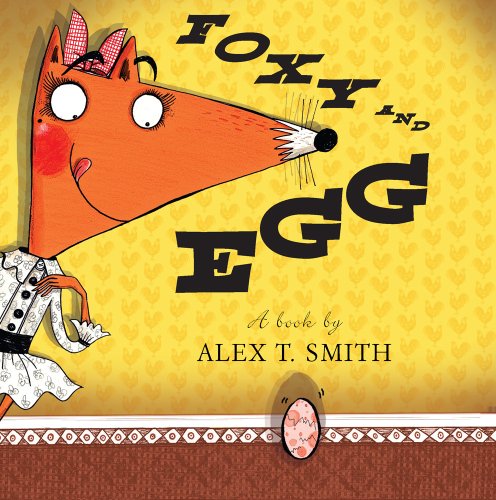
Foxy and Egg
by Alex Smith

Holiday House 2011, review copy from library

Foxy and EggAn egg visits Foxy, who hopes to fatten it up to eat the next day but gets a big surprise instead. Okay, it’s an egg visiting. An egg. An egg doesn’t visit or fatten up or play parlor games for exercise. It doesn’t grow huge overnight to crack open as a full-grown crocodile. Because it’s an egg. I’m getting that this is supposed to fall into the realm of the silly, but doesn’t pull it off and just seems like a dumb concept from the start. Maybe the story was supposed to be a takeoff on the crocodile and the hen folktale, which actually makes sense and is done quite well in Mrs. Chicken and the Hungry Crocodile. Honestly, I’m not crazy about the mixed media illustrations either, but it’s the story here that lacks cohesion and loses me at the first premise with that stupid egg.

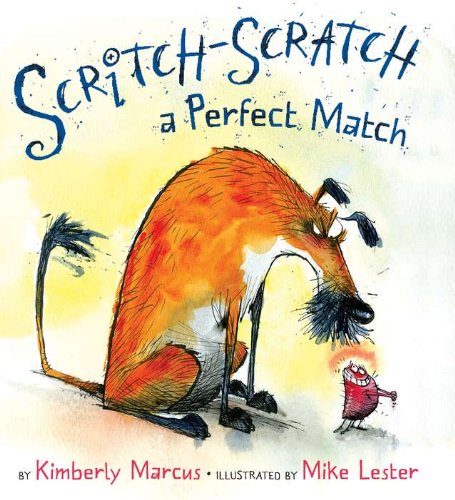
Scritch-Scratch, a Perfect Match
by Kimberly Marcus, illustrated by Mike Lester

Putnam Juvenile 2011, review copy from library

Scritch-Scratch, a Perfect MatchA flea biting a dog sets up a series of events that brings the dog to an owner and an innocent cat to harbor the flea. The story was slight and yet fairly illogical. Why does one flea drive this dog insane? Why does a random person feel the need to take care of this dog that just knocked him in the mud? What did the cat ever do to deserve this? The rhyming verses weren’t great either, as rhyming verses rarely are. But the illustrations seem ill-conceived for a picture book, being, well... ugly, with huge noses, bulgy eyes, and exaggerated expressions. The pen-and-ink outlines are surrounded by unfocused explosions of color in a distracting way that sometimes makes it hard to tell what is pictured. I’ve liked this illustrator in Ninety-Three in My Family, but this title misses the mark. The text might have squeaked through with more charming illustrations, but neither here can save the other.

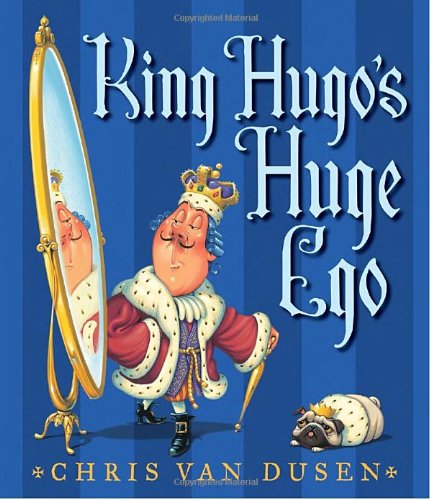
King Hugo’s Huge Ego
by Chris Van Dusen

Candlewick 2011, review copy from library

King Hugo’s Huge EgoA king with a huge ego pushes a maiden out of the roadway, causing her — as a sorceress in disguise — to put a spell on him to have the size of his head reflect his arrogance. His head grows so big that it catches the wind and blows him away from the kingdom to the feet of the girl, who deflates him with knowledge of his wrongdoing. His instant regret of his actions makes her fall in love with him and marry him. The End. Obvious message? Check. Rote ending? Check. Bad rhyming? Check. And let’s add the image of the king’s head growing grotesquely large as an image that nightmares are based on. I may be alone in my dislike of this title given the Amazon reviews, but again, I like the author/illustrator’s other books — like The Circus Ship — far more. I was really ticked that the maiden married the king, because yeah, that’s how fairy tales end, but this was no fairy tale. Better she become his therapist at an outrageous hourly fee and buy her own manor. Woman power!

Links to material on Amazon.com contained within this post may be affiliate links for the Amazon Associates program, for which this site may receive a referral fee.
Cybils FPB Nominees: Monsters

If you are heading to the library now for your Halloween books, you are likely out of luck. Those Halloween-themed titles are long gone. But all is not lost if you expand your search to books about monsters:

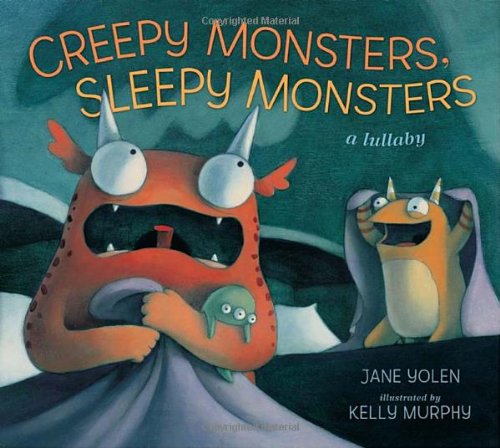
Creepy Monsters, Sleepy Monsters
by Jane Yolen, illustrated by Kelly Murphy

Candlewick 2011, review from library copy

Creepy Monsters, Sleepy MonstersA simply worded lullaby about monsters everywhere will captivate young readers. The rhyming text is sparse, putting the attention on the perfectly detailed illustrations. And perfect they are, being both a bit creepy and cute at the same time. The soft palette and gentle acrylic paintings make even the multi-eyed monsters adorable. The friendly expressions and familiar settings — like playgrounds, kitchens, and bedrooms — keep it sweetly accessible, even as the monsters chow down on worm sandwiches and burp in bed. As a read-aloud book it’s distracting that the last sound doesn’t rhyme, given the carefully constructed couplets throughout. Given the “Grrrr” it seemed logical to have a monster cat give out a calming “Purrr” at the end instead of the standard sleepy sound, “Zzzzz.” A quibble perhaps, for a nice monster/bedtime book.

Check out an earlier post for more monster picture books to find when the Halloween pickings are low.

Links to material on Amazon.com contained within this post may be affiliate links for the Amazon Associates program, for which this site may receive a referral fee.
Cybils FPB Nominees: Dots and Squares

Sure you can fill your picture book with all sorts of fancy art, but there are others who take a simpler approach. And it’s hard to get more basic than a dot and a square.

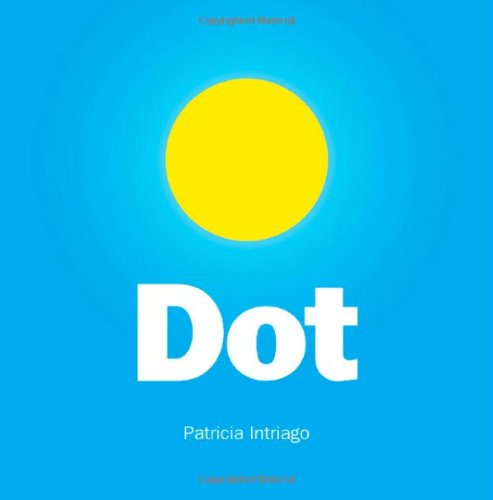
Dot
by Patricia Intriago

Farrar, Straus and Giroux 2011, review copy from library

DotGraphically bold, the simple dot is used to illustrate concepts and opposites. Starting with color changes of the stoplight to show stop and go dots, the design becomes conceptual to describe other ideas. The loud dot has a big pie shape cut out to represent an open mouth while the sad dot is shaped like a teardrop. A few photo images make appearances to show hands poking the hard and soft dot, and then a clearly dotted dalmatian and a not-dotted zebra. The text doesn’t always rhyme or follow a rhythm. That, along with the surprising change to photos in the two spreads, marred the book’s consistency for me, though I can see how others would appreciate those touches that leave the reader a bit askew. In all, a decent early concept book, but not one that I can imagine becoming a much-loved title.

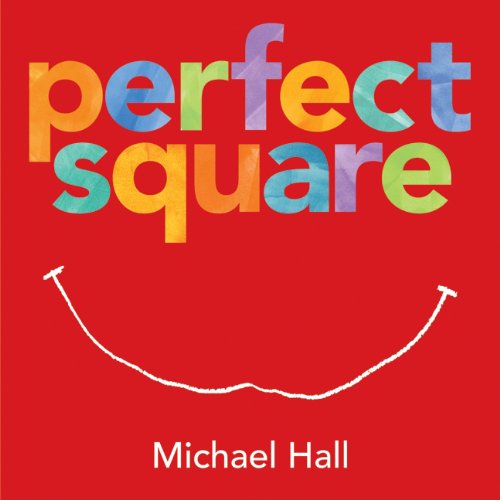
Perfect Square
by Michael Hall
Greenwillow Books 2011, review copy from library

Perfect SquareThrough a week, a perfect square goes through transformations, becoming cut, torn, shredded, shattered, snipped, and crumpled. Many squares would get annoyed at this treatment, but this square makes the best of it by turning itself into lovely pictures of flowers and mountains and such. At the end, the various pictures come together into one story in one imagined scene of all the colors of the rainbow. Personally, I would have liked to see the whole scene put together at the end — though I can guess that it wasn’t so easy. Also, I was confused by the idea that it was “a” perfect square. How does one square get pulled apart each day and also change color? I may be over-thinking here, but it did annoy me. But I’m peevish that way.

Links to material on Amazon.com contained within this post may be affiliate links for the Amazon Associates program, for which this site may receive a referral fee.
Cybils FPB Nominees: Cats

As I negotiate the peace between our old cat and our new cat, I’m probably particularly attuned to the feline nature. Though really, I’m always a sucker for picture books about cats, and these two Cybils-nominated titles set me purring. Figuratively, that is.

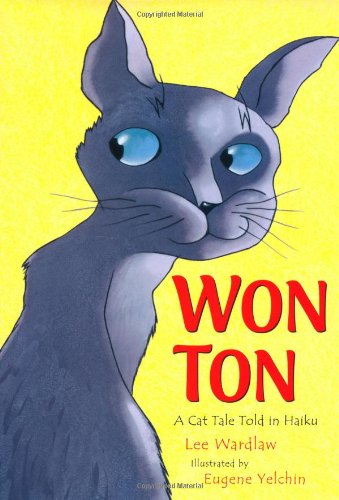
Won Ton: A Cat Tale Told in Haiku
by Lee Wardlaw, illustrated by Eugene Yelchin

Henry Holt and Co. 2011, review copy from library

Won Ton: A Cat Tale Told in HaikuThis isn’t your schoolroom haiku. Or even technically haiku, which focuses on nature and seasons. But here the author notes that we are looking at a series of senryu, a form that focuses on human nature. Or cat nature. In the book we are introduced to a lonely shelter cat, lean and longing, who gets a home and adjusts to his new surroundings with the typical practiced nonchalance and semi-disdain exhibited by the feline. “Hel-looo. I’m waiting/Put down that pesky pencil/and fetch the catnip.” Poems cover fishy breath, scratching furniture, and hairballs along with the cuter aspects of cats. The illustrations keep the focus on the feline, tuning out the backgrounds in soft colors, and capturing the essence of each poem and its subject. The sparse text will make it suitable for reading aloud to preschoolers, but the subtleties of the poetry will take the title well into elementary school with fun for all along the way.

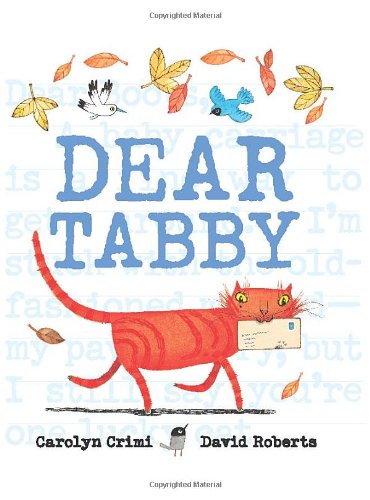
Dear Tabby
by Carolyn Crimi, illustrated by David Roberts

Harper Collins 2011, review copy from library

Dear TabbyAn alley cat sets up an advice column for animals, responding to the problems of a parrot, the distress of a dog, and the grumblings of a groundhog — among many other animals. Tabby D. Cat gives good suggestions, some of which could apply in broader, human situations — touching on listening, acceptance, and gratitude. Other than some puns, the advice itself isn’t silly, with the humor conveyed in the situations, the illustrations, and the ultimate resolutions. In the end, the advice offered to one overly pampered cat brings the helpful tabby a new home. Animal lovers of all stripes will appreciate the clever scenarios and engaging pictures. With a fair amount of text and lots to enjoy on every page, this book is a great choice for elementary school kids. Adult readers may also appreciate the actual advice, which ends the books with this letter to a mournful dog: “Well, sometimes happiness is right there beside you. You might even be passing it on your daily walk! But a lot of times you have to make happiness happen. Sniff it out, hunt it down, dig dig dig until you find it.” Good words for all of us!

Links to material on Amazon.com contained within this post may be affiliate links for the Amazon Associates program, for which this site may receive a referral fee.