Well, that was some kind of week. Awards and a controversy. Honestly, it was too much for me to take in, much less write about. Plus I didn’t know what to think, and in a way, I still don’t.
Everyone can agree that what Bloomsbury did with the Magic Under Glass cover was a big bowl of wrong. I mean, didn’t we just have this conversation with the same publisher? It’s maddening, if not insulting, for them to ignore the whole issue again. And it’s appropriate that they’ve at least acknowledged the error by changing the cover of the book.
Except, I don’t feel good. I guess I feel a little pleased that bloggers can affect change in the publishing industry, but mostly I don’t feel good.
In fact, I feel bad for the author who poured her heart into her first book, chose to feature a woman of color as the main character, and then found her book in the middle of a fight. And now her book’s release will be delayed as Bloomsbury tries to do the right thing by the cover. It’s not the author’s fault, but she has to suffer the consequences.
I don’t feel good that book bloggers were tossed in the mix of blame for not noticing or reporting on the cover earlier. That argument assumes that (a) lots of bloggers get early copies, (b) the bloggers actually read that book of all the books they get, (c) in reading that book they notice the cover, and (d) they feel like reviewing the book. Book bloggers — we’re all on the same team here.
I certainly don’t feel good that this is the only approach we can take to make publishers put diverse characters on the book covers. We have to catch them and make them do the right thing? That’s not a well-working strategy for any of us.
I don’t feel good that we spent the week on this issue — even if we had to spend the week on this issue — instead of getting to sit back and enjoy the ALA Youth Media Awards. This was their week. But instead of discussions, we got quick lists of winners and then we were back to the controversy.
And in that same vein, I don’t feel good that instead of talking about books that feature people of color from the Coretta Scott King and Pura Belpré awards, we spent the week talking about how we’re not talking about books that feature people of color.
Where does that leave me? Well, in the places where I disagree on methods or strategy with Susan or Doret or Ari, I am grateful for their intensity and vulnerability, which keeps us all aware and energized. I thank Colleen for following the discussion with genuine passion, but also an intelligent focus on the issues rather than the distractions. I thought Leila did a wonderful job of breaking down the discussion and giving a viable course of action — to write the publishers directly and express our concerns/dismay/outrage. And I appreciate Liz Burns’s thoughts on accountability — that by putting our voices out there as book bloggers, we aren’t just making a list of books we like, but have a greater responsibility to feature diverse books.
In the end, I want to take this week with me — the good and the bad feelings of it — to make me a better reader, blogger, and advocate. I trust that our fantastic community of bloggers can continue the dialogue, but I also hope that we won’t have to have this exact conversation again. I’m looking at you, Bloomsbury.

Showing posts with label Liar. Show all posts
Showing posts with label Liar. Show all posts
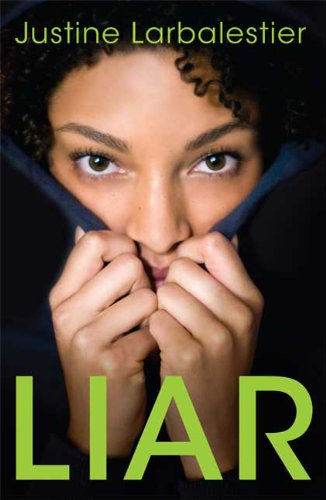 As reported in Publishers Weekly, Bloomsbury has replaced the controversial cover for Liar, even going through the trouble and expense of a new photo shoot. Victory is ours!
I’d like to thank the academy...
No, but really I would like to give a tip of the hat to many participants in this campaign.
First of all, us. Bloggers brought the issue out to the forefront with posts like that of Editorial Anonymous. As the controversy became known, bloggers wrote about the problem with support for the author’s honesty and distaste for publisher’s decision. Chasing Ray collected a long list of excerpts from blog posts to make it absolutely clear that this was, indeed, a Big Deal. Now, we’ve proven that bloggers matter — and quite a lot.
Justine Larbalestier wrote an amazingly honest and brave post about the cover, saying that she argued for a different representation but ultimately had no say in the decision. I was awed by her courage in speaking out, and appreciated her dilemma in challenging her own title and publisher. With the support she’s received, I know that she will enjoy a best-selling book that is true to her vision. I also suspect that she’ll be branded with a lifelong reputation for the greatest integrity.
Authors win a second look from publishers as a voice on book covers. I don’t expect a final say to be on the table for writers. Not at all. But I do think that publishers may listen a little bit harder when authors speak out about their covers, especially when it involves the color of the character’s skin, or say, a cover that by its very being affects the interpretation of the book to the point where it tears the narrative to shreds. Or something like that.
The victory also goes to authors and illustrators of color who have been fighting against racial bias in cover art for far too long. This particular battle was fought by many amazing book bloggers who focus on books with diversity, but I’m giving the win to Color Online. Through it all her voice was ever present and ever engaging, challenging us to write more, fight harder, and change sooner.
Many, many authors, illustrators, bloggers, and readers contributed their messages, opinions, and support. It made a difference, and hopefully one that will reach even farther than this one book.

How great that Young Adult Literature is being featured on Boing Boing. What a shame that it’s for Bloomsbury whitewashing the cover of Liar.
 In Liar, the main character is black with short, “nappy” hair. The cover shows a white girl with long brown hair. It’s striking, but wrong. Though other options were presented, Bloomsbury prefers to use photos on their book — but apparently not of an African American. Author Justine Larbalestier wrote an amazingly honest and brave post about the cover, saying that she argued for a different representation but ultimately had no say in the decision. She’s heartbroken that the reader’s interpretation of the book is being affected, as Micah is a compulsive liar, and the cover is making it seem like even her self-identity is in question. The publishers gladly embraced that notion in Publishers Weekly. The problem with that interpretation is that it makes the book almost unreadable if we can’t hold onto anything as truth in the story. I know about the unreliable narrator concept, but the idea that every aspect of the book is subject to question is taking the idea too far. And wasn’t at all what the author intended.
I’ve read the book. The first time, I’ll admit that I didn’t think about the cover at all, and I enjoyed the story immensely. It’s an interesting and thought-provoking book that challenges the reader to interpret reality. I talked about the book with someone who wondered if the cover represented the character lying about her appearance — meaning that everything in the book could be a lie. So I read it again with that in mind and could barely get through it trying to find some solid ground to believe in.
My point here is that they messed with the wrong book, because the whitewashed cover is changing the interpretation of the story, and that’s a problem. It looks like they’ve also messed with the wrong author, give her strength. And one can hope that they’ve messed with the wrong community of authors, bloggers, librarians, and readers who can argue for racial equality on our book covers.
With today being Poetry Friday, let me share a very appropriate poem by Langston Hughes:
In Liar, the main character is black with short, “nappy” hair. The cover shows a white girl with long brown hair. It’s striking, but wrong. Though other options were presented, Bloomsbury prefers to use photos on their book — but apparently not of an African American. Author Justine Larbalestier wrote an amazingly honest and brave post about the cover, saying that she argued for a different representation but ultimately had no say in the decision. She’s heartbroken that the reader’s interpretation of the book is being affected, as Micah is a compulsive liar, and the cover is making it seem like even her self-identity is in question. The publishers gladly embraced that notion in Publishers Weekly. The problem with that interpretation is that it makes the book almost unreadable if we can’t hold onto anything as truth in the story. I know about the unreliable narrator concept, but the idea that every aspect of the book is subject to question is taking the idea too far. And wasn’t at all what the author intended. I’ve read the book. The first time, I’ll admit that I didn’t think about the cover at all, and I enjoyed the story immensely. It’s an interesting and thought-provoking book that challenges the reader to interpret reality. I talked about the book with someone who wondered if the cover represented the character lying about her appearance — meaning that everything in the book could be a lie. So I read it again with that in mind and could barely get through it trying to find some solid ground to believe in.
My point here is that they messed with the wrong book, because the whitewashed cover is changing the interpretation of the story, and that’s a problem. It looks like they’ve also messed with the wrong author, give her strength. And one can hope that they’ve messed with the wrong community of authors, bloggers, librarians, and readers who can argue for racial equality on our book covers.
With today being Poetry Friday, let me share a very appropriate poem by Langston Hughes:
A Year of Reading is hosting Poetry Friday. Chasing Ray is collecting blog posts about Liar.I, Too
I, too, sing America.
I am the darker brother.
They send me to eat in the kitchen
When company comes,
But I laugh,
And eat well,
And grow strong.
Tomorrow,
I’ll be at the table
When company comes.
Nobody’ll dare
Say to me,
‘Eat in the kitchen,’
Then.
Besides,
They’ll see how beautiful I am
And be ashamed —
I, too, am America.




 Posts