105 Ways to Give a Book

Thursday Three: Poetic Ideas

As we wrap up National Poetry Month, let’s talk about bringing more poetry into your child’s life.

1. Read It: Next time you’re at the library, take a turn into the poetry section. Most likely you’ll find it under Dewey’s famous decimal system at either 811 (for single author) or 808 (for collections). While poetry books may have been limited when we were growing up, the choices now are amazing. There are collections about cats, oceans, sports, friends, apologies, and world records. You’ll also find styles and forms just as varied, along with a broad illustrative range. It’s a new day in children’s poetry compared to what you might remember as a somewhat stale past. Take a chance and bring some home for your nightly reading time.

2. Write It: Inspired by the poems you read, try your hand at writing a few. Don’t worry about perfection or natural talent. Simply have fun with words. With your child, play with rhythm and rhyme to make up some silly poems. If they don’t really make sense, maybe they’ll make you laugh. I amused my three-year-old niece with a quick ditty about a little black dog that was running down the street, with a baseball cap on top of his head and sneakers on his feet. From there, we could have looked at the rhyming word family of “feet” (note: Learning Alert) or come up with a new story. (As it was, we turned into Applebees.) Another easy form to investigate is the haiku with its three line, 5-7-5 syllables format. It’s surprising how many lovely turns of phrase can be changed slightly to fit the form. Or:
Changed slightly to fit,
Many lovely turns of phrase
become the haiku.
And I didn’t even try there to get the original sentence to work. Okay, technically there is more to the haiku than syllables, but for fun think what could be done with your child’s observations about clouds, spiders, or crayons.

3. Find It: Once you start to look, you’ll find poetry all around. Song lyrics come through more clearly as poetry. (Well, some at least. I wouldn’t suggest the works of Lady Gaga as being rich in material, though “want to take a ride on your disco stick” may be one of the best phrases ever crafted.) Picture books can be poetic, even when they aren’t categorized as poetry. Phrases you hear on the playground or words you see at the store, fragments of lists or sentences of novels can spark your imagination. You could tuck those pieces away for a future poetry venture, or acknowledge them in the moment and let them go. But truly, allow yourself and your child to recognize the magical and musical quality of words, because that is poetry.
Category: 2 comments

Notes from a Drama Mama

What happens on Wednesdays stays on Wednesdays.

This week both of my girls are engaged in the theater. In fact, though one of them is still in sixth grade, she is playing a child in one scene of the play opening tomorrow. The teen doesn’t have a speaking role, which isn’t surprising for a freshman in a huge high school, but is the understudy for the lead.

The lead who was sick yesterday in the middle of the dress rehearsal.

Teen and I were up late last night preparing for the possibility — now much more real — that she will live the famous statement, “the show must go on.” And yet, she also may not. Actors recover, dig deep, and go on anyway. Thus is the anxiety and thankless task of the understudy. I have to say that I’m not even sure what to wish for. I’d love to see her get a chance, just one performance, and at the same time I know how scary that would be for someone who hasn’t had the practice onstage. I’ll let you know what happens.

For me, today I’ll be selling tickets at school, running carpool for actor kids, and later making cookies — hopefully with bite marks in them. Oh, I need to mention that the play is Dracula. Cool, huh? Here’s the teaser trailer that teen made for the morning announcements. It’s had the school abuzz. Enjoy.

UPDATE: OMG! Teen is going on today as the female lead in Dracula! It’s the final dress rehearsal/faculty performance, not a ticketed show. But, damn! Send good thoughts!

Prizes! Prizes! Prizes!

Today might have been TeenReader Tuesday, but the teen’s been in endless rehearsals for the high school play and hasn’t had time to read anything but her school assignment, A Tale of Two Cities. Asked to summarize her review of that book so far, she was able to do so with two words:
Hate. It.
Moving on, I’m still in the pre-announcement phase of the 48 Hour Book Challenge, coming the weekend of June 3rd. Why so coy? Well, the official announcement will come after I’ve had a chance to review the rules from last year to make any needed updates or changes. And last week? Spring Break? So not the week to get that done.

But I do have some donated prizes lined up, ready to announce, and am very excited about them. These will most likely be ones that are given to randomly selected participants, because not everyone can aim for forty-eight hours of reading — though it sure is fun to try. Some lucky readers will win signed copies of:
The Latte Rebellion, by Sarah Stevenson
Scars, by Cheryl Rainfield
Dragon Speaker: The Last Dragon, by Cheryl Rainfield
Little Chicken’s Big Day, by Katie Davis
So excellent! I also have donated books for the winner prize packages from HarperCollins’ Walden Pond Press. In fact, I’m opening the box this minute to find...
The Billionaire’s Curse, by Richard Newsome
The Emerald Casket by Richard Newsome
Juniper Berry, by M.P. Kozlowsky (signed bookplate)
Guys Read: Funny Business, edited by Jon Scieszka (signed bookplate)
Guys Read: Thriller, edited by Jon Scieszka (ARC, Sept 2011 release)
And that’s just the beginning, a sampling, a taste of what’s to come. I can already promise some Random House teen titles, like Rotters, Flip, and Exposed. I’m also looking to Book Expo America to line my prize coffers. Of course, if you would like to donate prizes — signed books, illustrator sketches, crafty ventures, etc — contact me at MotherReader AT gmail DOT com.

Perhaps you want to start getting prizes now, instead of say, at the beginning of June. Then check out the Little Chicken’s Big Day Sweepstakes going on week by week starting... well, last week. But there’s plenty more chances to win. For instance, this week offers a signed copy of the book and a baby quilt, handmade by Katie!

While we’re talking prizes — and I did title this blog post with three uses of the word itself — I should mention the ongoing round-up of book giveaways done at Brimful Curiosities and Lori Calabrese’s Fish for Free Book. Wonderful resources for the KidLitosphere.

Links to material on Amazon.com contained within this post may be affiliate links for the Amazon Associates program, for which this site may receive a referral fee.

Thursday Three: Single Poem Picture Books

For National Poetry Month, I’ve covered poetry collections and picture books in my Thursday Three. Today I have a set of books where one poem is made into a picture book. Enjoy.

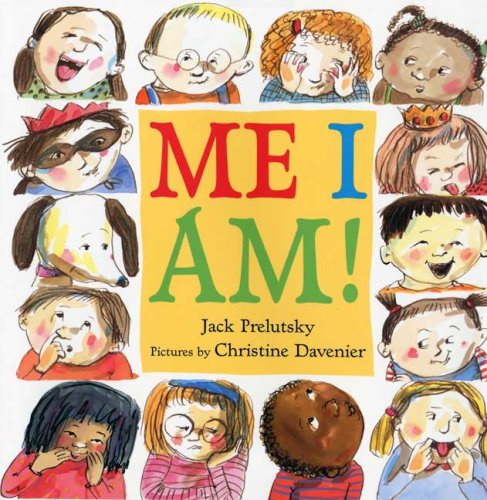
Me I Am!
by Jack Prelutsky, illustrated by Christine Davenier

Me I Am!I know, another Prelutsky book that seems different from the style that I attribute to him. I may need to give the man more credit. For this book, I love the way this poem expresses the uniqueness of each person and celebrates our individuality. It’s like a personal anthem. “I am the only ME I AM, who qualifies as me; no ME I AM has been before, and none will ever be.” The poem carried through the pages is lovely, but the artist, Christine Davenier, has taken it another step into a celebration of childhood. Each two-page spread is a story in itself, told in the pictures. Over two pages, we see a girl trying on a frilly dress, rejecting it, putting on play clothes, skating away, falling, and getting up again happy. There is another story for a little boy, and then another little girl, and then in the end they all come together. So much more is going on in this book than the words, and it’s all good.

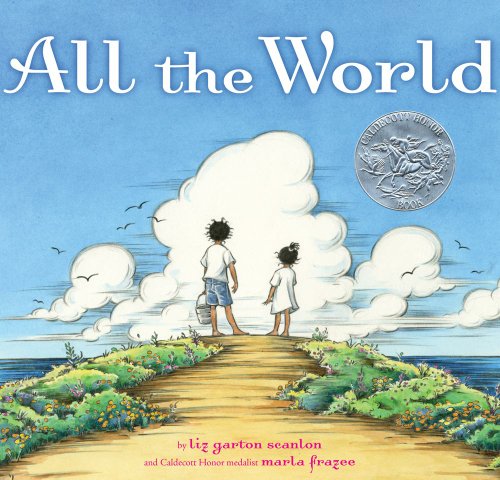
All the World
by Liz Garton Scanlon, illustrated by Marla Frazee

All the WorldThe poetic text is simple — “Rock, stone, pebble, sand; body, shoulder arm, hand; A moat to dig a shell to keep, All the world is wide and deep.” The book takes a multicultural family through a day that focuses on their connection with each other, with friends and neighbors, and the world around them. There are beaches and parks, gardens and restaurants, the big outdoors and the cozy space of home. The sentiment is lovely and is made more so by the detailed illustrations and breathtaking panoramas. This title encourages repeat readings to expand on the stories contained in the pictures, and the beauty contained in the message.

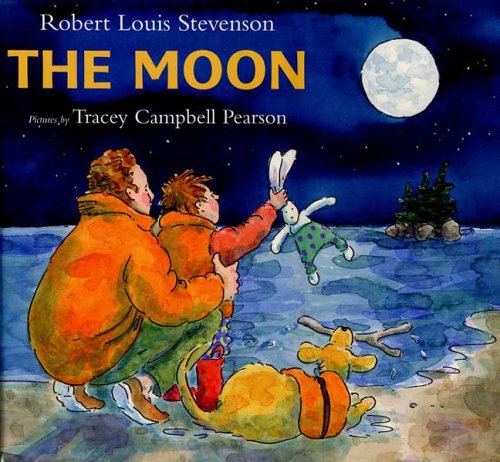
The Moon
by Robert Louis Stevenson, illustrated by Tracey Campbell Pearson

The MoonRobert Stevenson’s poem — “The moon has a face like the clock in the hall; / She shines on thieves on the garden wall, / On streets and fields / and harbour quays” — is brought to life by illustrator Tracey Campbell Pearson. She turns this poem about the moon and the world at night into a story where a father wakes up the boy (or girl with short hair — it could go either way) and takes him out on a nighttime adventure. They say goodbye to mommy and the baby, but take the dog and cat along. They drive through the country to a dock, get on a boat, and go on a nighttime ride. You can imagine what a treat this would be for an older sibling to have a special trip with daddy after bedtime. Pearson has made each picture such a feast for the eyes, with incredible attention to detail and to the mood. A fantastic book that may inspire your own nighttime adventure.

Links to material on Amazon.com contained within this post may be affiliate links for the Amazon Associates program, for which this site may receive a referral fee.

Overgrown Garden

What happens on Wednesdays stays on Wednesdays.

I call the little front patch my Darwinian garden, because I throw a bunch of things in there and see what survives. But that designation isn’t entirely accurate, because I do attempt to keep the weeds down so whatever I’ve tried to plant has a chance to grow.

This spring has been unusual, it seems, in the amount of rain and the continuing chilly weather — with the rain urging the weeds to grow and the cold keeping me from yanking them out. At the beginning of April they were a pretty addition to the garden, covering the dirt and tangling the dead leaves in a carpet of green with delicate white flowers. But now the weeds have taken over the little patch, thwarting any efforts to plant by making me Do Something About Them.

Yesterday as I spent a second hour in the dirt, I was thinking about how much these weeds are like so much else in my life. I saw the signs and could have done something earlier, but it wasn’t going to be pleasant. So I avoided it, and now the job is much harder. Now these things have roots, and I have to get in the dirt. I have more to carry out, and I’ve left new seeds behind that I’ll have to deal with later. The task seems overwhelming. Oh, and all this digging around makes me sick. (Allergies, you know.)

Sounds like everything else I’ve avoided. Clutter. Decisions. Relationships. Even the friggin’ economy fits the weed metaphor.

So maybe that’s why, when the weather gets warm, I don’t mind the hours in the garden. Because there, with some time, energy, and a willingness to work, I can see concrete results. All the digging makes the soil ready for something new to take hold. What I plant is up to me, and how those plants grow is always somewhat of an experiment. The pumpkins might peak too soon, or the cantaloupes may take over the mums. Last summer morning glories just showed up, curled around what appears to be a new flowering tree.

A tree that grew, I may note, because I simply left it alone wondering what it would turn out to be. Because the clause that makes the rule so much more complicated is that there are occasions where leaving something alone is the right choice. That’s life in the garden. That’s life.

How are you tending your garden?
Links to material on Amazon.com contained within this post may be affiliate links for the Amazon Associates program, for which this site may receive a referral fee.

Sixth Annual 48 Hour Book Challenge Pre‑Announcement

48 Hour Book ChallengeI’m not sure that Spring Break is the best time to plug a project, but I have been getting questions about this topic. So let’s call this the pre-announcment of the Sixth Annual 48 Hour Book Challenge and officially set the date for the weekend of June 3rd–5th. I will put up the official sign-up post with rules on Monday, May 2nd, but feel free to start spreading the word. In fact, I beg you to share the news. For a refresher on the rules, check out my 48 Hour Book Challenge standard information. Prizes are needed for our winners, so if you are willing to donate signed books, crafty ventures, illustrator sketches, reading paraphernalia, etc., I’d really appreciate it. Email me with those at MotherReader AT gmail DOT com.

Personally, the selected weekend is going to be an issue for me because I have a Girl Scout event right in the middle of it, but I decided that it was better to keep the 48HBC the first weekend of June as a tradition. Plus also, my weekend was completely open last year and I didn’t knock it out of the park anyway, so maybe having a few obligations — or one large obligation — actually helps keep reading focus. If nothing else, it will let you know that you can participate even if you have to block off a large chunk of time during the weekend. Because whatever you’re doing, it is not as crazy as taking twelve sixth graders to a Medieval Times dinner and joust. Right?

Day of Silence

I ask your indulgence because today I need to brag on my teen. It isn’t enough that she is smart and witty, as you might notice in her TeenReader reviews. She also is talented in the filmic arts, and has put that to use in making videos for her school’s morning announcements. That’s so cool for a freshman to be doing for the organizations that she’s involved in.

But I’m particularly proud of her for this video as it because it shows that she will stand up for her beliefs even as a self-conscious teen. And yes, the description of “self-conscious teen” fits over ninety percent1 of the high-school crowd, but I employ it here to note that my daughter is one of those teens. She doesn’t invite controversy or drama. Tall and lovely, she still prefers to blend in rather than stand out. She’d also — shhhhhh! — kinda like a boyfriend. So for her to take such a prominent place in the Gay Straight Alliance is a statement of her level of belief that Love is Love. And that we can work to make a difference, just by making our voices heard. Or by a day of silence.


  1. The 90% is intended to give an idea of the prevalence of self-consciousness among teens, and is not intended to be a factual statement. ↩

Thursday Three: Poetry Picture Books

Last week I had some great poetry collections, and now I have some great poetry picture books. If you have some favorites, share them in the comments.

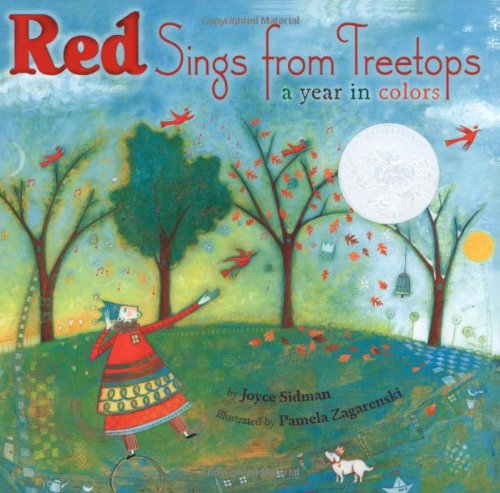
Red Sings from Treetops: A Year in Colors
by Joyce Sidman, illustrated by Pamela Zagarenski

Red Sings from Treetops: A Year in ColorsWhat can I say about this book but lovely, lovely, lovely, lovely and oh yes, lovely. Taking us through all the seasons in colors, these short poems by Joyce Sidman pack a velvet-covered punch, while Pamela Zagarenski’s illustrations invite long-lingering looks and sighs. Truly, I want to live in the world that Zagarenski sees and sink into the descriptions of Sidman’s words:
In SPRING,
Red sings
from treetops:
cheer-cheer-cheer,
each note dropping
like a cherry
into my ear.
For today’s three highlighted books, I wanted to include another title from this dynamic duo — This Is Just to Say: Poems of Apology and Forgiveness — a book that rocked my world with its deft and deep understanding of human nature. It makes me cry. And now I’ve squeezed in a mention, so HAH! Try to fence me in, Thursday Three format that I invented.

Speak To Me (And I Will Listen Between The Lines)
by Karen English, illustrated by Amy Bates

Speak To Me (And I Will Listen Between The Lines)I bring up this book a lot, I know, but it really sticks with me. I don’t know that I can verify that it captures the feel of an urban school — though it sure seems that way — but I do know that it really captures the feelings of third graders. Feeling pride in an eighth birthday. Worrying about losing a best friend to another girl in the class. Daydreaming. Saving a seat at lunch. Each poem is told from the point of view of one of the kids in the class, most of whom are African American. The illustrations capture the feel of the kids and the poems in every nuance of expression. A perfect classroom book, for sure, but also a wonderful book to share at home.

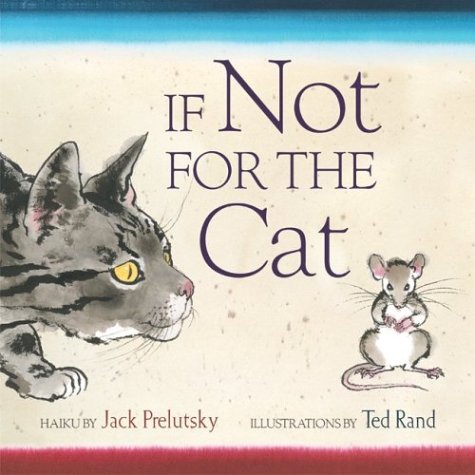
If Not for the Cat
by Jack Prelutsky, illustrated by Ted Rand

If Not for the CatThe title begs to be finished, so here is the poem of the mouse:
“If not for the cat, And the scarcity of cheese, I could be content.” Every time I reference this book, I have to double-check that the poet is indeed Prelutsky because it doesn’t fit with the sillier style I’ve come to associate with him. But yes, it’s him crafting these perfect poems about seventeen different animals. The poems are accessible for children, but take some thought too — along with offering some challenging, evocative words. The illustrations are beautiful, with a great use of detail and color to support the haiku. Purists will note that it isn’t true haiku as they don’t all feature the requisite seventeen syllables, but I don’t feel the need to split hairs with someone who thinks to describe jellyfish moving “gelatinously.” Brilliant stuff, this.

Links to material on Amazon.com contained within this post may be affiliate links for the Amazon Associates program, for which this site may receive a referral fee.

Not Intended to Be a Factual Statement

What happens on Wednesdays stays on Wednesdays.

You may have heard about Senator Jon Kyl’s remarks condemning Planned Parenthood because over 90% percent of its funds go to providing abortions. Of course, a quick media fact check found that abortion procedures account for closer to three percent, which is a pretty large difference from the Senator’s statement. The response from Kyl’s office was extraordinary in its brazen disregard for truth, justice, and the American way — or outright lying on the Senate floor. The response was that his comment was “not intended to be a factual statement.”

Both Jon Stewart and Stephen Colbert have taken the Senator to task on their shows, segments of which are shown at The Huffington Post. But Stephen Colbert has turned it into performance art with his series of tweets under the tag #NotIntendedToBeAFactualStatement.

A sampling:
  • Jon Kyl thinks no one can see him when he puts a paper bag on his head.
    #NotIntendedToBeAFactualStatement


  • Once a year, Jon Kyl retreats to the Arizona Desert and deposits 2 million egg sacs under the sand. #NotIntendedToBeAFactualStatement

  • Jon Kyl can, and will, deny that you’re a jolly good fellow.
    #NotIntendedToBeAFactualStatement


  • Jon Kyl developed his own line of hair care products just so he could test them on bunnies. #NotIntendedToBeAFactualStatement

  • John Kyl is 90% prune juice. #NotIntendedToBeAFactualStatement
The hashtag has been taken up by the Colbert Nation with a slew of humorous or would-be-slanderous lines, though few have topped the pithy, perfect tweets of Colbert, including the top tweet so far:
  • Jon Kyl bought a SodaStream so he could drink *carbonated* tears of the poor. #NotIntendedToBeAFactualStatement
What’s your favorite one on Twitter? What would you add to the list?

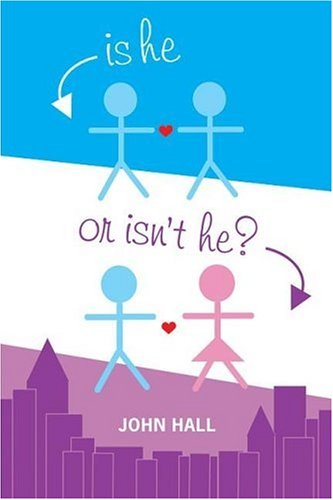
TeenReader Tuesday: Is He or Isn’t He?

Today’s TeenReader selection, published way, waaaay back in 2006, is a departure from my reviews of fresh-off-the-press ARCs. (Yes, be jealous.) However, it remains an oldie but a goodie. And timeless. I’m sure you fondly remember teenage days, darning socks to the tunes on the radio and debating if your crush is a straight metrosexual or as gay as the Fourth of July.

Is He or Isn’t He?Is He or Isn’t He? by John Hall, tells the story of two best friends, Paige and Anthony, who have vowed to each get a boyfriend by the end of Senior year. But when the new (and super-cute) boy Max shows up in NYC, their gaydar goes completely out of whack. Both falling head over heels, Paige and Anthony flirt and flaunt to discover which team Max is playing for. Surely one of them must win his heart, right? Well, you’ll have to read and see! (And don’t call me Shirley.)

I really liked the author’s portrayal of Anthony as a gay teen. In the first few pages it is mentioned very matter-of-factly, but as the plot gets deeper, the author elaborates on Anthony’s sexuality and its effect on his life. There’s a little preachiness as Anthony sees other gay couples in the city and muses about his own misfortunes, but I thought it was necessary to balance the topic being glided over earlier in the story. A very realistic and tasteful portrayal of today’s homosexual teen: In other words, pretty much just as stressed and confused as anyone else — but with perhaps a bit more flair.

My one qualm was the foreshadowing, which ended up being more like foretelling-you-the-end-of-the-story. Minor spoilers ensue here, but really nothing that a fairly smart person couldn’t figure out after reading a few pages. It starts when Paige is talking with Anthony’s brother Paulo about his annoying obsession with sports. And they argue. For three pages. Later, Paige complains about how she can’t stand Paulo. And how weird is it that he acts all moody whenever she mentions her crush on Max? After their first interaction, I can pretty much guess who’s gonna come through for Paige in the end. But what about Anthony? If only there were an opportunity for him to date Roger, the so-sweet waiter at the cupcake shop. But Roger is definitely straight, as proven by easily refutable evidence. Oh, what to do?

Equally accessible as characters, Paige and Anthony are very different in personality, allowing the reader to root for his or her favorite to win the boy. Personally, I thought Anthony deserved him. So much so that I may have shouted a little bit whilst reading. (Guido-style fist pumps and cheering may have been involved as well. I admit to nothing.) Even with the plot fairly easy to predict, the individual adventures as Paige and Anthony try to win Max still remain suspenseful. This book is a compelling and light read, with a honest view of homosexual teens. Definitely a worthwhile read!

Links to material on Amazon.com contained within this post may be affiliate links for the Amazon Associates program, for which this site may receive a referral fee.

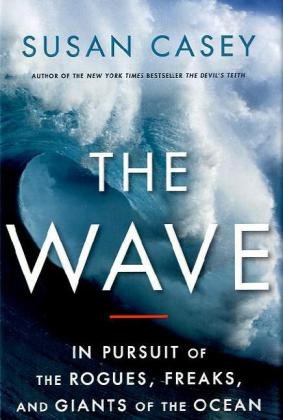
The Wave

The Wave: In Pursuit of the Rogues, Freaks and Giants of the OceanThe Wave: In Pursuit of the Rogues, Freaks and Giants of the Ocean, by Susan Casey, isn’t about lazy, relaxed days of beachfront surfing. Oh no, sir. The dudes featured in this title routinely chase forty-foot waves, dreaming of the challenging sixty-footers, and longing for that Holy Grail, the one-hundred-foot surfable wave. The stories of these amazing men — and yes, men dominate the extreme sport — are interspersed with interviews with the scientists who study the ocean and historical information about the world’s craziest waves. The adventure stories are gripping and keep readers coasting through the scientific sections with a drive to learn more about ocean waves than they perhaps thought possible.

My only minor problem was that it was sometimes hard to follow the chronology of the surfers’ storylines, as there was a lot of jumping around to describe past exploits. The photographs in the insert were arranged according to the waves discussed, but not necessarily the ride mentioned in the book — which was a bit confusing. The pictures in the insert added to many of the descriptions in the chapters, and I would have loved to see many more photos, even if it is impossible to truly capture the intensity of these towering walls of water. Overall, The Wave is a fascinating book that will have appeal for teens as well as adults. Personally, my shoreside stares over the ocean will be forever altered knowing the fierceness that lies in the sea.

Nonfiction Monday is hosted today at Apples With Many Seeds.

Links to material on Amazon.com contained within this post may be affiliate links for the Amazon Associates program, for which this site may receive a referral fee.

Thursday Three: Poetry Collections

For National Poetry Month I’m sharing three poetry collections for kids of all ages. It’s possible — and I’m not tossing out blame here — that you’ve thought of the poetry progression as Mother Goose, Shel Silverstein, and whatever they hand out in middle school. That’s okay, because I was once like you. But now you can start your foray into poetry with these incredible collections.

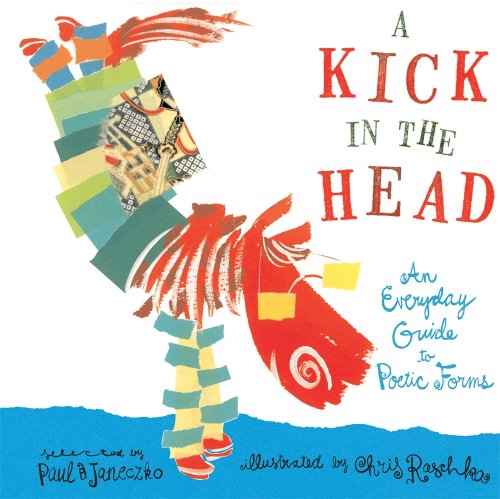
A Kick In the Head: An Everyday Guide to Poetic Foms
selected by Paul Janeczko, illustrated by Chris Raschka

A Kick In the Head: An Everyday Guide to Poetic FomsWhether it’s starting small with an Odgen Nash couplet and moving on through to a Shakespeare sonnet, or showing a limerick where we all know the form to a pantoum where we learn something completely new, this book both serves as both a collection of poems and a primer of forms. Along with sample poems from a variety of poets, each form is explained briefly, but in a fun, entirely accessible way, from the youngest readers to us poetry-deprived adults. The bright, lively, abstract illustrations of Raschka capture the different tones of the poems and lend to the lightness of the collection. You can pick up this book in paperback, so it’s a ridiculously low investment for a lifetime of understanding poetic forms.

Poetry Speaks to Children
edited by Elis Paschen and Dopminque Raccah, illustrated by Wendy Rasmussen, Judy Love, and Paula Zinngrabe Wendland

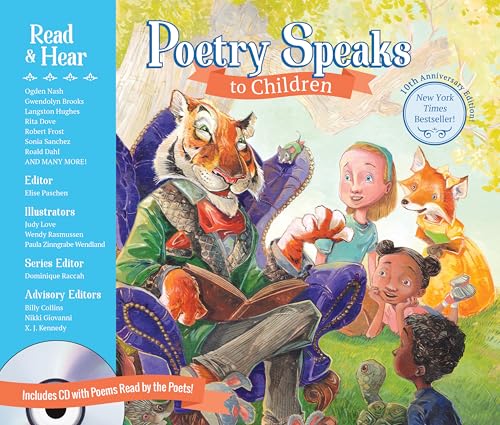
Poetry Speaks to ChildrenThis is an amazing collection of modern and classic poems from a diverse group of poets that includes Ogden Nash, Langston Hughes, Sonia Sanchez, and Roald Dahl. I love the eclectic feel where “Gas” by C.K. Williams is one page away from a poem from Macbeth, where a Native American poem taken from a Osage prayer is followed by a poem by Rudyard Kipling. The book is accompanied by a CD of many of the poems read by the poets, which means that thanks to archival copies, today’s children can hear readings from Robert Frost and Langston Hughes, among others. Three illustrators bring these poems to life, giving us a mix of styles, while still keeping a general consistency throughout the book. Absolutely one of of my favorite poetry books.

Side by Side: New Poems Inspired by Art from Around the World
edited by Jan Greenberg

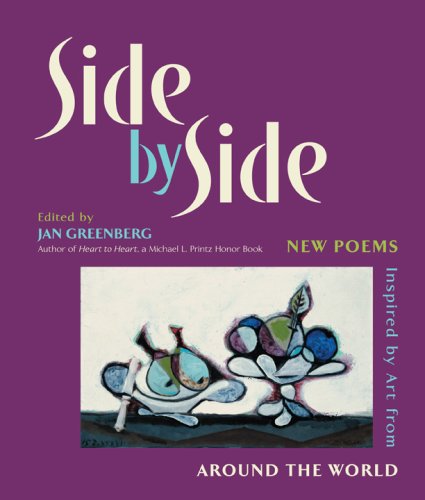
Side by Side: New Poems Inspired by Art from Around the WorldPoetry and art. Multiple languages and multicultural images. Enriching and educational, this collection is masterful in its presentation. Each poem is written in the poet’s native language, as well as in English, and collectively represent a wide range in style and subject. Each page is illustrated by an iconic, related work of art, which is such a natural fit to poetry that it makes the book inspired. The overall sophistication makes this a collection for the older elementary child on up. While it would be a pleasure to own and peruse in any home library, I have to say that it would be ideal for the classroom.

On the topic of poetry, there is a full month of blogging events listed at at KidLitosphere Central. If you need to start with dipping your feet in the poetry pool, let me suggest Gotta Book’s 30 Poets/30 Days, Miss Rumphius Effect’s Poetry in the Classroom, and Poetry for Children’s Poetry Tag.

This post was previously published at PBS Booklights.

Links to material on Amazon.com contained within this post may be affiliate links for the Amazon Associates program, for which this site may receive a referral fee.

What Happens on Wednesdays...

...stays on Wednesdays.

Recently I started a decluttering process for the house. Well, that isn’t completely accurate, because I feel like I’ve been making decluttering attempts for most of my adult life. But now that I’m not working, I actually have the time and energy to deal with things on more than a superficial, get-it-out-of-the-way level.

It hasn’t been easy, and it’s certainly slow going. I’ve always had an attachment to Things that makes it very hard to get organized. Getting rid of things is the hardest, but I’m gaining ground. I’ve donated a bunch of books to a local organization that puts them in the hands of needy children. I’ve also brought them my daughters’ outgrown clothes. I’ve recycled piles of magazines that were pushed “out of the way” but now seem in the way as I want a cleaner space.

Sorting various things is the hardest job so far. It takes me forever, and when I’m done — no matter how much it seems that I’ve thrown out — it doesn’t seem like I’ve made much progress. But at least in this job there is one mini-bonus: It’s like a little archaeological dig.

I tend to keep “important” papers together to deal with them and shuffle through them from time to time to find what I need. In this shuffling, some get tossed or used or filed and so the pile shrinks. It’s like compost. All the leftover papers end up in a plastic filing drawer, pretty much in the order they were as I was kinda sorta dealing with them. So now, as I’m going through these drawers, I’m finding three-year-old school essays, birthday cards, random photos, news articles, report cards, and my daughter’s drawings.

I love this.

It takes a lot of time to shuffle through it again and remove things that are now useless and/or bulky. Old class catalogs, random magazines, school newsletters, junk mail, and reminders for events long past. But I love these little looks into the past all contained in handfuls of paper. What we were doing in 2008 is reflected in this seemingly random collection of paper that includes an editorial about Obama’s election, several drawings of fairies, a presentation about the solar system, a map from Disney World, a photo of our baby tree, and flyers from school plays.

I’ll keep decluttering. I’ll keep culling papers. But I am keeping my piles.

The Cats of Roxville Station

(TeenReader is in the midst of A Tale of Two Cites, her assigned class reading, and didn’t have time to give us a new review this week. Pity her as she finds a tiny amusing bit in the book and shares that she feels her “standards of humor slipping away.”)

Throwing the unwanted cat off the bridge and into a river? Yeah, I could have lived without that brutal opening. But it certainly does set the frank, sometimes harsh tone of The Cats of Roxville Station, by Jean Craighead George.

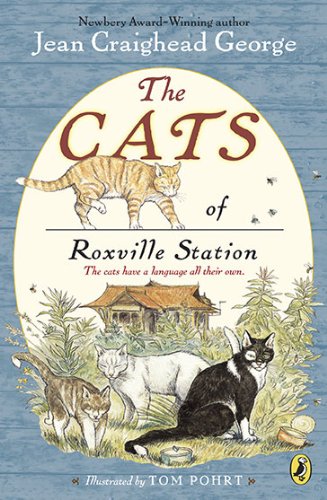
The Cats of Roxville StationWhen Rachet is abandoned as a young cat, she needs to learn how to live on her own. Of course, she’s not really on her own, given the other stray cats and the wild animals making their homes near the train station. Instinctively, she is able to navigate the social order of the feline set and avoid the dangers of the forest creatures. She even begins to make a human friend, fighting against her best instinct that humans are cruel.

This is no Disney movie. The animals don’t speak to each other in witty jabs using popular references. Instead of adapting their language to ours, the author describes their communication — allowing us to speak cat. Rachet smells danger on the breeze and tracks the movement of a mouse with her steady eyes. She conveys her lower rank in the cat hierachy with a lowered tail.
Queenella’s black pupils nearly filled her green irises, expressing anger. She crouched and looked away, tilting her head slightly. That head movement warned Rachet that she was on Queenella’s property and that she, Queenella, would fight for it. Through her whiskers and nose, ears, and eyes, Rachet learned that the big black-and-white cat, Queenella, was the high-ranking one — the boss cat.
The commentary is left for the humans, mainly a boy named Mike who would like to have a cat. Breaking up a fight between a big dog and Rachet, Mike becomes especially interested in this little cat. Unfortunately his foster mother won’t tolerate a cat in the home, and Mike can’t imagine convincing her otherwise.

With an omnipotent narrator, we see the lives of all the cats and some of the humans as Rachet grows up. There were times in the text where the educational aspect felt a bit forced into the story, but it was a small price to pay for learning more about the ways of cats. Interesting and enjoyable book for cat lovers.

Links to material on Amazon.com contained within this post may be affiliate links for the Amazon Associates program, for which this site may receive a referral fee.

Thursday Three: Board Books, Simply Sweet

ABC Baby Me!
by Susan Katz, illustrated by Alicia Padron

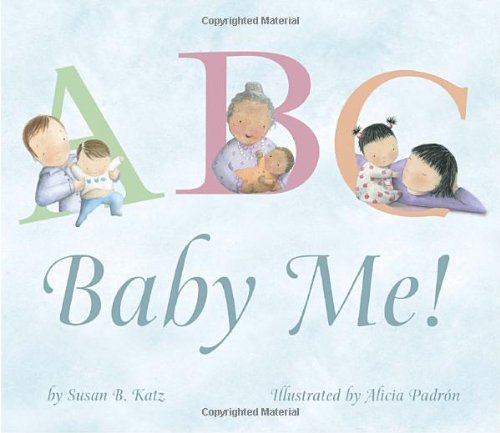
ABC Baby Me!Lots of babies get all the loving attention that little ones need, and in alphabetical order no less, from “Adore me” to “Zzzz, I’m fast asleep.” Along with the parents as caregivers, grandparents, siblings, and even pets are incorporated into the diverse families portrayed. The simple sentiments of caring and the lovely, gentle watercolor illustrations make this a wonderful reading choice for new parents. Hey, and perhaps the book can even serve as mini-checklist for those anxious mothers afraid they’ll miss a step: “Adore me. Bathe me. Cuddle me, too.” Done, done and done!

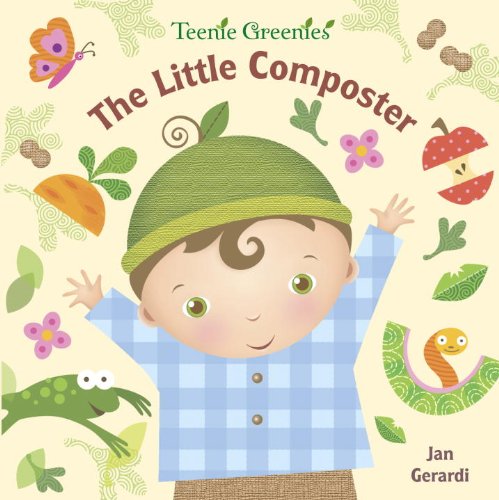
The Little Composter
by Jan Gerardi

The Little ComposterI don’t know that there is interest in the idea of composting at the pre-preschool level, but if so then this book hits the mark. Lift-up flaps show what is left of fruits & veggies — like the cores and peels — and how they can be mixed with leaves, dirt, and worms to make healthy compost for gardens. It’s fun to see an actual new concept presented in a board book, so rare given the well-trodden territory, and the illustrations are engaging with simple patterns in the color blocks. The other book in the Teenie Greenies series of two is Eco People on the Go! It’s also a cute book, but I found myself wondering what made these people particularly Eco for jogging, hiking, and skating. I’d guess the point was to find other ways to get around other than driving, but none of those three are truly alternatives, but rather recreational activities in themselves. Unless maybe eco people do skate to the farmers market to pick up their arugula.

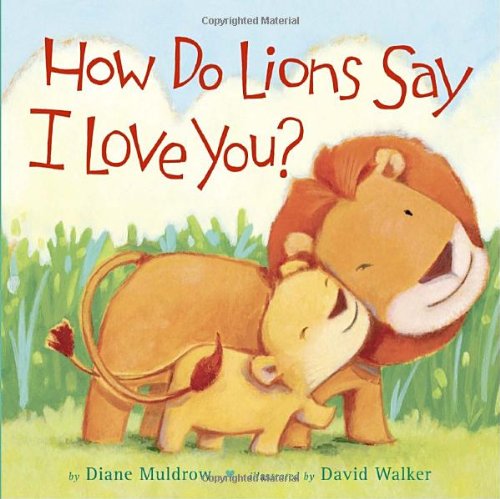
How Do Lions Say I Love You
by Diane Muldrow, illustrated by David Walker

How Do Lions Say I Love YouVarious animals express love to their children in the ways they know best, whether by howls or cuddles. The soft, sweet illustrations complement the simple rhyming couplets. Speaking of couples, some of the tender moments seemed to be shared by mates, but rest assured that is nothing like you may have seem on those wild animal shows. Though it could add a bit of humor by finishing this particular rhyme, “A hen says I love you to her chicks with a cluck / Swans mate for life ’cause...” Yeah, you want to know how it ends now, don’t you? All right, you win. The pages are online at Amazon.

Links to material on Amazon.com contained within this post may be affiliate links for the Amazon Associates program, for which this site may receive a referral fee.

What Happens on Wednesdays...

...stays on Wednesdays.

Today I need to talk about hamster racing. Yes, really. I saw a flyer at my local pet store about a hamster-ball racing event on Saturday and I came home all charged up. The idea of incorporating two things I love — hamsters and humor — was intoxicating. We started training our hamster, Cookie, and she isn’t at good at hamster-ball running as I may have thought. Though it has led to some great moments. Like me sighing at the end of the evening, realizing that we had forgotten to do our practice, and my teen saying with perfect comic delivery, “What?! Don’t you want to be the mother of a champion?” Then there are the times that we encourage Cookie by singing the Rocky theme song, including when my husband comes in playing it on the iPod. Or when we refer to the hamsters’ quick back-and-forth yard-long runs as similar to Rocky’s runs on the stairs, and the teen starts laughing and says, “See, it’s funny because Cookie hasn’t even seen the movie!” (Actually, Cookie did see the movie and she found it rather derivative. She recommends Etienne! for discerning viewers of the rodent art film.)

Certainly this is a scene of some silly, family fun, but it’s also a strategy. Not for the hamster-ball competition, which we are sure to lose at this point, but for injecting fun into the dreary times. I talked last week about feeling off-balance, and I truly appreciated your responses. But the venting and connecting can’t be the end game, or it’s all too easy to sink into misery. It’s tempting to look over our legitimate reasons for being down, taking our comfort in commiseration and validation. But while we may feel better about our right to feel down, we don’t actually feel better — and that should be the ultimate goal.

We need to allow ourselves, force ourselves even, to take a break from the heaviness and replenish our strength. Take a nap, draw a picture, watch a show, make a collage, pull the weeds, buy some flowers, arrange a closet, or (duh) read a book. You may even engage in the rising sport of hamster racing. In that case, Cookie and I will see you at the next meet.


Yes, we actually had this calendar hanging over Cookie’s cage, and it was hysterical.

Links to material on Amazon.com contained within this post may be affiliate links for the Amazon Associates program, for which this site may receive a referral fee.

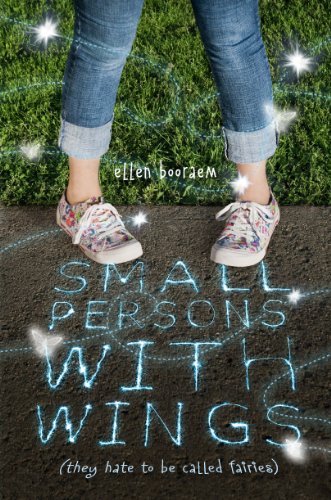
TeenReader Tuesday: Small Persons With Wings

In honor of the tiny winged folk in Small Persons With Wings (FYI, they hate to be called fairies), and their native language, I have decided to write this entire review in Latin! Let us begin:

Salve! Mihi nomen est TeenReader!

Actually, thanks to my school’s funky curriculum, that is all my knowledge of conversational Latin. However, I know the perfect phrasing for telling someone to go die in a ditch (I necare in fossa!), so that’s a perk.

Small Persons With WingsSmall Persons With Wings, by Ellen Booraem, is the story of Mellie Turpin, who has grown up with a fairy — er, small person with wings (gotta keep the PC man off my back). But when her small friend disappears, she is called a liar by everyone she has told about him. Resolved to stop imagining such silly things as fairies, she removes every thought of them from her brain. This plan works great — that is, until her family inherits an old inn completely infested with small persons with wings.

My favorite thing about this book is the obvious effort plotting a complex world building. Every character quirk is based in the their personal history, so much so that even the magical Parvi (another name for the non-fairies) seem to have motivated and logical actions. With the exception of the magics of the Parvi, which are explained somewhat sparsely, everything is introduced slowly but surely. In this way, every strange idea seems very understandable, and the reader finds themselves doubting themselves for ever NOT believing in fairies. The story itself is light with plenty of parts that made me literally laugh out loud, and astonishingly realistic for a book about magical creatures. All in all, an intricate and creative storyline with care put into even the smallest characters. Definitely one of my favorites, and sure to become one of yours!

Salvete, omnes!

Amore, TeenReader

Links to material on Amazon.com contained within this post may be affiliate links for the Amazon Associates program, for which this site may receive a referral fee.

You Are Not Anonymous

It is easy to be anonymous. We can be anonymous by blending in at a sporting event or a high school. We can be anonymous driving a car, ducking in a club, or disappearing in a crowd. We can leave a note unsigned or a comment button unclicked. We can allow ourselves to feel invisible and in that, feel empowered or ignored — sometimes simultaneously.

But you are not anonymous. Unsigned notes can often be tracked to their writers, through context, motive, or investigation. And online? Oh child, you should know that every computer has an address, and every computer that you connect to has that address. When the computer is big, like at a news site, there is little need or motive to track down those addresses even if the comments are inane. But for a small site, like this one, it is easy to know the location of every computer that visits and every person that comments. While there would generally be no need to look at this information in any depth, I can do so, as can pretty much anybody with a site and the motivation. So you may click a button to comment without a signature, but you are not actually anonymous. I know, crazy — but that’s the Internet.

As this distinction can be unclear to some or an invitation to others, I have turned off the anonymous comments on my site. Almost everyone who comments here has an account anyway, so it is a small sacrifice for me and done with the intention of maintaining better control over what may appear online.

Let me say that being anonymous has a power that should be used wisely. Being in crowds can make us feel anonymous because we are one of so many people that our individual actions aren’t being watched. This can be exhilarating as we shout at sports events or sing loudly at rock concerts. And it can show an ugly side as people shout insults at town halls or spout hateful messages on YouTube. Being anonymous can be freeing when you aren’t worried about being noticed, and yet worrying when you don’t notice that your freedom requires a responsibility to do the right thing. Or at least, not to do the wrong thing. Even if nobody knows it but you.

Links to material on Amazon.com contained within this post may be affiliate links for the Amazon Associates program, for which this site may receive a referral fee.
Category: 5 comments

What Happens on Wednesdays...

...stays on Wednesdays.

A child bit my child yesterday. This would be another normal milestone in the parental path except for the fact that my child is eleven years old. And the biter was twelve. Sixth graders, biting and being bitten over sharing a hula hoop at recess. What is going on here?

It defines in one scenario the way that everything seems off kilter, in big and small ways. In the world we went from uprising in Egypt to devastation in Japan to bombing in Libya. In the United States, one man takes away the rights of multitudes and the conversation is about the lavish salaries of teachers while we ignore the compensation packages of executives that the taxpayers bailed out. In my area, two of the richest counties in the nation are looking at reducing contributions to programs that serve homeless children in our community. In my home I am wrestling with the limbo that is my mother’s condition even given access to the nation’s best physicians, and a situation with my daughter’s friend in great need and a family who seems unable and somewhat unwilling to provide.

And some kid bit my kid in sixth grade, which isn’t such big a deal really, but somehow puts into focus the sense that everything is off balance. I think my newfound drive to tackle household clutter is coming from a need to organize and straighten my surroundings in a chaotic time. The earthquake in Japan shifted the earth’s axis. I feel mine shifted as well.

Links to material on Amazon.com contained within this post may be affiliate links for the Amazon Associates program, for which this site may receive a referral fee.

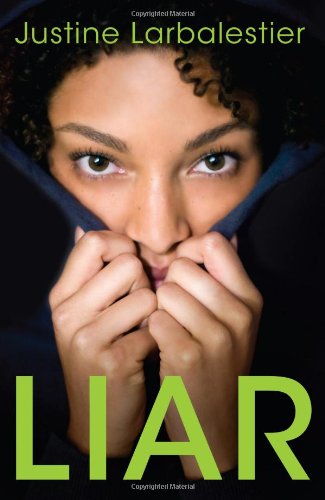
TeenReader Tuesday: Liar

Cover controversy aside — ancient history, right? — I present a review of Liar, by Justine Larbalestier. This is the story of Micah, a compulsive liar. When her boyfriend is mysteriously killed, she decides to tell the reader the truth about everything, to come clean completely. But with the truth so muddled in her lies, it’s hard to know what to believe.

LiarLiar offers the excitement of Catching Fire for people who don’t have the patience for all of Katniss’s whining. (Hunger Games? More like Whaaa! I’m Hungry! Games. Zing!) This book begins with the slow set-up, usually an enemy of me and my short atten— Hey, my cursor looks funny when it flashes! Hehehe… But yes, I normally can’t stand a measured, dramatic buildup. However, this one has some surprising events that propel the story and keep it interesting. Then when you get to section two, there is a game changer that blows your mind, and you never doubt the pure concentrated awesome of this book again. The beginning is slow but the payoff proves how necessary it is to have a deliberate beginning to provide contrast when action kicks in. It’s like your mom telling you to eat vegetables to be big and strong when you grow up. Except this is actually worth the pain. (Candy corn for life, baby!)

Liar is a fantastic read. A parting word, however: Be careful of reading too much — like the jacket flap or back cover. It can take some of the punch out of the storyline. But it’s certainly a phenomenal book, worth picking up today!

Or am I lying to you?

I’m not.

Or am I?

Seriously, though, I’m telling the truth.

The truth? What is truth?

Oh, shut it.

Links to material on Amazon.com contained within this post may be affiliate links for the Amazon Associates program, for which this site may receive a referral fee.