105 Ways to Give a Book

Thursday Three: Beginning Home Library

As you are shaping your child's beginning home library, there are three types of books to look for in filling the bookshelves.

1. Classics
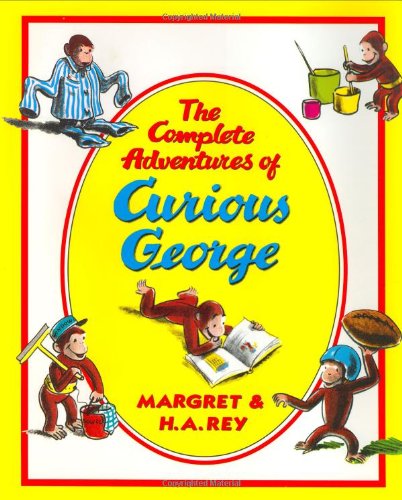
Curious GeorgeThere are really two kinds of classics: the ones that you read as a child and the new classics that have come out in the intervening years. Your child's bookshelf should have some of both. Reading the books that you grew up on gives you a chance to share that connection with your child. Maybe these books don't honor the faster pace of today's child or use the latest research on teaching to the developing brain of a toddler. But they mean something to you, and that's important. Many also have a place as cultural reference that continues through generations. (Hello Man in the Yellow Hat.) Such books like Curious George; Madeline; Goodnight Moon, Corduroy, Where the Wild Things Are, Bread and Jam for Frances, and The Cat in the Hat belong on every child's bookshelf. You may have some books from your own childhood that are special to you that you should also share. New Classics are ones that you'll see featured at any bookstore, like Chicka Chicka Boom Boom; The Hungry Caterpillar, Don't Let the Pigeon Drive the Bus!; Clifford the Big Red Dog; Guess How Much I Love You; and Fancy Nancy. Here's a hint on finding the New Classics: they often have a line of related merchandise. I'm not condoning it, I'm just saying'.

2. Mulitcultural/Diverse
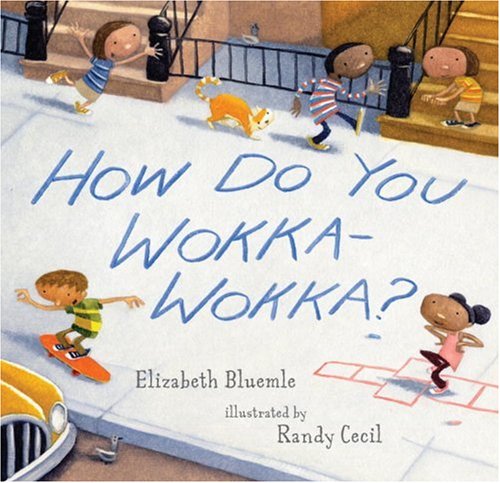
How Do You Wokka-Wokka?Reading is one of the first ways that we see the greater world around us, so take the opportunity to widen that exposure with books that are diverse and multicultural. In looking for books featuring children of color, I've become fond of the illustrator Randy Cecil who used a great cast of characters in Looking for a Moose and How Do You Wokka-Wokka? (written by Phyllis Root and Elizabeth Bluemie, respectively). Kadir Nelson brings his art to life in every book he illustrates, but young readers will especially enjoy Please, Puppy, Please. Grace Lin incorporates Asian children and themes in the many, picture books she has written and illustrated - like in Kite Flying and you'll find Hispanic themes in the works of Pat Mora and Tony Johnson, among many others.
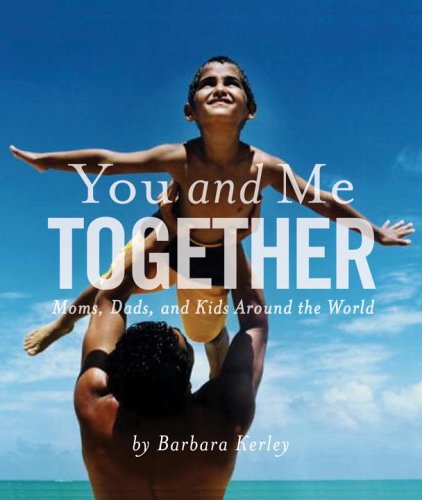
You and Me TogetherExplore the world without leaving home in the wonderful picture books of Barbara Kerley, with photos from National Geographic - like You and Me Together. Start even younger with the board books like Global Babies or broaden the concept with If the World Were a Village. Think about different kinds of families with The Family Book by Todd Parr (speaking of children of color, you'll see all the colors of rainbow represented here - literally) or And Tango Makes Three, by Peter Parnell which tells the story of two male penguins who raise an egg together.

3. Art
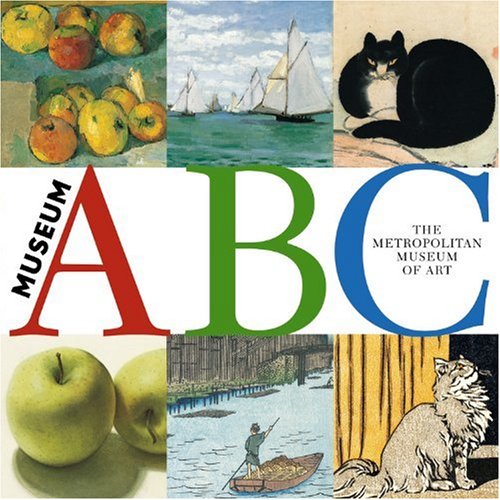
Metropolitan Museum seriesIf you're stuck on buying a book, look for the one with great art. I don't mean books with classic artwork in them - though I am fond of the Metropolitan Museum series - but instead books that have amazing illustrations. Step into the art of Steve Jenkins in books like Actual Size or the surreal world of David Wiesner in Flotsam or the perfect spareness of Peter Reynolds in Ish. Investigate the soft tone of Jon Muth or the lively colors of David Diaz. Compare the watercolors of E. B. Lewis to the scratchboard work of Beth Krommes. Find books that are illustrated with beauty, style, and creativity and you'll likely find yourself in possession of very, very good books.

(This post was previously published at PBS Booklights.)

Links to material on Amazon.com contained within this post may be affiliate links for the Amazon Associates program, for which this site may receive a referral fee.

Comment Challenge Winners

I mean, other than us all being winners for participating, connecting, and learning during the Comment Challenge. I had fully intended to share the winning names selected from both those who reached one hundred comments and those that didn't. But as it turns out, I'm not going to because Lee Wind did it better... and he is the one providing the prize packages. So head over there for your Comment Challenge 2012 winners, and tune in next year to do it all again!

Thanks to all for being part of it and to Lee for keeping me ever inspired!

Thoughts from the Comment Challenge

Why aren't people commenting on my blog? It's a common complaint, a question for the blogging ages. There are big picture answers that highlight content, engagement and connection. But today I want to focus on some concrete things I noticed as I was making my way through the Comment Challenge participants.

1. The commenting process is difficult. At this point, most bloggers are using some sort of filter that keeps spambots out. But I've noticed that some commenting systems are harder than others. For instance, I have no problem with the ones that want a Google ID, but I shy away if a Facebook login is requested. And I'm not even sure what Disqus is. A lot of this isn't in your control, but might be worth knowing.

2. The content isn't updated. I'm one to talk after my pathetic January posting schedule, but fresh content does matter. As I visited blogs during the Comment Challenge, I commented on the post that drew my attention most - and if I didn't have much to choose from then sometimes I didn't comment. There it is.

3. The content isn't varied enough. Maybe you are focused on branding your reviewer/illustrator/writer blog, but give yourself a little room to play in the bigger world of KidLit/YA literature. Throw in something personal, book recommendations, movie tie-ins, Kidlitosphere news - just something different from your norm to engage more people.

4. The post doesn't invite comments. I've struggled with asking questions at the end of a post, and generally avoided it myself for fear of leaving it dangling out there, unanswered. But what I'm thinking of is posts that give little to latch onto. Okay, an example is posting illustrations alone. Other than "Lovely," what have you given me to say?" But add to that posting where the idea came from, what you struggled to capture... whatever went into it that gives me a way to relate.

5. The blog is continuous self-promotion. Obviously, your blog will have some self-promotion for your achievements, but if that's all your posts are about then you are not inviting engagement. You're not even inviting return visits.


I'll be back soon with winners from the Comment Challenge. I apologize for the delay, but with SCWBI's conference, coordinating with Lee at the conference, and fighting a bad cold it just didn't happen. Soon.

Comment Challenge: Finish Line

You made it! As you finish up with your blog reading today, please check in here or with Lee Wind with your totals. We have fun prizes, so leave us your final stats even if you didn’t make it to five comments a day. We’ll be picking winners from among the 100 Comment Club and also winners from everyone who participated — which requires at the very least signing up and then signing out in today's comments.

I hope that the Comment Challenge has helped you connect to the community, find new blogs to read, and increased your comfort with commenting. This year with so many of the SCBWI folks participating, I found myself exposed to new ideas in writing and illustration that gave me a jump start on my own goals, so I thank you. My own comments aren't finished today as I'm making my way through the last blogs on the sign-up list (which were the first blogs, since I started in the middle). During the month, I made some great discoveries of new-to-me blogs and the commenting here has me feeling charged up for a new year of blogging. While the Comment Challenge has finished, I know that it's really just the beginning.

Poetry Friday: A Poem of Pronunciation

If you are looking for a way to be more connected to other kidlit bloggers, I can suggest no easier starting point than Poetry Friday. Started over five years ago, the meme host changes every week with the schedule available at KidLitosphere Central. The rotation allows more contributors to feature their site while sharing the workload of the event. Bloggers share original poems, reviews of poetry books, reviews of poetic picture books, links to poems at copyright protected sites, thoughts about poetry, poem writing tips, and more. Then the participants link to the host, submit their own link, and follow the other links to their heart's content.

Today I have a tricky poem from The Poke that you can only appreciate if you read it aloud - if you can:
Dearest creature in creation,
Study English pronunciation.
I will teach you in my verse
Sounds like corpse, corps, horse, and worse.
I will keep you, Suzy, busy,
Make your head with heat grow dizzy.
Tear in eye, your dress will tear.
So shall I! Oh hear my prayer.
Just compare heart, beard, and heard,
Dies and diet, lord and word,
Sword and sward, retain and Britain.
(Mind the latter, how it’s written.)
Now I surely will not plague you
With such words as plaque and ague.
The rest of the lengthy verse is here for a little English language fun, but honestly I couldn't make it even this far without getting caught up in the pronunciation. How did you do? The Poetry Friday round-up hosted at Wild Rose Reader.

Comment Challenge Check-In II

I am really loving the Commment Challenge this year because it is getting me paying attention to the blogging world around me. As I make my way through the list of participants - I started in the middle if you're wondering - I'm discovering new-to-me blogs and fresh ideas on writing. Perhaps I've erred some in not focusing on my own blogging content, but there's something to be said for taking a step back and reflecting.

The commenting has been coming easy and keeping up the numbers has not been the challenge so much as making the time to do some concentrated blog reading. Along with tracking my comments, I've been keeping some notes about things I'm finding at different blogs. Carrie Pearson had a great post on responding to writing critiques. I was stunned by the work involved in an international list of reading/literacy charities at Playing by the Book and inspired by the 12 x 12 in '12 Picture Book Challenge that I learned about from Lori Degman and Stacy Jensen, and the writing excuses post at Pen and Ink may just be enough to get me to sign up for that challenge. If so, I'll have to thank Teaching Authors for getting me unstuck and On My Mind for giving me some story starters.

Oh, and there is so much more! I hope you've been enjoying your Comment Challenge experience. Let us know how it's going at the Official Comment Challenge Check-In with Lee Wind!

Links to material on Amazon.com contained within this post may be affiliate links for the Amazon Associates program, for which this site may receive a referral fee.
Science & Stories Program: Snow

There’s a new meme in town. STEM Friday focuses on books that promote Science, Technology, Engineering, and Math. The round-up this week is hosted at Capstone Connect.

Over the year I’ll be sharing the preschool program I created for the library and that I’m presenting once a month. The concept behind the program is to introduce science topics by combining fiction and nonfiction, songs and mini-experiments, action rhymes and hands-on times. The target age for the program is three to six years old, so the information and experiments are basic, and intended to encourage a questioning, observational approach to scientific topics.


Snow


Book: Snow is My Favorite And My Best, by Lauren Child

Song: "Snowflakes"
(to "Mary Had a Little Lamb")
Snowflakes whirling all around,
All around, all around.
Snowflakes whirling all around,
Until they cover all the ground.

(stand up, hands are snowflakes, bend down to put them on "the ground." Do twice)

Book: Snow is Falling, by Franklyn Branley

Experiment: "Salt and Ice"
Put the same number of ice cubes in two bowls. Stir some salt in one. Wait 15 minutes, stirring often. Which melted more? Why?

Book: The Snow Show, by Carolyn Fisher

Experiment: "Making Frost"
Fill a metal can – like a soup can – 2/3 full of crushed ice. Place on paper towel. Pour 1 tablespoon of water on paper towel around can. Fill rest of can with salt and stir. Watch frost form on the outside of the metal can.

Book: Stella: Queen of the Snow, by Marie Louise Gay

Experiment: "Snowflakes"
Make six sided snowflakes by cutting folded paper. Fold paper in half, then in thirds, cutting off the “extra.” Cut out shapes and show-off snowflakes.


Links to material on Amazon.com contained within this post may be affiliate links for the Amazon Associates program, for which this site may receive a referral fee.

Comment Challenge Check-In

But not with me, with Papa Lee! Head over and share how the Comment Challenge is working out for you. After a slow start, I've found it surprisingly easy to get back into the grove of commenting. It does take a little more of my online time, but I feel more connected to what I am reading. And to whom I'm reading, because I'm making sure to explore new-to-me blogs. I'll have to talk more about that later. Right now I am on track with my five-a-day comments and loving it.

Check in with Lee Wind to share your stories and to tell that nice guy a big Happy Birthday!

Reading Anticipation

The Fault in Our StarsLike many others in the KidLitosphere, I preordered a copy of John Green's book, The Fault in Our Stars and through the magic of Amazon Prime, it's here! The funny thing for me is that I haven't been following the story of the book or the VlogBrothers, though I dip in on occasion. I happened to see that preorders were being signed and thought that would be cool and it was cheap on Amazon and mostly... well... I wanted to anticipate something.

Lately the books that everyone's buzzing about are not what I love to read. Seriously, I gave away my signed Book Expo America ARC's of The Scorpio Races, Goliath, and Legend as prizes for the 48 Hour Book Challenge without reading a single one first. Which in retrospect seems very generous and a bit stupid. So yeah, I got The Fault in Our Stars mainly to capture some of that excitement of a long-awaited book.

What have you been anticipating?


Links to material on Amazon.com contained within this post may be affiliate links for the Amazon Associates program, for which this site may receive a referral fee.
Category: 18 comments

Not in Need of Improvement

Everything in January seems focused on being better. We resolve to exercise, eat healthy, and get organized in one fell swoop. So much energy is spent concentrating on what is wrong with ourselves that it's no wonder we end up on the couch gnawing a chocolate Santa recovered from the back of the pantry live-tweeting the fifth hour of a Hoarders marathon with snarky, derisive comments. Or maybe that's just me.

In any case, this time of resolutions and goals and challenges - yes, even this one - can be difficult for just feeling good about ourselves. So I thought I'd give my blogging buddies and fellow comment challengers a chance to share something about yourself that you like or do well. Not promotions or book deals or Ultimate Grand Supreme wins, but a little something like this:
My eyelashes are so long that they brush against my glasses if I wear mascara - which I don't need to do anyway because they are so dark and thick.
Yeah, that felt good. Real good. Now it's your turn to brag a bit. As you work to improve your commenting habits, exercise routine, organization skills, time management, book promotion, social media platform, etc... what can you feel good about today?
Category: 27 comments

Comment Challenge 2012: Sign-Up

Before you embark on Comment Challenge 2012 - twenty-one days of community-building through comments - let's knock out some common barriers:

You’re setting the bar too high. If you need a reality check, read the comments on any YouTube video or Yahoo article. These people don’t spend time concerned with whether their comment is “witty” or “insightful” or “makes sense.” Seriously, you are in the top ten percent of commenters merely by paying minimal attention to basic spelling and verb/noun agreement.

You’re over-thinking it. We hear about social media and networking in terms of helping our writing/blogs/careers and start worrying about how comments figure in the process. Look, no one is getting a book deal from a comment. It's about connecting, engaging and getting out there. Relax.

You’re reading blog posts like articles. This is understandable, because they are articles, but they are also conversations. A comment isn’t crafting a letter to the editor. It’s closer to your response after listening to someone excitedly tell you about this great novel they just read. You wouldn't walk away from that, right? What would you say? Okay, now say that but in a comment.

So with that and the FAQs in mind, let's get started.


Links to material on Amazon.com contained within this post may be affiliate links for the Amazon Associates program, for which this site may receive a referral fee.

Comment Challenge 2012

It’s BACK! Now that it has become a habit, Lee Wind and I are bringing The Comment Challenge to your January — the perfect time of year to make a new resolution to connect more with your fellow bloggers.

Since it is said that it takes twenty-one days to form a new habit, we’re going to run the Comment Challenge for the next three weeks — starting Thursday, January 5, and running through Wednesday, January 25, 2012. The goal is to comment on at least five book blogs a day. Keep track of your numbers, and report in on Wednesdays with Lee. We’ll tell each other how we’re doing and keep each other fired up. On Wednesday, January 25, I’ll post the final check-in post for the Comment Challenge. A prize package will be involved, drawing from among the bloggers who reach the 100 Comment Mark (five comments a day for twenty-one days with one day free of comment charge). It’s also pretty likely that we’ll award some random door prizes for trying, because why not? I’m including the Frequently Asked Questions to get warmed up and I'll post the sign-up tomorrow. 

Where do I sign up?

Sign up at the Thursday, January 5th, post, here at MotherReader. (Note: Direct link will be added on Thursday.)

If I don’t start on that first day, is it too late to start?

No. You can either up your number of comments per day if you want to make the 100 Comment mark, or you can set your own goal and join us for the support and camaraderie.

Five comments a day! How can I do that?

Feel free to set your own goal. Maybe start smaller and build up. Maybe aim for one thoughtful comment and two “I can’t wait to read that!” comments a day. But honestly, it’s easier than it sounds. Think how many comments you leave on Facebook or replies on Twitter. It’s doable.

Does it have to be exactly five daily comments, or can they be averaged?

I will say that it sets the habit better if you make a point to comment every day that you’re reading blogs, but you don’t have to hit exactly five comments every day. Averaging them together is fine.

Do you have to be an KidLit/YA book blogger to participate?

No, all book bloggers are welcome. We’re only pushing the Comment Challenge within the kidlitosphere to boost the energy in our community. I mean, we don’t want the knitting blogs to get the fruits of our commenting labor. The challenge is open it to any book blogger who would like to participate. Especially those who would like to find out more about the wonderful world of KidLit/YA Blogging.

Is there a special tracking system?

Well, mine is a Post-It note. We’re on the honor system here, so track your own comments however you see fit. However, I don’t recommend tattoos. Been there, done that.

What are the prizes?

I’m working on it, but I’m guessing books. If you have something special you’d like to donate — signed books, original art, crafty ventures — send me an email at MotherReader AT gmail DOT com.

Do you have to comment at a hundred different blogs or only blogs that are new to you?

No and no. You can use this as an opportunity to reconnect with the blogs you know. But personally, I find it easier to spread my comments around among lots of blogs because I find I have more to say.

Will there be a list of participants whose blogs I can make a special effort to visit as fellow Comment Challengers?

Yes. The sign-up list here at MotherReader. 

Why isn’t anyone coming back to my blog?

Make sure that your profile links back to your blog. I’ve often tried to follow comments on my own blog back to the writer only to find that the profile is blocked or leads to an old blog.

Do I have to check in on Wednesdays to participate?

Strictly speaking, no you don’t. To be counted as a participant, you have to sign up for the challenge and you need to sign out on the last day with your totals. However, I highly recommend coming to the check-in posts on Wednesdays with Lee as it will keep you on the commenting track. Plus, prizes.

Questions? Ask in the... comments.

National Ambassador for Young People's Literature

Since lots of people in the kidlitosphere are writing about today’s announcement of the new National Ambassador for Young People’s Literature, I wasn’t going to. But it turns out to be Walter Dean Myers, and hey, I actually talked to him for a decent amount of time at one of those ALA conferences. So the tiny personal connection makes it even a bit more real. Then I caught his platform, his motto for the year and I was hooked:
Reading Is Not Optional
In his interview at School Library Journal he goes on to say:
The value of reading has escalated in my lifetime. As a young man, I saw families prosper without reading because there were always sufficient opportunities for willing workers who could follow simple instructions. This is no longer the case. Children who don’t read are, in the main, destined for lesser lives. I feel a deep sense of responsibility to change this.
Actually, the whole interview makes me excited. Color me on board! Congratulations to Walter Dean Myers and best of luck!
Category: 2 comments

Cybils Finalists 2011

The Cybils finalists are in for all categories today, but I’ll be showing off the work of me and my fellow panelists for the last few months with the shortlist for Fiction Picture Books, and you can head to the Cybils site for the rest.

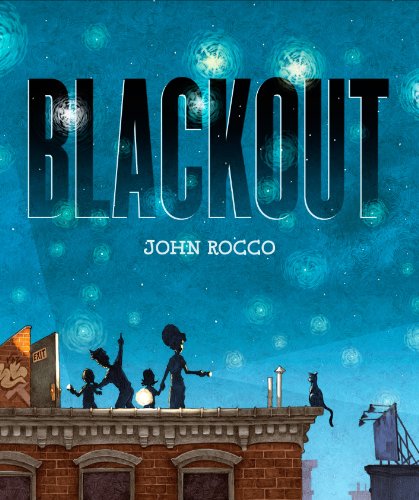
BlackoutBlackout
by John Rocco

Hyperion, 2011

When all the lights in Brooklyn go out one summer night, families are suddenly not busy, much to the delight of a young child. Without power, the family can’t do their many insular electronic tasks and have time to play games together, socialize with their neighbors and even look at the stars from the roof. With top-notch paneled illustrations and limited text, Blackout’s comic-like setup adds to the progressing action. It’s when the lights go out that the evening’s action begins, and the reader enjoys Rocco’s details of the character’s facial expressions and the community’s joint adventure on the streets and roofs of the city. Like the young boy and his family at the center of the story, one doesn’t want the evening in the shadow of the Brooklyn Bridge to come to an end.

Do You Know Which Ones Will Grow?Do You Know Which Ones Will Grow?
by Susan A. Shea, illustrated by Tom Slaughter

Blue Apple Books, 2011

With tongue firmly in cheek, Shea challenges young children to compare living and nonliving things through a series of silly, rhyming questions. While lifting page flaps will show a stool “growing” into a chair, series of answers in rhyming couplets reinforce the basic concept. Relationships between inanimate objects small and large are established in creative ways, subtly encouraging critical thinking when kids are too busy giggling to even notice. No doubt about it, children will joyfully answer these questions with a resounding “NO!” at each page turn.

I Had a Favorite DressI Had a Favorite Dress
by Boni Ashburn, illustrated by Julia Denos

Abrams for Young Readers, 2011

When a girl’s favorite dress gets too small, turning it into a new top is just the beginning, as this special item of clothing continues to change through seasons, styles, accidents and growth spurts. Lyrical language plays with rhyming and repeated words and reflects the voice of an inventive child. Soft watercolor tones are perfect in capturing the pinks of the dress and soft browns of the girl, while line drawing and actual stitching incorporated into the pictures add whimsical touches. While readers will relate to the life cycle of one dress, the book works on multiple layers with the themes of growing up, problem solving, and resourcefulness served in an engaging way.

I Want My Hat BackI Want My Hat Back
by Jon Klassen

Candlewick Press, 2011

Having lost his beloved hat, a bear seeks help from a variety of other animals before finally rediscovering it. Readers may be one step ahead of the bear in finding the hat, but the author remains a step ahead of the reader with a surprise ending. The reactions of the culprit and the bear display a dark, sophisticated humor. Minimalist and muted, with careful use of color to highlight what’s important, the artwork is nicely integrated with the mood and the text. The memorable book becomes a standout with its spare illustrations, dry humor and unconventional storyline.

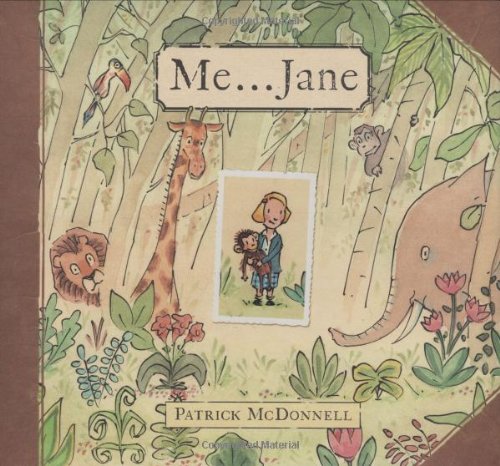
Me... JaneMe... Jane
by Patrick McDonnell

Little, Brown, 2011

A picture book biography in the truest sense, McDonnell has created an introduction to the life of primatologist Jane Goodall that keeps the K-2 audience firmly in mind. Themes of following your interests and achieving your dreams are woven into the story of Goodall’s childhood spent indulging her curiosity in the natural world. Expertly combining ink, watercolor, stamps, and one perfectly placed photograph, Me... Jane is as artistically ambitious as it is heartfelt.

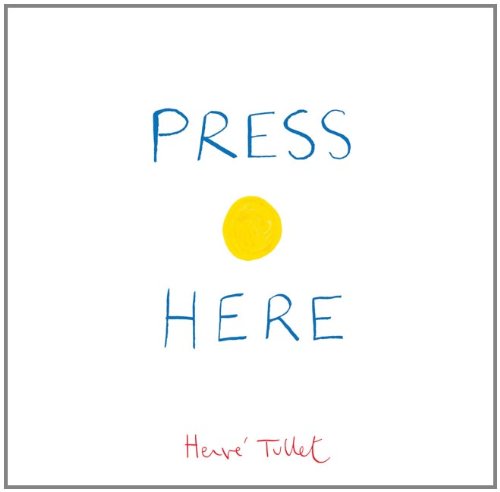
Press HerePress Here
by Herve Tullet

Chronicle Books, 2011

Open the book. Start reading. Watch the children listening to this magical book. Watch the children as the book works its spell on them, mesmerizes them, compelling them to press the dots, to tilt the page, to blow on the dots, to shake the book. Observe the children as they press and tilt and blow and shake. Look into the eyes of the children. See the enchantment in their eyes. Listen as the children cry, “Again!” as you reach the end of the book. Go back to the beginning of the book. Read this whimsical book again. And again and again and again...

The Princess and the PigThe Princess and the Pig
by Jonathan Emmett, illustrated by Poly Bernatene

Walker Books for Young Readers, 2011

A farmer hauling a little piglet in his cart stops for a break underneath a castle tower. Happenstance — and a very neglectful Queen — finds the piglet flying up to the tower and the newborn princess trading places with it. But no one is shocked with the switch since “it’s the sort of thing that happens all the time in books.” Younger kids will enjoy the silly story and funny pictures, while plenty of references to classic fairy tales will captivate school-age kids. With a strong plot, an unexpected ending and vibrant illustrations, The Princess and the Pig is a delightful read-aloud.

Links to material on Amazon.com contained within this post may be affiliate links for the Amazon Associates program, for which this site may receive a referral fee.
Category: 5 comments

Happy Festivus: The Airing of the Grievances

Yes, it’s Festivus, the holiday for the rest-of-us. The iron pole is up and the feats of strength are on the schedule (mine are primarily of emotional strength, as I’ll be hosting my family, including my divorced parents, in my smallish split-foyer). Now is the time for the airing of the grievances. You have free space in the comments — my gift to you this holiday season. I’ll start:
  • The high school’s decision to omit honors courses where AP ones are offered is killing my teen. There is no reason my fifteen-year-old sophomore needs to be taking college-level world history and it is completely dominating her homework schedule. And that’s even though she’s taking pre-calculus.
  • I’m still peeved at my county’s decision to have new part-time employees of the library work both Saturdays of the two-week pay period. So for those of you keeping track, that’s every Saturday. Since I can’t possibly do that with all of my family obligations — every other Saturday was bad enough — I cannot get my old job back. Which totally sucks, because I loved it.
  • My mom — who doesn’t read this blog, btw — has call to stop using our phone conversations to turn some event into something that is critically sad or upsetting. And then the next time I call, she tells me that it’s all fine. The last was a friend’s new marriage, which she might annul because it was so awful, and the follow-up call was that they “worked things out.” Seriously, I have enough in my life without adding second-hand drama.
  • I’m not sure I get to have a grievance about the Republican party, not being a member or supporter. But with all that is going on between the ridiculous primary nominees, the constant filibusters, the amazing hypocrisy and outright intolerance, the best case scenario is that it’s some elaborate performance art piece.
So how about you? None of your people are likely to see your grievances all the way over at my blog, so go nuts. Talk about your boss, your neighbor, your mother-in-law. Tomorrow we can get back into the spirit of the season, but now it’s venting time.
Category: 10 comments

Ways to Wrap a Book

I really wanted to do a couple of reviews today, but I realized that I haven’t done Christmas cards, wrapped presents, or returned my library books from the Cybils reading. So instead it’s the return of creative ways to wrap a book. This is at the end of 150 Ways to Give a Book, but who knows how many people made it that far. At this point, I’m not sure I’d trust Amazon’s shipping in time for Christmas, but if you want to make the gamble or have post-Christmas day festivities, you can still take advantage of the pre-shopping done in that list and this.

Wrap a Book
  1. Wrap your book up in solid paper and tie a cool scarf around it. This is from Hanukkah gifts with Old Navy scarves — just look at how the silver wrapping paper sets off the gray in the scarf. Masterful!
  2. For just a little something extra, make headbands the ribbons around your wrapped package. Red and white dots for Christmas, blue and white for Hanukkah.
  3. Wrap a cookbook in photocopies of your favorite recipes. A knitting book with your own favorite patterns. Or hey, wrap a book about finances in real money.
  4. Wrap your book up in a clever Threadless t-shirt. Want a literary theme? They’ve got that covered. But my favorite shirt has to be the Harry Potter inspired Tee Which Shall Not be Named.
  5. If you’re going the book gift card route, give it in a cute coin purse.
  6. Tuck a book or two in an Aeropostale tote. Three things to know. One, pick the solids for teens and logos for tweens. Two, don’t pay over $15 because these things are almost always on sale. Three, don’t think you can use another brand of tote unless you are very confident in your teen tote radar. Believe me, I know of which I speak.
  7. Strawberry bags
  8. Try reusable shopping bags — wrap in one, attach another in its pouch as a gift. These bags fold up into little strawberries. Cute!
  9. Stick a book inside another book — a book box, that is.
  10. Find a little booklight to put in the gift bag for a little late-night reading.
  11. Maybe you just want to attach a little something to the gift for fun. I suggest a keychain, an ornament, bangle-bracelets, locker magnets, or lip gloss. You can find these online, but personally, I go to the very back of Claire’s stores where they often have incredible discounts on such little things for tweens and teens. Honestly, the dollar stores have potential for this kind of little extra thing too.

Links to material on Amazon.com contained within this post may be affiliate links for the Amazon Associates program, for which this site may receive a referral fee.
Last Call to Give Books for the Holidays

Trying to get a present for Christmas? Today until 8:00 p.m. PST you can still get free two-day shipping at Amazon and take advantage of the helpful shopping I’ve done for you with 150 Ways to Give a Book. If you are overwhelmed by the choices for your younger readers, try ten top picture books with gift pairings. If you’re aiming for the end of Hanukkah, you’ve got just a little more time. I’m not sure this would be the best gift for the festival of lights, but it is...

The Number One Book Narrated by Death

(Picture from The Strand in New York City.)

Links to material on Amazon.com contained within this post may be affiliate links for the Amazon Associates program, for which this site may receive a referral fee.

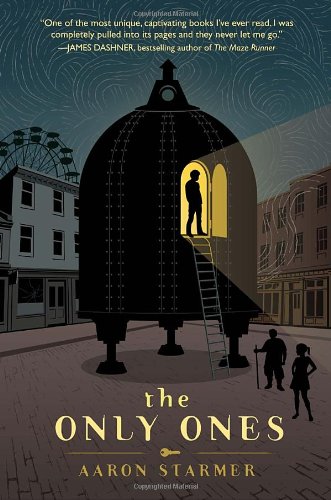
The Only Ones

This is a new one for me. I read the first chapter of this book online, switched to Amazon, and ordered it immediately.

To back up, I interviewed Aaron Starmer about darker middle grade books based on a fabulous conversation we had at the BEA KidLit Drink Night, but I hadn’t read the his book because the ARCs had been given out by then. I meant to go back to read it, but with Cybils on my plate, I lost track of it. But I do follow @AaronStarmer on the Twitter, and when he noted there that the first chapter was online, I thought I’d dip in and get a feel for the book. I was hooked.

I spent all day yesterday reading it. I resented the times I had to put it down. It’s darker than my usual middle-grade fare, skirting the edge of Young Adult. It’s realistic and dystopian and science fiction and old-fashioned and smart and sensitive all at the same time. Simply a fantastic book. So let’s do this for realsies.

The Only Ones
by Aaron Starmer

Delcorte 2011, purchased copy
The Only OnesMartin Maple is tucked away from the world on an island with only his father for company, and the occasional summer vacationers to observe. But on his eleventh birthday, his father sails away and doesn’t return. Self-sufficient, Martin waits for him for two years, and then in searching for his father on the mainland finds a world deserted of people. One strange traveler points him on his way to the village of Xibalba, composed of a group of misfit teenagers trying to get by and make a life. Threaded through the book is the mystery of what happened on The Day and what can possibly happen next for this new world. Intensely smart and constantly gripping, realistic characters combine with mystical elements in a perfect story of nothing less than humanity itself. The resolution lingers, tickling the brain with the continuing questions offered by the very best of literature.

Let me say two things here personally. One, I’m calling this as a movie waiting to be made. Two, this book would make a perfect gift, and you’ll have to trust me that its gift-giving potential has an element in the book. Right now, you don’t even need to leave the house, because you can buy The Only Ones with free two-day shipping at Amazon.

Note that free two-day shipping at Amazon and take advantage of the helpful shopping I’ve done for you with 150 Ways to Give a Book. If you are overwhelmed by the choices for your younger readers, try ten top picture books with gift pairings.

Links to material on Amazon.com contained within this post may be affiliate links for the Amazon Associates program, for which this site may receive a referral fee.

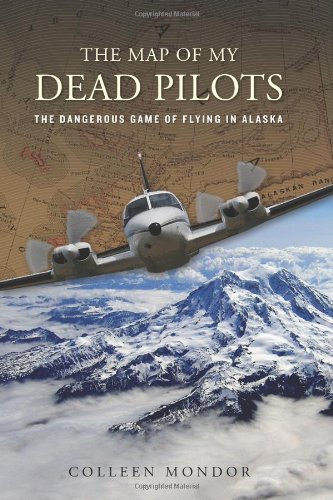
The Map of My Dead Pilots

The Map of My Dead Pilots: The Dangerous Game of Flying in Alaska
by Colleen Mondor

Lyons Press 2011, purchased copy

The Map of My Dead Pilots: The Dangerous Game of Flying in AlaskaThis book is simply the worst marketing campaign ever for arctic aviation. So you want to be an Alaskan pilot? Because it’s cold, lonely, boring, erratic, stressful, exhausting (very, very cold needs another mention), and you may die. Blending the adventure stories of plane trips both successful and unsuccessful with personal narratives, Colleen Mondor brings the reader into the last frozen frontier. With money at stake, planes fly in weather too cold, with cargo too heavy to be legal or safe. Everyone personally knows some pilot who died, yet the collected stories of deadly accidents don’t change the rules or risks. Published as adult nonfiction, there is crossover appeal for teens in the subject and — let’s be honest here — shorter page count then many nonfiction titles. There is some language throughout the book, but nothing that teens won’t have heard, read, and likely said before.

Personally, I read the book on a deadline, and now feel that it deserves a less rushed reader. Because when I could stop, I was able to process much more of the weight of what I had just read. For example, one anecdote detailed how the operations department was expected to lie on the official documentation for the flight — but in her job the author would write the correct weight on scrap paper, for only cargo and the pilot to see. Based on that real number, they would make the decision whether to take the flight. In a way, that number was the only thing that had substance, reality — in that everything else was faked (like the numbers), uncertain (like the weather) or precarious (like the aging planes): all but that one scrap of paper that would get thrown away. That’s something to think about, right? And that’s this book.

My fellow book blogger and good friend Colleen Mondor agreed to stop by to answer some questions about her book and new authorhood:

When did you start writing and/or seeing yourself as a writer?
I really started thinking that I could write as part of who I intended to be (as opposed to writing all through school and being told it was “a nice hobby”) after I left graduate school and realized that all the research I had done for my thesis was too valuable to shelve. The thesis was the longest thing I had ever written (160+ pages) that made sense and had a real beginning and ending. Once I had it in my hands I believed I could be more than just someone who writes after I do my “real work” every day (as I had always been told growing up) and that’s when I got serious. (I should note that my thesis was on pilot error accidents among Alaskan bush commuters — so it played right into Map.)
Who inspires you personally or professionally?
Ray Bradbury, Louis Armstrong, Hepburn & Tracy, Springsteen, Dan Eldon, Peter Beard, Barbara Hodgson (The Sensualist, Dreaming of East, etc.), Sara Vowell (!), Tim O’Brien (The Things They Carried), and so many more. Lately my life is filled with images of my great grandmother, Julia Lennon, whose photo albums recently came into my mother’s possession. Her life was incredibly hard and I find it amazing how she survived — her sheer force of will is the stuff of legend. If that isn’t inspiring (and she was my Nana!), I don’t know what is.
The narrative has an organic flow, elaborating on things previously mentioned and hinting at stories to come. With that structure, how did you organize the writing process?
Ha! Organization was something that came up all the time — sticky notes and index cards everywhere to keep straight what I wrote where and when I said what and on and on. (I have Scrivener now and I’m hoping it will help a lot in the future.) I wrote the book completely out of order and then, with the help of my agent and editor, put it in the final order you see now. I wish I could have been more straightforward when writing the book as it would have been easier from an organization perspective, but in terms of the actual creative process, easy was just not any part of the writing.
With such a personal and difficult topic, what was the hardest part to write?
Technically it was most difficult to make sure I protected the identities of all the people involved while still writing the complete truth. The hardest chapter though was a surprise for me — it was “The Good Pilot,” about my friend “Adam” who crashed due to pilot error but is still alive and well in Alaska. You would think as he is still here that would have been easier but the crash had such a detrimental affect on him and was so preventable that I really struggled with how not to let my frustration with the whole situation boil over. I wanted a different story for him — I still want a different story for him — and there is nothing that anyone can do about that. At one point I wondered if I could even include the chapter at all. It took forever to get it right.
You’ve had a longtime perspective on publishing from the reviewing side of things at Bookslut and Chasing Ray. What have you found surprising as a new author?
How quickly you become overwhelmed by the need to sell the book now that the book is written. I wish writers could just write and write and write and while I had some idea from friends how much work I would have to put into marketing Map after it came out, I was still surprised. It can overtake your life if you let it.
Where do you go next, either literally with author visits or figuratively as a writing path?
Literally, I will be going through several cities/towns in Alaska this spring and also hopefully in the Pacific northwest. To get the book on lots of shelves I have to help generate interest, and the best way to to do that is to show folks the pictures I have of flying up there and to talk about the job. There is a lot of interest in Alaska — a lot of curiosity — and I have found people very receptive to events where they can see what we saw and ask questions about what the Company was like. That is my plan for early 2012. For writing, I have several essay projects in the works and intend to continue with narrative nonfiction — more on that as it develops!
Be sure to check out other reviews and interviews:

Links to material on Amazon.com contained within this post may be affiliate links for the Amazon Associates program, for which this site may receive a referral fee.

Thursday Three: Hanukkah

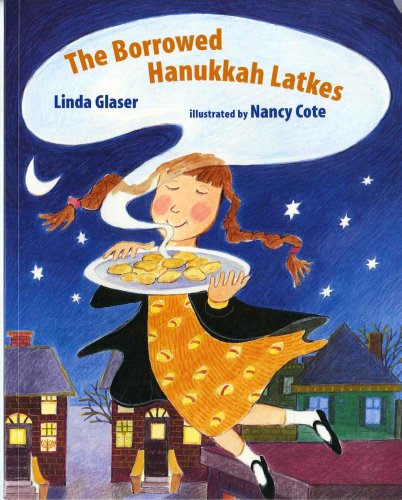
The Borrowed Hanukkah Latkes
by Linda Glaser

The Borrowed Hanukkah LatkesAs a family prepares for Hanukkah, more guests are due to arrive than expected. The daughter, Rachel, borrows potatoes and eggs from their elderly neighbor to make the latkes, each time hoping that by borrowing food she will convince the woman to join the family for Hanukkah. She can’t make her come over, but in the end comes up with another plan to bring Hanukkah to the woman. Light and bright illustrations complement the tone perfectly. A fun story that doesn’t feel the need to explain either the history or the specific celebration of the holiday. There a sequel, too: Mrs. Greenberg’s Messy Hanukkah.

Hanukkah at Valley Forge
by Stephen Krensky

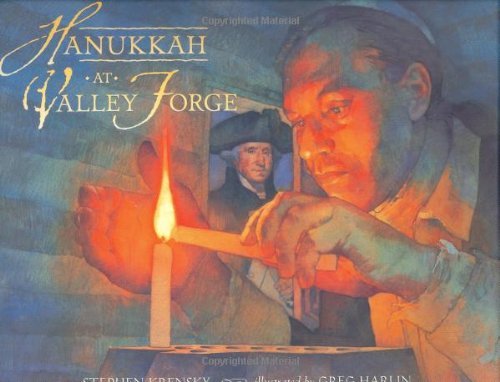
Hanukkah at Valley ForgeIn the middle of the Revolutionary War, a soldier takes a quiet moment to celebrate Hanukkah. Spotted by General Washington, he explains the religious history of Hanukkah as we see the connection between the fight of the Maccabees and America’s fight with the British. The book has a historical basis, as the author’s note describes. Lovely book too, in its detailed watercolor illustrations.


Chanukah Lights
by Michael Rosen

There’s no need to review this new and spectacular book. I got the promotion piece at Book Expo America and was already sold on this title. Just watch.


Links to material on Amazon.com contained within this post may be affiliate links for the Amazon Associates program, for which this site may receive a referral fee.

Christmas Books Lite

Today is another repost, but a good one. The focus is Christmas books that aren’t so very heavy on the Christmas — a trait I’ve found useful for classroom readings and library storytimes. Because as it turns out, I do live in the part of the country where — as Rick Perry see it — kids aren’t allowed to celebrate Christmas. I say that with sarcasm, but since the D.C. area is culturally diverse, there is great care to not offend. I agree with the logic, but it sure does make seasonal storytimes difficult.

In the past, I’ve focused on the cultural aspect of holidays around the world — including this set of Christmas books. I’ve pulled together books I liked that focus more on the gift-giving aspect of Christmas rather then Santa or — I can’t even imagine presenting this in this area — the Nativity. These are books about gifts and giving, that happen to be at Christmas but aren’t so much about Christmas. I haven’t done research on this in years, so many of them are on the older side. I’d appreciate some new title suggestions to explore. Oh, and I like them too.

My Penguin OsbertMy Penguin Osbert, by Elizabeth Cody Kimmel
Joe gets a penguin for Christmas from Santa after years of misunderstandings, but having a penguin turns out to be a lot of work. This is one of my favorite books for the “be careful what you wish for” message, but it is handled with humor and grace.

Shall I Knit You a Hat?Shall I Knit You a Hat? by Kate Klise
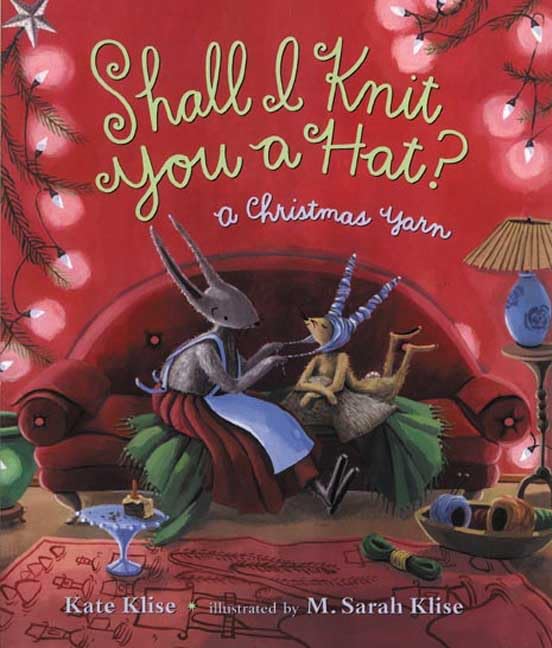
A mother rabbit knits a special hat for little rabbit, and together they decide to make some very creative hats for all of their friends. The book mentions Christmas, but otherwise is really focused on the giving aspect. A cute book, sweet and simple, with some humor in the illustrations as hats are made for the variety of animals.

Merry Christmas, Matty MouseMerry Christmas, Matty Mouse, by Nancy Walker-Guye
A little mouse is heading home from school with six Christmas cookies for his mom. On his way home he runs into some hungry friends and, one by one, gives all but one cookie away. In the end, mom and little mouse share that cookie, and then realize that they have the recipe to make more cookies. They make more and invite all the forest friends. Very sweet book about sharing and being kind.

Okie-Dokie, Artichokie!Okie-Dokie, Artichokie! by Grace Lin
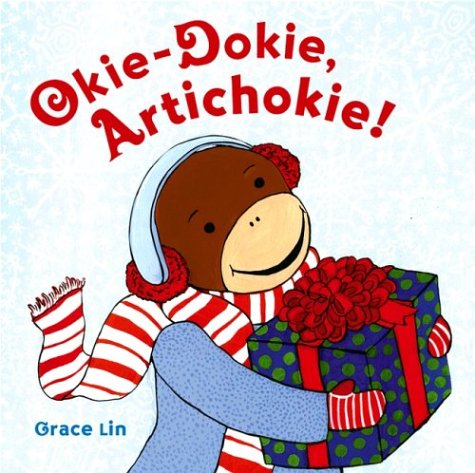
A Monkey gets so mad at his giraffe neighbor below him for being noisy that he stops talking to him. One day, near Christmas, he gets a package meant for the giraffe. He delivers it to Artichoke and finds out that they are ceiling pillows. Artichoke hasn’t been banging the ceiling on purpose, he’s just too tall! A book about gifts and misunderstandings, with a little bit of Christmas thrown in.

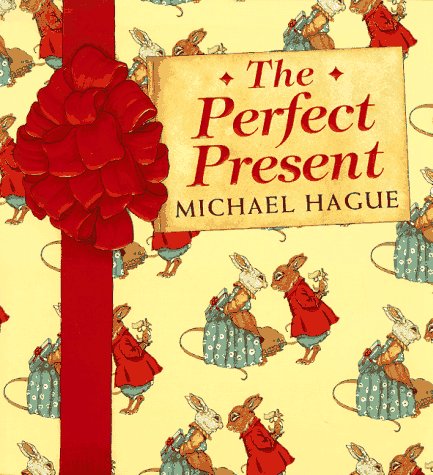
The Perfect PresentThe Perfect Present, by Michael Hague
A bunny buys a toy for his sweetie, but it takes off without him. He chases it down the streets and around the town (letting kids look for it in the highly detailed pictures) and then it rolls in a snowball right to his sweeties house. There are Christmas colors and some decorations in the background, but actually only a couple of mentions of Christmas. Hague’s illustrations are amazing.

Jingle BellsJingle Bells, by Nick Butterworth
Two mice are threatened by The Cat. They make Christmas stockings out of glove fingers, but the Cat puts up a note at Christmas saying they went away. They decide to teach cat a lesson, that involves a noisy jingle bell as a present. A twist on the idea of the present, where the present they give the cat is actually much better for the mice.

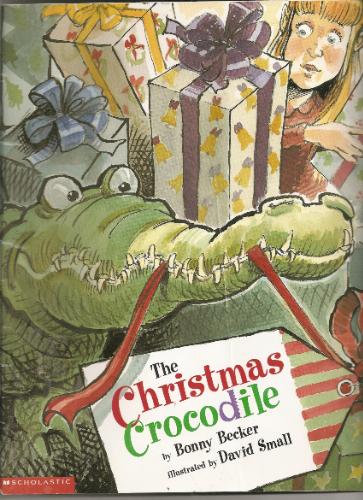
The Christmas CrocodileThe Christmas Crocodile, by Bonny Becker
A crocodile is left under the tree at Christmas and he wreaks havoc on the family. There’s a lot more text to this one than many of the other picture books, making it a good choice for classroom reading. Illustrated by David Small and very funny.

Links to material on Amazon.com contained within this post may be affiliate links for the Amazon Associates program, for which this site may receive a referral fee.
Christmas Around the World

Today didn’t go as planned in terms of writing, blogging, or doing useful things. Since I get pretty frequent searches for books about Christmas around the world I’m reposting those titles today, with apologies to others for my recycling.

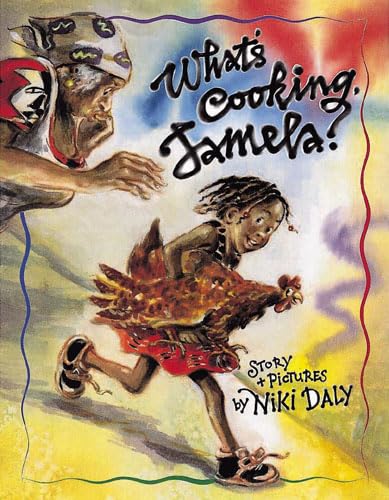
What’s Cooking, Jamela?
by Niki Daly


What's Cooking, Jamela?Jamela’s family gets a chicken to fatten up for Christmas dinner, but Jamela gets attached to the chicken as a pet. Tension builds as a woman comes to prepare the chicken dinner, but in the end, Jamela’s mother finds something else for the Christmas dinner and gives the chicken to Jamela as a present. A fun story of a South African Christmas, conveying a sense of the culture along with a few words of the country.

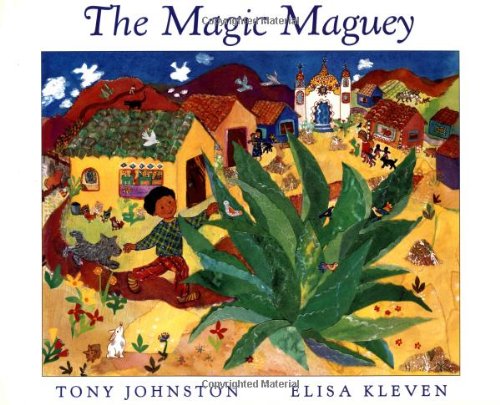
The Magic Maguey
by Tony Johnson, illustrated by Elisa Kleven


The Magic MagueyA large maguey plant sits in the middle of a Mexican village providing many resources to the people of the town, as well as a gathering spot. As Christmas approaches, a rich man who owns that land says that he will get rid of the maguey and build a house there. Miguel, with the help of the other children, decorates the maguey so beautifully for Christmas that the rich man realizes his error and doesn’t cut it down. A great story about resourcefulness with a little bit of Christmas tradition and a smattering of Spanish words.

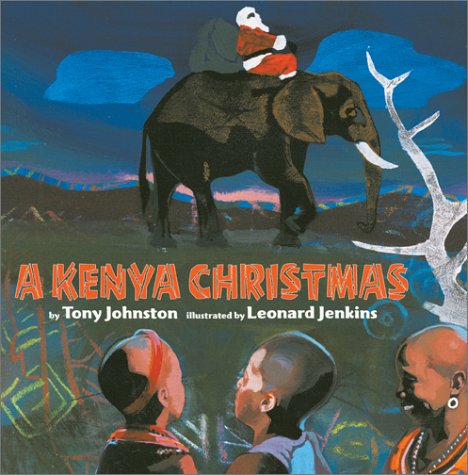
A Kenya Christmas
by Tony Johnson, illustrated by Leonard Jenkins


A Kenya ChristmasJuma’s Christmas wish is to see Father Christmas, and his special aunt brings a red and white suit to the village. She tells Juma to find someone to wear the suit so that the whole village can see Father Christmas for the first time. He does so, and Father Christmas surprises the village with his arrival. But it is Juma who is surprised later when he finds out that the man who was supposed to play the part didn’t do so after all. Who was that man on the elephant? A very different picture of Christmas in Africa with amazing pictures by Leonard Jenkins.

Cobweb Christmas: The Traditon of Tinsel
by Shirley Climo, illustrated by Jane Manning


A Cobweb ChristmasIn Germany, a old woman sets up a Christmas tree and cleans her house throughly, chasing the spiders outside. Let back into the house by Kris Kringle, the spiders are curious about this interesting tree, and end up “decorating” it with their cobwebs. What could be a holiday mishap becomes magical as Kris Kringle turns the webs into silver, making the first tinsel. A sweet story about the Christmas tree tradition.

Links to material on Amazon.com contained within this post may be affiliate links for the Amazon Associates program, for which this site may receive a referral fee.
Category: 0 comments

STEM Friday: Science and Stories Program II

There’s a new meme in town. STEM Friday focuses on books that promote Science, Technology, Engineering, and Math. The round-up this week is hosted at Wrapped in Foil.

Over the year I’ll be sharing the preschool program I created for the library and that I’m presenting once a month. The concept behind the program is to introduce science topics by combining fiction and nonfiction, songs and mini-experiments, action rhymes and hands-on times. The target age for the program is three to six years old, so the information and experiments are basic, and intended to encourage a questioning, observational approach to scientific topics.

Motion and Force

Book: Move! by Steve Jenkins and Robin Page

Song: “This Is the Way”
This is the way we walk to school
Walk to school, walk to school
This is the way we walk to school
So early in the morning.


(Repeat with: kids’ suggestions and/or run, hop, slide)

Book: Forces Make Things Move, by Kimberly Brubaker Bradley

Experiment: “Pushing, Pulling & Stopping”
Give each child a ball. Push the ball. Stop the ball. Both the push and the stopping were forces. Show other forces. Pull the ball with a rubber band. Drop the ball to show gravity. Push, pull, and stop on different surfaces to show the effect of friction.

Book: Hot Rod Hamster, by Cynthia Lord

Experiment: “Animal Crash”
Put a stuffed animal on a toy car and push against a stable object. The animal goes flying off, because objects in motion tend to stay in motion. (Which also shows why we need seat belts.)

Book: What is Velocity? by Joanne Barkan

Book: What’s Faster Than a Speeding Cheetah? by Robert E. Wells

Experiment: “Speed and Distance”
Set up toy cars on different-size ramps and of different surfaces. What changes the speed or distance the cars will go? The size of the ramp? The surface they roll on?

Links to material on Amazon.com contained within this post may be affiliate links for the Amazon Associates program, for which this site may receive a referral fee.

Thursday Three: Holiday Books

My kids aren’t little anymore, and our taste in holiday picture books has changed. These are my favorite books for the season — even when it seems like everyone is too old for picture books. Never, my friends, never.

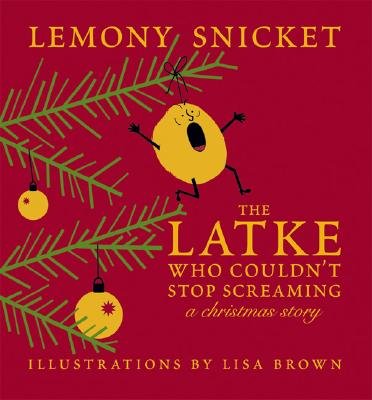
The Latke Who Couldn’t Stop Screaming
by Lemony Snicket


The Latke Who Couldn’t Stop ScreamingJust hysterical. A latke runs screaming from the frying pan and encounters various Christmas icons along its path. As the latke explains what it is and its significance in the celebration of Hanukkah, it keeps getting compared to Christmas. And so it keeps screaming. Lemony Snicket actually gets in a fair bit about the meaning of Hanukkah, while keeping a wry tone throughout. For instance, as the latke explains in a long paragraph about being fried in oil — as a reference to the oil that was used to rededicate the temple and the miracle that made the oil last for eight nights — the answer it receives is par for the course:
“So you’re basically hash browns,” said the flashing colored lights. “Maybe you can be served alongside a Christmas ham.”

“I’m not hash browns!” cried the latke. “I’m something completely different!”
And then it runs screaming, “AAAHHHHHHHHH!” for two pages. As my kids have grown past the traditional — and too often schmaltzy — Hannukkah stories, this one is our new family classic.

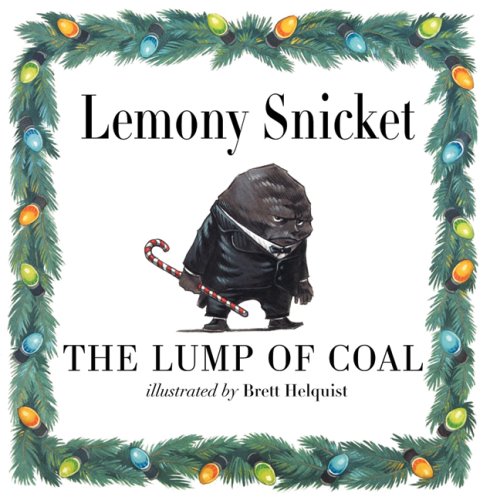
The Lump of Coal
by Lemony Snicket


The Lump of CoalOn the same note, we’ve turned to this title to replace the cute Christmas stories that absorbed us in the past. It contains perhaps one of the most perfect opening sentences of all times:
The holiday season is a time for storytelling, and whether you are hearing the story of a candelabra staying lit for more than a week, or a baby born in a barn without proper medical supervision, these stories often feature miracles.
A humble lump of coal longs to be something more and visits an art gallery and Korean barbecue in hopes of fulfilling his search for meaning. Instead, a drugstore Santa decides the lump will be the perfect thing for his stepson’s stocking — as punishment. But this ill intent goes right, as the coal finds his purpose in an artist’s hand. Wry, funny and odd, this book ends on just the right note for the holidays, and in echoing the first sentence, with miracles.

Robert’s Snowflakes
by Grace Lin


Robert’s SnowflakesLest you think I’m all about the wit, my third choice is not about either holiday, but it is about beauty, joy, and hope. The book features dozens of snowflake shapes decorated by famous children’s illustrators and gentle haikus for the winter season. The artwork created is amazing. Some illustrators featured their characters — like Ian Falconer’s Olivia and the dinosaurs of Mark Teague. Others contributed scenes of snow, skating, Santa, and lights. The real story within the book is the dedication of this group in auctioning the original snowflakes to fund cancer research. A lovely book that will be especially enjoyed by those who appreciate children’s book illustrators.

Links to material on Amazon.com contained within this post may be affiliate links for the Amazon Associates program, for which this site may receive a referral fee.
Blogger/Publisher Relationships: Words Matter

At the Fifth Annual KidLitCon, I was on a panel discussing relationships among bloggers, publishers, and authors. Noting that it remains an open topic, we continue to define relationships that contain both collaborative efforts and critical reviews.

Perhaps writers of blogs and authors of books don’t need a lesson on how much words matter. We all have spent time carefully crafting a post, a page, a phrase for exactly the right impact. So when a publisher talks about continuing to offer “free books” instead of review copies, those words matter. If they refer to “free shipping” as a bonus feature, it matters. When they say “your job is simply to review the book,” then I wonder either when I became an employee or how — after referring to the dictionary — this became a duty or assignment. And “simply” is not how I would categorize the reading, reviewing, posting, and perhaps running a giveaway while scheduling in the one-month timeline that they are seeming to require. All of that matters.

Look, I can imagine that they meant to say: Hey, bloggers! We’ve heard that you’d prefer to receive more targeted review copies, and that works for our bottom line, too. So we’ll be sending emails of new titles, which you can request with a reply email. FYI, that first month around release is huge for us, so keep that in mind in scheduling reviews, if you can. Thanks!

What would go unsaid is the part about taking bloggers off the list if they didn’t review books, because it’s understood, and it’s unprofessional to point out. Reviewers can also pan a book, but we don’t write publishers: Hey, publisher! We’ve heard good things about this book and would love a review copy. But if we don’t like it, we plan on letting our readers know, and BTW we are not adverse to using the word ’suck.’ Thanks!

I wasn’t planning on writing about this issue, because I feel picky playing up one specific publisher to highlight a broader topic, even though the publisher wrote a terrible letter and the topic is important to me. I was fine with being part of the Twitter storm about it, because it resulted in an instant reply from the publisher changing the tone of the email. As Maureen Johnson tweeted, “One thing I love about the internet: you don’t have to wait long to find out if you’ve had a really bad idea.”

But since then, my tweet was written about in the LA Times Jacket Copy and The Guardian, and I felt the need to say more. Friend and fellow KidLitCon panel member Liz Burns of SLJ breaks down the issue superbly in three posts about relationships, volunteers, and reader access. She also gets me in my tweet “Can you imagine them sending this to Horn Book or The NYTimes?” as not setting myself at a status level equal to these institutions, but needing to establish where book bloggers fall in the publishing world. Essentially it comes down to whether book bloggers are to be treated more like print reviewers or like marketing employees. I’d prefer the former.

In truth, it’s not exactly either — which is why we have this problem. It would suit book bloggers to be considered reviewers. It would suit publishers to consider them marketing partners. And ultimately, the group that defines the language defines the relationship.

While I respect publishers, I don’t want that definition solely in their hands. I don’t feel entitled to “free books,” but I do feel a responsibility to correct language that has the potential to set the status quo. Maybe it’s just one publisher, one email. But book blogging is too important to me to sit back and let others establish the dialogue. Because words matter.
Category: 5 comments

Thursday Three: Teacher Gift Books

For all of their elementary school years, I always gave books to my kids’ teachers for the holidays. My favorite book to give was Earth from Above for Young Readers. It’s out of print now, but it embodies my perfect gift for teachers as a book that the adult can enjoy and appreciate, and can also be used in the classroom. That particular title could be used for such a wide range of ages that it was absolutely perfect. Seriously, I bought six of them when they went to a discount price and gave them out for three years straight — and my kids are three years apart. But here are three other great gift suggestions and I’d love to hear about more perfect teacher titles in the comments. You know you have them.

How to Heal a Broken WingHow to Heal a Broken Wing
by Bob Graham

A pigeon is hurt on the sidewalk, and everyone walks by — except one boy and his mother. They take the bird home, take care of it, and let it fly away. I’m keeping the plot simple, so that I can leave room to say that I have not shown this book to one adult yet who hasn’t been deeply moved by it. Kids may see the simple story first, and then the kindness beneath. Adults can see the deeper levels of helping others, healing wounds, and letting go. Or even, as I told my seventh grader, “that sometimes we’re the bird.” Bob Graham’s illustrations are wonderful, and truly tell the story more than the simple text. It’s a beautiful book and would be great for preschool through second grade teachers.

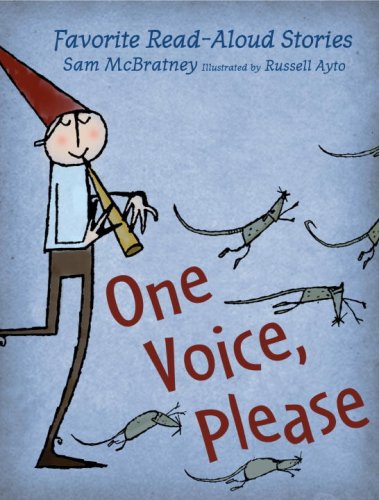
One Voice, PleaseOne Voice, Please: Favorite Read-Aloud Stories
by Sam McBratney

Elementary school teachers have tight schedules with all the pressures of different tests and required curriculum. It can be hard to fit in reading as much as they might like. But this book is perfect to use in those extra five or ten minutes. Filled with familiar stories from around the world, it can be shared with a few minutes to spare while ensuring kids are hearing the stories that make up our common understanding.
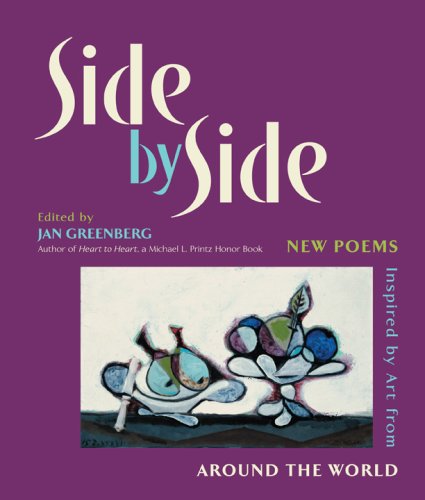
Side by SideSide by Side: New Poems Inspired by Art from Around the World
edited by Jan Greenberg

Poetry and art. Multiple languages and multicultural images. This comes pretty close to my new perfect book for teachers, only losing a mark for being too sophisticated for the early elementary kids. The art is amazing. The poems represent a wide range in style and subject. Each poem is written in the poet’s native language, as well as in English. Each page is perfectly illustrated by a related work of art from that area. This is an amazing book that will be enjoyed by the adult who receives it and as a classroom tool. (If you’re dying for a poetry book for a younger classroom, I can never mention Poetry Speaks to Children enough.)

For more ideas on giving books this holiday season, look to 150 Ways to Give a Book. With all the live links, you may not even need to leave the house to do your shopping.

Links to material on Amazon.com contained within this post may be affiliate links for the Amazon Associates program, for which this site may receive a referral fee.