105 Ways to Give a Book
Showing posts with label Book Reviews. Show all posts

The Checklist Manifesto

In 2001 at Johns Hopkins Hospital, Peter Pronovost did a little experiment. You see, a number of patients would get infections from central lines put in to, you know, help them get better. But the infections would, of course, make the patients worse. So he came up with a five-step checklist for putting in a central line with basic directives, which were as simple as washing hands with antibiotic soap.

Pronovost then asked nurses to observe doctors for a month and record how often they carried out each step. In more than a third of patients, they skipped at least one. After recording that explosive bit of data, for the next year the hospital asked and authorized the nurses to stop the doctors if they saw them skipping a step on the checklist.
The results were so dramatic that they weren’t sure whether to believe them: the ten-day line-infection went from 11 percent to zero... So they followed patients for fifteen more months. Only two line infections occurred in that entire period.
This remarkable story is from the book The Checkist Manifesto: How to Get Things Right, by Atul Gawande. The author’s theory is that many jobs — especially in the medical profession — have become so complicated that training and intelligence aren’t enough to achieve the best results. He offers a solution in the humble checklist.

The main comparisons he explores are two professions that have incredible amounts of potential scenarios, along with incredible consequences for failure — physicians and pilots. What he finds in his research is a huge difference in how each profession handles the problem, with implications for change in many industries. While doctors tend to bristle at being followed with a checklist — it’s why the nurses had to be authorized to stop the doctors in the above example — pilots embrace their checklists, which are standard to the airlines. In fact, pilots are taught not to go with their instinct as problems arise but to turn to the checklist first. That doesn’t mean that instincts, training, and quick thinking aren’t valued for the pilots. Instead, the idea is to take the guesswork out of basic steps and protocols so that the pilots can do their jobs with more focus.

The author shares another story from the airline industry, about a plane that suffered a complete engine shut-down in January 2008. Luckily, the plane landed safely enough that the passengers were fine, but the industry was puzzled as to the cause. The possibilities were researched, a theory was proposed, and new guidelines were established for particular flights. A new checklist was distributed and within a month of the recommendations, pilots had it in hand and were using it. How do we know? Because in November 2008, the same situation presented itself and the pilots were able to use the new checklist to recover the engines.

While new procedures can take years to establish themselves in medicine, compare that to this scenario of identifying a problem, recommending a solution, and distributing the information within a year. The author also shows uses for the checklist in financial and legal industries, but all have shied away from the solution as being too simple.

Will this next generation of thinkers be able to get beyond that mindset? I hope so, and that’s why I would recommend this book to high schoolers in hopes that they can change the way we approach problems in a society only growing in complexity.

Nonfiction Monday is hosted today at Rasco from RIF

Links to material on Amazon.com contained within this post may be affiliate links for the Amazon Associates program, for which this site may receive a referral fee.

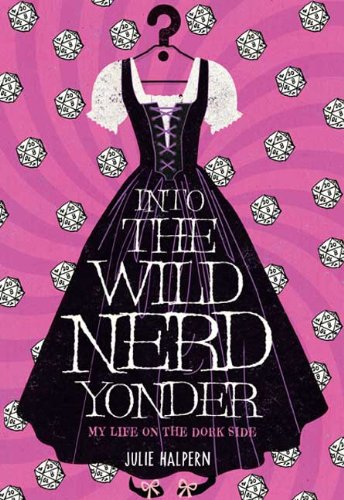
Into the Wild Nerd Yonder

My back issues notwithstanding (boy, is that ever appropriate), I have been trying to restore some order to my life outside my blog. It᾿s slow going and less than fun, but absolutely necessary. With that in mind, I᾿m trying to run some things that I don᾿t have to write myself. My teen was able to help me out with a book that I loved and then gave to her thinking that she would feel the same way. I᾿ll say quite honestly that I hesitated before giving her the book, because of an important plot point where the main character᾿s friend gives a BJ to a boy she barely knows. I wondered if my eighth grader was ready to read this. But the friend does suffer consequences both emotional and physical, which made my point for me and allowed us to have an open discussion about the girl᾿s choices. Anyway, enough from me...


Into the Wild Nerd YonderHey! TeenReader here, to review a great book called Into the Wild Nerd Yonder, by Julie Halpern (2009). The basic plot is about Jessie, a “nerd” girl whose friends have gone from prissy to punk in a matter of hours, all to impress the one boy Jessie has had a crush on ever since they met. And when one of her friends takes it too far, Jessie decides that she needs a new crew. But who should she end up with but the nerdiest group of all, the Dungeons and Dragons crowd!

I finished this book and looked back at it thinking it was one of my favorites (which I still think now). At first I thought it was because I identified with the character, being a nerd-girl myself, but I realized that this book is pretty middle-ground and perfect for everyone. There᾿s definitely a message, but it᾿s not preachy. The bad guys are annoying enough that you want to yell at them, but Jessie isn᾿t whiny about it. It᾿s funny, but not slapstick crazy. But the thing I think was most well done was avoiding overemphasis of her being a smart person. The book mentioned her advanced classes, but it was handled very casually. One of the faults of many books starring a nerd is that they make them über-geniuses. This book shows throughout that Jessie is smart, but keeps her identifiable. Also she has none of the cliché family members — the parents who always push her to work, the perfect older sibling that she loves/loathes. This book captured a regular family, with all its warmth and little imperfections. The plot was handled well, the characters were likeable, and the style was engaging, and the story was compelling. Into the Wild Nerd Yonder, FTW! [That᾿s textspeak for For The Win!]

Links to material on Amazon.com contained within this post may be affiliate links for the Amazon Associates program, for which this site may receive a referral fee.

Nonfiction Monday: The Day-Glo Brothers

The Day-Glo BrothersThe Day-Glo Brothers, by Chris Barton, is making all the lists of best books for 2009 and has been reviewed all over the book blogging world, so clearly I don’t need to chime in. But I have to, I can’t resist. I was flipping through it before I sent a copy on to my contest winner, and I found myself going back to the beginning to read the whole thing through again.

It’s certainly a well-written biography, the cartoon illustrations are engaging, and the touches of day-glo on the gray pages is inspired. Wonderful book, no doubt. But I think what is making this book such a standout is the sense of discovery, in two ways. The reader follows the brothers on their path to create a new color, and to find the applications of that finding to be more far reaching than they could have imagined. It’s an interesting story that most people have never heard. So reading it feels like a discovery in itself.

I was fascinated by the tale of these brothers, but perhaps even more impressed by the author’s original research on the topic. In the author’s note at the end of the book, Chris Barton describes how he interviewed various members of the Switzer family, dug through seventy-year-old experiment notes, and visited the U.S. Army’s historical office. With so much nonfiction already well-covered ground, there is a magic to the original source research that went into this book. So, I guess that’s a third discovery in the book — from the author himself.

For an addition to my 105 Ways to Give a Book theme, I’d pair The Day-Glo Brothers with neon glue pens. For more nonfiction, head to Nonfiction Monday, hosted today at In Need of Chocolate

Links to material on Amazon.com contained within this post may be affiliate links for the Amazon Associates program, for which this site may receive a referral fee.

Nonfiction Monday: Going Green

Yesterday there was an editorial in The Washington Post that lamented the current green consumer trend, arguing that we were getting distracted by our small changes and not fighting for the big changes that are truly needed. The author compared the environmental cause to the Civil Rights Movement, noting that legislative action was needed to enact change, not “10 Ways to Go Integrated.”

I see the author’s point, but also see the flaw in the argument. With segregation, people had ample evidence of the problem — especially as the growing fight opened their eyes. Certainly African Americans were well aware, but for the majority of Americans the issue was flying below their radar. It was The Way Things Were. But as the civil rights issues came front and center, the evidence was around to keep reminding people that it wasn’t The Way Things Should Be.

So while I agree that bringing my canvas bags to the grocery store isn’t going to change the world, it does make me just that much more conscious of the larger issue. I can roll my eyes at the sudden takeover of Go Green shirts at Walmart — probably made in China — but I think that the trend of individual responsibility for the environment helps by making the issue more tangible.

Nowhere do I see more potential for a shift in understanding than with today’s kids. They are hearing the message at school and on TV and in books. I recently came across two titles at my library that I was excited to share with my own kids.

True Green Kids: 100 Things You Can Do To Save the PlanetTrue Green Kids: 100 Things You Can Do To Save the Planet, by Kim McKay and Jenny Bonnin, features a paragraph for each concept, with a separate action step. The layout is clean and simple, with lots of white space. Produced by National Geographic, the photographs are engaging and some are truly wonderful. Section dividers are bright with an overall thought on the topic. The end of the book includes a resource section with pages of websites on different topics on the environment.


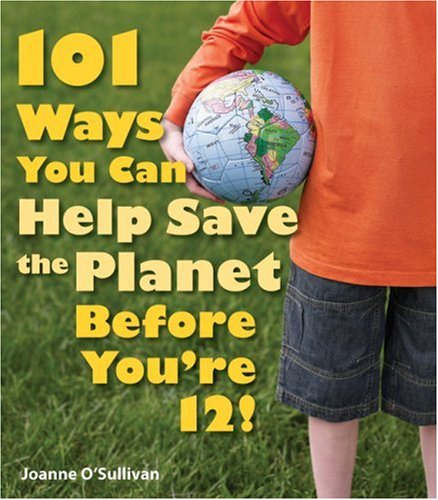
101 Ways You Can Help Save the Planet Before You’re 12!101 Ways You Can Help Save the Planet Before You’re 12! by Joanne O’Sullivan, packs in the information on each page, with lots of description, facts, ideas, and photos. The photographs are fine for a nonfiction book, but generally more utilitarian than artistic. The book is not divided into sections, and the websites are incorporated into the relevant pages instead of in a separate resource section.

Comparing the two, True Green Kids runs younger — with the shorter paragraphs and clean layouts making it easier to share with a child, even one who may not be reading on her own. Personally, I preferred the layout and the photographs, meaning that as an adult, it would be a book I’d be more likely to pull out to read with my daughters. 101 Ways has a more dynamic feel for older kids, and I like having the websites on the pages instead of in a separate section. I wish that they hadn’t used an age in the title, because this book could easily have reached the middle school audience — especially if it included a few teen photos. Both books present good ideas in an accessible way and provide specific things that the reader can do.

Nonfiction Monday round-up is hosted today at Rasco from RIF.

Links to material on Amazon.com contained within this post may be affiliate links for the Amazon Associates program, for which this site may receive a referral fee.
Nonfiction Monday: Zero Is the Leaves on the Tree

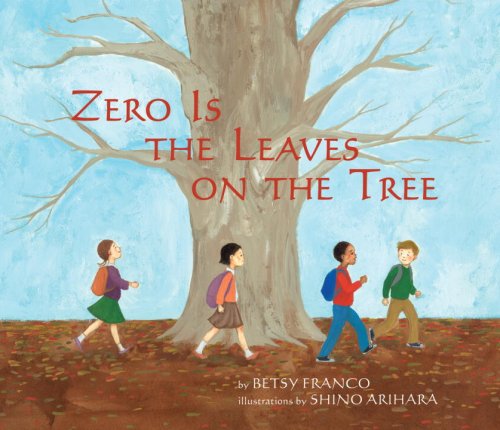
Zero is the Leaves on the TreeI’d seen the book Zero Is the Leaves on the Tree mentioned elsewhere, so when I saw a copy at my library I had to see what the fuss was about. Let me say that there is some well-earned fuss. Taking the reader through the seasons, zero is represented in many ways, including the number of sleds on a slushy hillside or the kites in a windless sky. The beautiful and slight wording on each two-page spread makes the book close kin to poetry.
Zero is...
the leaves on the bare,
brown arms of the oak tree.
I can’t think of another book that gently and beautifully tackles math, seasons, and poetry. Heck, through the lovely illustrations, the book even includes a story of sorts about a diverse groups of four friends going through the school year together. Honestly, it’s such a perfect book that it should not be missed. (Nonfiction Monday is hosted today at Tales from the Rushmore Kid.)

The Winter Blog Blast Tour begins today with some awesome authors appearing at:
Check Chasing Ray for the full week’s schedule.

Links to material on Amazon.com contained within this post may be affiliate links for the Amazon Associates program, for which this site may receive a referral fee.
Tracks of a Panda

Have you ever continued to look for something after you’ve found it? This happens to me a lot. Like I’ll have to replace a white shirt because it’s stained, or dated, or... ahem, tight. When I’m shopping, I’ll be looking for a replacement. But after I find a new white shirt, I keep noticing white shirts because I used to be looking for one. Not only can I not reset my search mode, I end up with three new white shirts because in continuing to look for one, I’ve found two more that I can’t live without.

It happens with books, too. I used to look for panda books for my younger daughter, who was fond of the animal. Now she’s moved on, but I have not. I keep noticing books about pandas. So even though I had a panda book recently for Nonfiction Monday, you’re going to have to hear about another one.

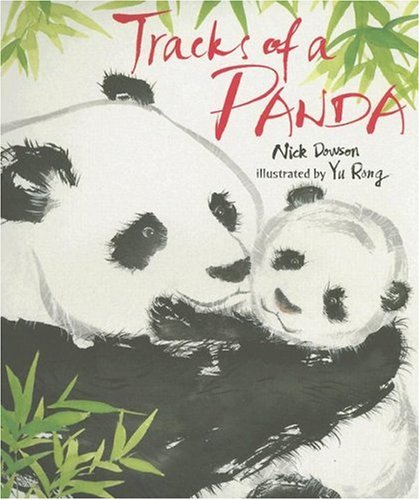
Tracks of a PandaTracks of a Panda, by Nick Dowson, came out in 2007, but I ran across it again recently. Intended for younger readers, the text is sparing and sweet with the sentences arranged in verse style. The story follows a mother and baby panda, starting with the animal as “small as a pine cone, pink as a blob of wriggling sunset.” (Perhaps Dowson was unaware of the standard description of “size and weight of a stick of butter.”) As the baby grows, the pair travels the mountain forests in search for more food, facing danger along the way. Facts about pandas are incorporated into the story and are explained in short captions. The illustrations of Yu Rong deserve particular notice for their gentle beauty. The watercolors are soft and evocative, with an Asian sensibility. Pages of the book are positively framable.

Nonfiction Monday round-up is hosted today at Wild About Nature, where you are sure to find books about something other than pandas.

A Pearl in the Storm

Life in the “real” world is hazy, and it is piled full of superfluous things that have little bearing on survival. Modern conveniences equate with disposability. When things break, we throw them away. When friendships break, we throw them away. After all, there are so many people. We don’t watch the weather; we change the thermostat. We don’t take care of ourselves; we leave that to the doctors and the lawyers. We don’t take care of the people around us; we pay taxes and expect the government to do the caretaking. We place our trust in our locks and alarm systems. People come and go at dizzying speeds, and most encounters are frustratingly superficial. When I remember to ask someone, “How are you?” I seldom slow my pace to listen to the response. Reality is sometimes difficult to find in the “real” world.
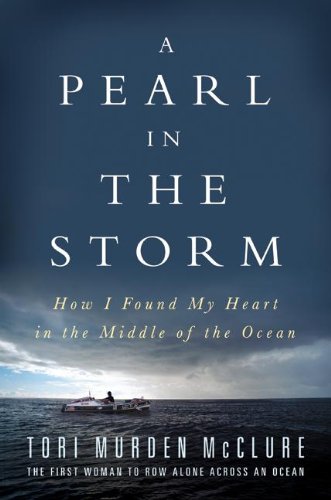
A Pearl in the StormA Pearl in the Storm: How I Found My Heart in the Middle of the Ocean, by Tori Murden McClure, is an amazing story of endurance, strength, drive, tenacity, pride and humility. This book was recommended by a patron at my library, and by the time my hold came up, I had forgotten all about it. I almost put it back, because I couldn’t imagine why I had wanted to read about the first woman to row across the ocean. I’m glad I gave it a try, because it was interesting and inspirational. An adult biography, it would be perfect for high schoolers as well.

In 1998, Tori McClure rowed across the Atlantic Ocean in a custom rowboat with a tiny cabin. She charted her journey in hours and miles rowed, in the lessons learned, and in the insights discovered. She rowed alongside whales and playful dolphins, through storms and rogue waves. When things broke, she fixed them. When things broke beyond repair, she did without — even when those things were considered essential.

She starts her story with a strong statement of will: “I felt proud not to be searching for life in the absent corners of weekends.” She ends her story with a realization: “Our helplessness makes us human. Love is what makes our humanity bearable.” And in between those two points, she shares the remarkable story of her life and ocean journey. Not to be missed.

Nonfiction Monday is hosted today at All About Children’s Books.

One Shot Southeast Asia: When Heaven Fell

Today Chasing Ray hosts the One Shot World Tour, focusing on books set in Southeast Asia. It gives me the perfect opportunity to mention a book I received a while ago, and then forgot. Which happens more than I’d care to say.

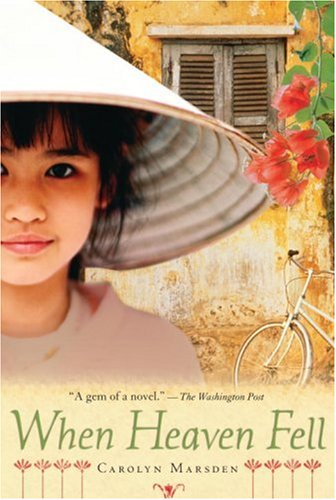
When Heaven FellLooking over this region would be woefully incomplete without including books by Carolyn Marsden. She’s written about girls from and in Thailand, China, and Vietnam. When Heaven Fell is set in present-day Vietnam with a girl, Binh, who sells fruit and sodas from a cart instead of going to school. Her family can’t afford the cost of the uniform and books, and her tiny earnings make a difference in how much the family can eat that day. She looks enviously at the girls heading to school and longingly at her older cousin’s dress — which she’ll receive as a hand-me-down. Her family lives life on the edge, dependent on the smallest amount of money.

When Binh’s grandmother announces that her long-lost daughter is coming for a visit from America, all the relatives begin to dream about all the gifts that will flow their way. Knowing that America is a land of riches, they expect to find themselves saved from their abject poverty by this woman that Ba Ngoai gave up after the war with America. But after all their expectations, can this lost child of Vietnam be the person they want her to be — especially when she is there looking for the mother and childhood that was ripped from her?

Written for elementary school students, When Heaven Fell is a wonderful view of life in Vietnam. The characters are engaging and real, all with their own flaws and blind spots. While not focusing on the war with Vietnam, the author gives a look into the conflict from the point of the innocent victims. The reader also gets to see an impression of America from afar.

For many more books on Southeast Asia, head over to the One Shot Round-up at Chasing Ray.

Nonfiction Monday: Round-Up & Pandas

How Many Baby Pandas?Pandas must be the only animal whose adult evolutionary strategy is cuteness. (Well, other than Ashton Kutcher.) They live on bamboo — and only bamboo — which apparently has all the nutritional value of pork rinds. They also weigh two hundred pounds, need a decent-sized range, and sport highly visible markings. No doubt this species would have died out long, long ago if people didn’t protect them because they were just so darn adorable.

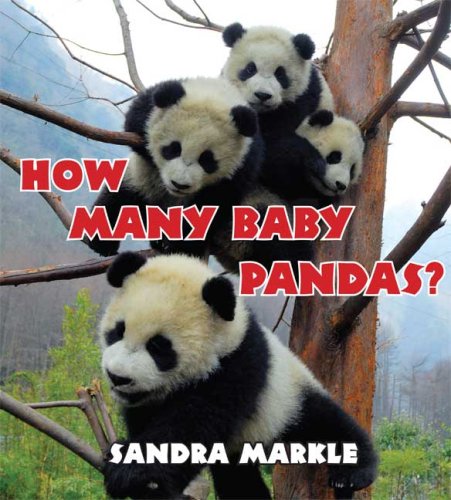
How Many Baby Pandas? by Sandra Markle, is a young readers’ introduction to pandas and how people are helping them at Wolong Giant Panda Breeding Center in China. We start with one panda at birth — about six inches long, weighing four ounces, and looking like a pink rat. We follow pandas’ growth in the center and learn facts about the animals along the way. The photographs of pandas wrestling with each other and holding their own baby bottles are as sweet as they sound. Regardless of the title, the counting aspect of the book is certainly secondary. At the end, there are extra facts, glossary, bibliography, websites, and donation information. Good for early elementary school readers or preschoolers who want to learn about animals. Especially cute animals.

Nonfiction Monday Round-up is here today, so leave links in the comments and I’ll update throughout the day.

Edited to Add: Funny story — I told my teen the Ashton Kutcher line yesterday, and she didn’t think it was that funny. I explained it, telling her that it’s only because he’s cute that he has a career, because he hasn’t really done anything. So, today I see an article in The Washington Post about celebrities who are famous for being famous. At the end of the article the primo example is named: Ashton Kutcher.

9:00 a.m. Round-Up
Noon Round-Up

4:00 p.m. Round-Up
  • Life in the Boreal Forest at Bookends. (Doesn’t that sound pleasantly cool during an August heat wave?)

  • A round-up within a round-up with Finding Truth, Then and Now, 14 Cows for America, Truth You Can Trust, and Save This Superstar! all at I.N.K. — Interesting Nonfiction for Kids. (Sorry I missed you earlier.)

7:00 p.m. Round-Up
  • The Frog Scientist at Biblio File, who adds, “MR! You live in DC! Baby pandas don’t look like a pink rat, they’re THE SIZE OF A STICK OF BUTTER!”
HA! (I respond.) I actually had that phrase instead of the pink rat, but I didn’t think anyone would get it! Of course, four years ago everyone in the DC area heard that the new baby panda was the size of a stick of butter so many times that “ButterStick” was one of the suggested names. (They went with Tai Shan.)

Lunch Lady Debut

There is something special about witnessing the start of a series. I remember when the KidLitosphere was tickled pink with the first Babymouse book. Now the eleventh book, Babymouse: Dragonslayer, is coming this August. And it seems like just yesterday that I was standing all alone at the ALA signing of Jeff Kinney, and now his fourth book, Diary of a Wimpy Kid: Dog Days, comes out in October — and a Wimpy Kid movie is currently in production.

Oh, they grow up so fast.

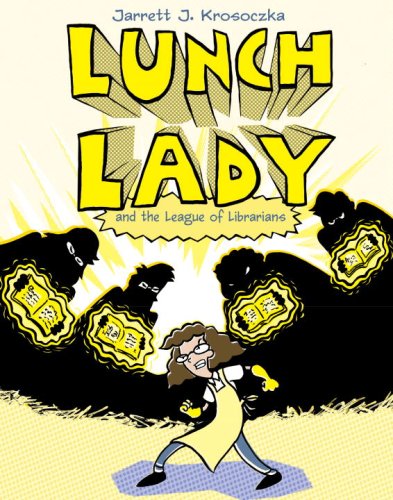
Lunch Lady and the Cyborg SubstituteSo here I am today, happy to see the beginning of a new series by Jarrett Krosoczka. Already well known for his wonderful picture books and creative videos (which I can no longer find, unfortunately), the multitalented author has written a set of fun graphic novels for kids. Apparently not one to do anything halfway, Krosoczka today debuts both Lunch Lady and the Cyborg Substitute and the second book in the series, Lunch Lady and the League of Librarians.

Lunch Lady and the League of LibrariansThe series follows a school cafeteria worker who fights crime with help from her gadget-making sidekick Betty. In the first title, her secret identity is discovered by three kids — the Breakfast Bunch — who promise to have more active roles in the coming books. The layout is similar to that of Babymouse, but with yellow instead of pink — a relief to boys everywhere. With a variety of silly, food-themed gadgets and a large serving of humor, readers will leave wanting second helpings.

The third book, Lunch Lady and the Author Visit Vendetta, will be released in December, and Lunch Lady and the Summer Camp Shakedown is scheduled for Spring 2010. Also, a film adaptation is already in the works.

Oh, they grow up so fast.

Fun on the Run and Booklights Post

Today at Booklights I’m talking about books for car trips, and I welcome you to add your own suggestions. Have an exciting audiobook that kept you engaged (or more importantly, kept the kids engaged) for a long drive? Know a great book of games for the road? Head over and lend your knowledge to weary parent travelers.

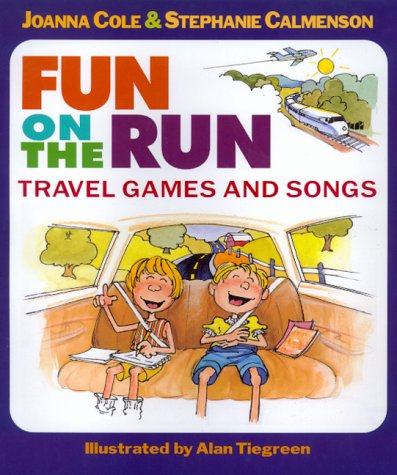
Fun on the RunFor your bonus book here at MotherReader, I’ll mention Fun on the Run: Travel Games and Songs, by Joanna Cole and Stephanie Calmenson. Filled with all those games we needed to know before the age of portable DVD players and Nintendo DS, this title can give you the ideas to make a long car trip seem just a little bit shorter. With something for everyone, the book includes wordplay games, license plate races, and silly stories. There are even a few songs — though not the really cool ones like the Jonas Brothers sing.

Alligator vs. Crocodile and Other Nonfiction

Today I am talking about some great nonfiction animal books over at Booklights, and I had one extra that didn’t fit the criterion of featuring excellent photography, though it is an interesting book. You get it as a bonus gift just for reading MotherReader.

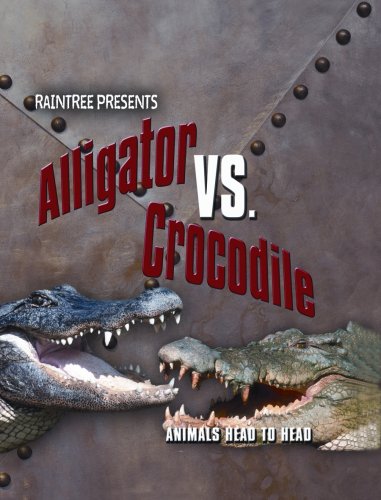
Alligator vs. CrocodileAlligator vs. Crocodile: Animals Head to Head, by Isabel Thomas

The Animals Head to Head series takes two “vicious” animals and compares them in terms of which would win a fight. Chapters compare their size/strength, body armor, speed, endurance, attack strategy, and more. Each animal gets a score for each feature and then an overall score at the end. Pitting alligator against crocodile was particularly interesting because they are so similar that the direct comparison was helpful in understanding each reptile better. The series also gives us Elephant vs. Rhinoceros, Lion vs. Tiger, Polar Bear vs. Grizzly Bear, Scorpion vs. Tarantula, Shark vs. Killer Whale, and Cheney vs. Limbaugh.

Okay, I may have made up the last one.

Meerkat Mail

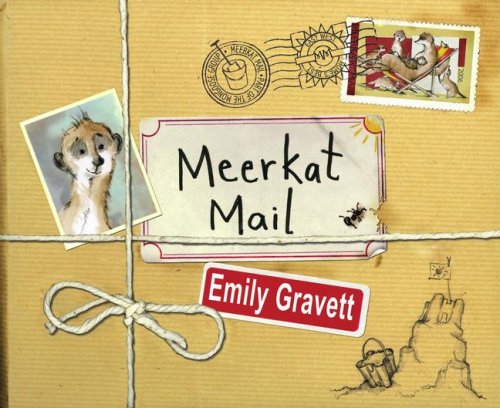
Meerkat MailIllustrations by Emily Gravett always leave me sighing. Or is it singing? I guess whichever one conveys my happiness at being part of the way she sees the world. In Meerkat Mail, Sonny gets tired of always being around everyone ALL OF THE TIME. After all, the meerkat motto is “Stay Safe, Stay Together!” But Sonny longs to explore, and so sets off to visit some of his cousins — different mongoose families across Africa. He sends postcards home to tell where he is and what he’s doing. (Apparently, he doesn’t Twitter.) In the end, of course, there’s no place like home.

The postcards he sends are taped in the book, which is pretty cool. The art is fantastic, the learning is subtle, and the humor is ever-present. Gravett’s books often have a bit of darkness to them, and here that nod is seen in a jackal that stalks Sonny on his journey. The question remains why the predator doesn’t... ahem, eat him along the way. So maybe the threat part is a little contrived. It’s a minor complaint, though, for a majorly great book.

Frankie Pickle and Booklights

With Father’s Day coming up, today’s post at Booklights features three picture books about dads. I didn’t select my personal favorites, choosing instead to highlight ones that were a little bit different. Head over and add your recommendations in the comments. Oh, I also mentioned Book Dads as a website/blog devoted to finding books that feature positive images of fatherhood. Just a site you should know, if you don’t already.

I had all these mighty plans to review like the wind this week, but I am beat. Really beat. I know that the period between mid-April and mid-June is crazy-busy for me, but I’m usually able to keep enough in reserve to make it to the end without falling apart. This time I’m crawling to the finish line.

The house is a disaster. It wasn’t great anyway, as I’d let the cleaning fall back in order to tackle other more pressing projects. But now as the school papers come home, it’s a nightmare. But there is one good thing about it. Perfect jumping off point to introduce...

Frankie Pickle and the Closet of DoomFrankie Pickle and the Closet of Doom, by Eric Wight. Frankie is a hero in his own mind, tackling mighty adventures even without the benefit of the dryer-sheet cape he hopes to make. Real life keeps pulling him back, specifically in the form of a mom who wants him to clean his room. When nagging fails, a bargain is struck, leaving Frankie to enjoy his squalor in peace. Or at least until it gets truly out of control. And then there’s that mysterious smell...

Graphic novel sections of Frankie’s imagined adventures lend a sense of fun to the story of a regular boy. It’s like a boy version of Judy Moody meets Babymouse meets Indiana Jones. This great early chapter book, with lots of humor and fun, is one to watch for a sequel.

Emily’s Sharing and Caring Book

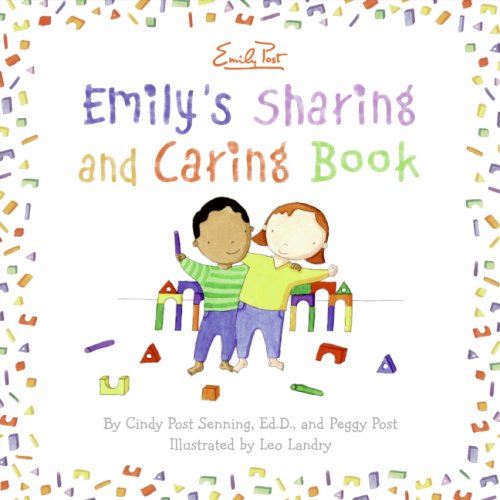
Emily’s Sharing and Caring BookEmily’s Sharing and Caring Book, by Cindy Post Senning and Peggy Post, conveys the message that sharing IS a way of caring, and could be especially helpful if you have a toddler or preschooler having trouble with that concept. Could you relate your feelings without this book? Sure, but this book offers extra help bringing the message home, and in a gentle way.

I wouldn’t make the case for this title if it were one of those issue books posing as a fun storybook. But it is clearly categorized as a nonfiction book in manners, having been written by co-directors of the Emily Post Institute. You know, the etiquette people. Having a niece with some sharing... challenges, I thought the concept was handled well.

In the book, sharing is shown as a special way that the character makes others smile, which puts the focus on the reward instead of on the moral argument. That sharing gets a smile — rather than that sharing is the Right Thing To Do — seems more appropriate for a toddler or young preschooler’s stage of moral development. The illustrations by Leo Landry bring warmth to the story, as a little girl interacts with several people including a grandma, a dad, a mom and peers — brothers or friends. I also like the inclusion of a child of color on the cover.

The Summer I Turned Pretty

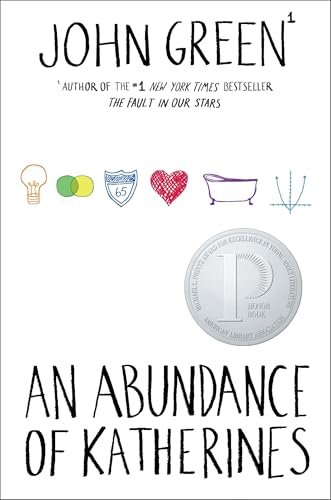
The Summer I Turned PrettyI’m a sucker for summer stories. I love being in the middle of summer and reading about someone else’s summer. It’s like having two for the price of one. I guess I kind of collect summer books, at least in my mind. Off the top of my head, some of my favorites are: The Liberation of Gabriel King, The Penderwicks, Monsoon Summer , An Abundance of Katherines, Cicada Summer, Lowji Discovers America, and Cassie Was Here.

Anyway, while Jenny Han had me interested in her book the moment I knew that she was writing one — huge Shug fan here — I was especially excited when seeing the title for the first time: The Summer I Turned Pretty.

I felt a particular connection to the story, having spent my childhood years at the New Jersey shore for weeks at a time. I looked forward to those days of digging in the sand, swimming in the ocean, and watching the sunrise. As I turned to teenager, it became less about playing with the shovels and more about walking along the ocean in my bikini.

In Han’s book, Belly measures her life by summers when she stays in a beach house with a family friend. While Belly’s mom and her friend Susannah spend time together, Belly tags along behind her brother and Susannah’s boys. She takes on the role of younger sister to Jeremiah and Conrad, and sometimes it chafes her like the sand in her swimsuit. But this summer is different, because Belly has finally come into her own. She’s grown up now and things are changing.

Going back and forth between the present time and Belly’s previous summers, the book gives a full sense of Belly’s relationships and her growth. The shore setting gives us crab dinners, boardwalk outings, beach parties, and midnight swims. You can practically smell the salt air. Simply a wonderful summer book.

If you’re in the DC area, Jenny Han will be signing books in Northern Virginia. On Saturday, June 13th, she’ll be at Aladdin’s Lamp in Arlington at 2:00 p.m., and on Sunday, June 14th, it’s Hooray for Books in Alexandria, also at 2:00 p.m. I plan to be at the Sunday signing with my daughter and some of her Girl Scout friends.

I mentioned some of my favorite summer books. What other wonderful Young Adult and Middle Grade titles should I add to my collection? (Not to disrespect picture books, which I know have plenty of stories. But I’m looking for the books where you can escape for hours into someone else’s summer days.)

MagicKeepers: The Eternal Hourglass

MagicKeepersThere was a two-week blog tour for MagicKeepers: The Eternal Hourglass, by Erica Kirov, so I feel like I’ve seen the book everywhere. Good thing that it has an appealing cover — and story.

Nick is living in a third-rate hotel with his father, a fourth-rate magician in Las Vegas. But on Nick’s thirteenth birthday, his circumstances change completely as he finds himself living among a family of magicians. Real magicians, not those illusionists putting on stage shows. And the family is his own extended relations exiled from Russia. Nick finds out about his own powers and the secret that he carries that threatens him and his new family.

I liked the inclusion of Russian culture and history in the book. Houdini also makes an appearance as we learn the back story of a lost magical relic. The writing is engaging and lightly funny. There may be comparisons to Harry Potter, and that’s fine. In fact, it’s probably good, as it may draw readers to this great title. This Middle Grade series will be particularly good for kids who like the idea of the Potter books, but may not be ready to tackle the longer and darker ones. Personally, I’ll be watching for the next book.

For more information, check out the website and blog.

Catching Fire

Catching FireI’ve spent the last few hours with this book, but it’s too late for me to write anything and still be careful to not give away any part of it. So, before I get some much needed rest, here’s a quick reaction to Catching Fire from my seventh grader, that I will now echo.

While she was reading and I was on another book, I asked her a question as she was on the last pages. She shushed me. I laughed. A few minutes later she closed the book and uttered the following:
Whoa. That got freakin’ awesome. The first part was boring, then about three-fifths in it gets exciting, but the last twenty pages are so exciting and amazingly... whoa.
Personally, I wouldn’t call the first part boring, but maybe a bit slow. I agree with the rest, but especially the whoa.

My Life in Pink and Green

My Life in Pink and GreenMy Life in Pink and Green, by Lisa Greenwald, was just the book I needed at this stage of the 48 Hour Book Challenge. Light and a quick read.

For Lucy, the family-owned pharmacy has always been a second home to her. Now a seventh grader, she even helps out with the workload. Unfortunately, as business has taken a downward turn, both the family’s finances and the pharmacy itself are in danger. But Lucy isn’t one to just give up, and tries to save the day with her love of makeup and the environment.

Lisa Greenwald does a wonderful job capturing tween insecurities and new crushes. With the characters’ involvement in the Earth Club at school, ideas for helping the environment are included naturally in the book. In fact, since Lucy gives information on makeup application during the book, and tips are part of every chapter title, girls can also come away with a healthy look at cosmetics, too. So in one book you get information on going green, looking beautiful, talking to boys, and taking initiative. That’s a bargain!

Riot

RiotIf you’ve read Walter Dean Myers’ book Monster, you’ll be excited to see that he’s written another book in the same screenplay format. Unfortunately, you’ll probably be disappointed upon actually reading it. It’s not easy for me to say this, because I respect Myers and what he’s brought to the canon of Young Adult literature, but Riot is no Monster. Not even close.

Monster used the screenplay format to bring the reader into the action. The language was real, and the story was gripping. I remember listening to it on audiobook — something I rarely do — and sitting in my car outside my house because I couldn’t leave. It was masterful.

Riot tries to apply the same technique, but falls flat. The action jumps from scene to scene with no sense of flow. Myers’ grip on contemporary language — the book is set in 1863 — is stifled and the dialogue is stiff. The story incorporates too many characters, scenes, and timelines to work with the style.

The book is about days of violence against African Americans when Irish immigrants, angered by the draft for the Civil War, find another minority to attack. Riot mostly follows Claire, a biracial teenage girl, but also zooms in on her family, her friends, soldiers in the street, and an Irish immigrant couple.

The subject seems interesting for a book, but the format was all wrong. It was hard to follow and hard to stay engaged with the characters. But the worst offense was the language, which didn’t sound realistic at all. It also felt like it was mixing modern terms with the historical. The one that stood out the most for me was the continued use of the characters referring to themselves and to others as black. I don’t have the research, but was this term in common usage in 1863? Overall, the dialogue simply didn’t sound like things people would say. Here’s a excerpt from Claire’s argument with her mother:
If it’s my skin that makes me unsafe, can I take it off and put it in a drawer until the streets are calm again? If it’s my skin that puts me in the sights of murderers, can I change it the way I would change my dress or my apron? Where is the “safe” you’re talking about? And if I’m black and you’re white and that makes me a target, where is this “family” you’re talking about? Where is it, Mum? Where is it?
You can get away with this kind of dialogue in a play, which has its own stylistic conventions of speech. It could have worked in a standard book, where we could follow Claire’s thoughts as well as her words. But for a screenplay, the language is almost painful to read.

Sorry. I wanted it to be good. What can I say?